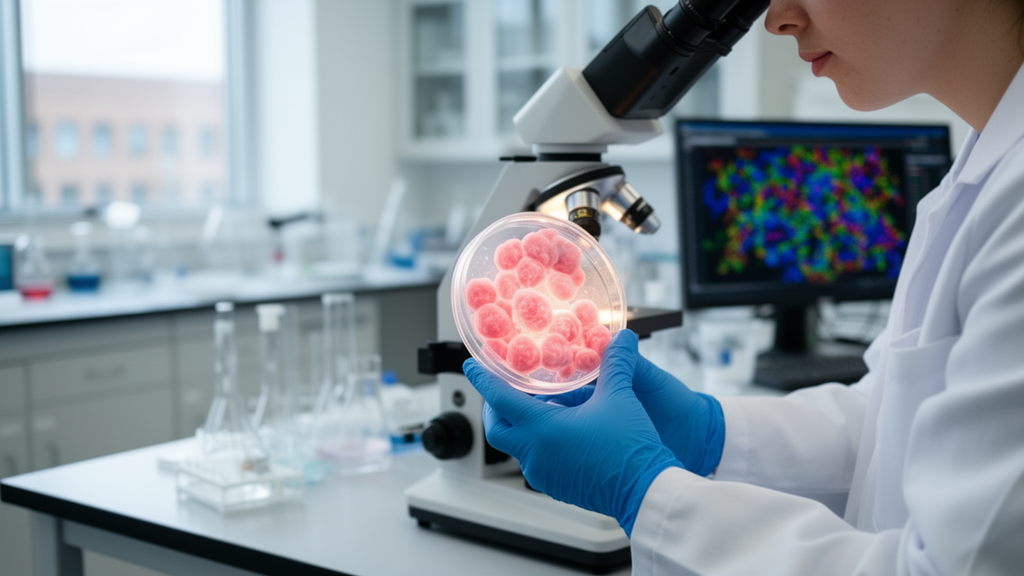
Organoids grown from patient cells, miniature organs-on-chips, engineered tissues and artificial intelligence models are transforming how biomedical research is done, offering scientists direct access to human biology without relying on laboratory animals. But as these New Approach Methodologies, known as NAMs, multiply across laboratories worldwide, a critical bottleneck has emerged: how do researchers actually know when one of these models is good enough for the job they want it to do? A new perspective article published in Frontiers in Medical Technology argues that the answer lies not in building more models, but in building independent infrastructure to test them, and it points to the UC Davis NAMs Testing Center as a working blueprint for how that can be done.
The article, written by K. C. Kent Lloyd of the Department of Surgery and Mouse Biology Program at the University of California, Davis, lays out a problem that has grown quietly urgent as biomedical research shifts away from animal-heavy experimentation. The vocabulary and standards for validating NAMs were largely developed for toxicology and chemical safety testing, where the questions are narrow and well-defined: does this chemical cause skin sensitization, genotoxicity or organ injury? In those settings, reference chemicals, positive and negative controls and performance metrics can be specified in advance. Federal coordination through the Interagency Coordinating Committee on the Validation of Alternative Methods, known as ICCVAM, and the NICEATM program, which moved into the NIH Office of Research Innovation, Validation, and Application in June 2026, has advanced this work considerably. But biomedical discovery research is a different animal entirely.
When a researcher studies Alzheimer’s disease, cancer, fibrosis, immune dysfunction or metabolic disease, they often do not know in advance which cell type, tissue, developmental stage or systemic interaction will prove most important. A human organoid might faithfully reproduce one aspect of a disease while completely missing immune, endocrine, vascular, neural, metabolic or biomechanical influences. A computational model may predict an outcome beautifully in one dataset yet fail in another. A microphysiological system may capture a tissue interface without reproducing whole-body pharmacology. These are not failures of the technology; they are gaps between what a model can do and what a scientist needs it to do, and Lloyd argues that independent testing infrastructure is the missing piece that can identify those gaps before they derail a research program.
The UC Davis NAMs Testing Center approaches this challenge by drawing on expertise that rarely resides in a single laboratory. As a campus-wide resource, it assembles capabilities from biomedical engineering, comparative biology, pathology, genetics, imaging, phenotyping, veterinary medicine and human health research. The university’s academic health system, its Schools of Medicine and Veterinary Medicine, the Mouse Biology Program, the National Biomedical Research Institute, the Comprehensive Cancer Center and specialized research cores all contribute. A steering committee of campus administrators and faculty advisors guides priorities and coordinates participation across units. The result is a facility that can pull together whatever combination of expertise a particular scientific question demands, rather than forcing every project through the same pipeline.
Several capabilities are already operational through participating UC Davis programs. These include patient-derived xenograft models, full necropsy and histopathology services, x-ray, microPET and microCT imaging, and in vivo phenotyping pipelines that span cardiovascular, respiratory, neurological and behavioral, ophthalmic, auditory, metabolic and endocrine, digestive, hematological, immune, musculoskeletal, renal, reproductive and embryonic systems. Projects can also draw on transcriptomic, proteomic and metabolomic analyses and, with appropriate approvals, clinical specimens from UC Davis biorepository resources. A single fit-for-purpose study might combine human cells or organoids with quantitative imaging, molecular profiling, computational analysis and an orthogonal comparator that measures the relevant biology in a completely different way.
The Center’s evaluation framework distinguishes between three levels of evidence. Verification addresses technical reliability: control performance, repeatability, quality-control criteria, reagent or operator effects and whether the method can be transferred to another laboratory under defined conditions. Validation refers more broadly to evidence that a method can support a defined inference in its stated context of use. Qualification is reserved for formal acceptance by a regulatory or other decision-making authority when such a pathway applies. Fit-for-purpose assessment ties the amount and type of evidence to the intended use rather than to a universal validation label. These distinctions align with recent confidence frameworks that emphasize context of use, biological relevance, technical characterization, transparency and independent review.
Biological evaluation asks whether the model actually contains the features needed for the domain of inference. A fibrosis model, for example, may require matrix-producing cells, inflammatory signaling and enough time for tissue remodeling to occur. A tumor model intended to predict immune-mediated response must include relevant immune biology, not just cancer-cell growth. Comparative testing is then selected according to the question: a NAM may need comparison with human tissues, clinical data, another NAM, an existing dataset or a carefully designed in vivo study. No single comparator serves as a gold standard for every application. Discordant results, where a NAM, an animal model and human data disagree, can be among the most informative outcomes, pointing to missing biology, species differences, inappropriate exposure conditions or limitations in the comparator itself.
The Center is currently supporting studies that integrate patient-derived, 3D-bioprinted tumor models with orthogonal in vivo tumor models to evaluate therapeutic response and mechanism. In an ongoing bladder cancer study, responses observed in the 3D platform are compared with an established syngeneic bladder cancer model developed through the Center, while machine-learning analysis of tumor morphology and large human cancer datasets is used to assess mechanism and potential patient relevance. This workflow demonstrates how complementary NAM, animal and human data can be integrated to evaluate both biological validity and translational relevance in a single coordinated effort.
The Center occupies a deliberately different position from organizations that set regulatory requirements. ICCVAM and D-NICEATM/ORIVA coordinate federal validation support, the FDA’s ISTAND program provides a qualification pathway for novel drug development tools, and OECD guidance and EURL ECVAM offer international frameworks. The NIH Complement-ARIE Validation and Qualification Network is building standardized evidence packages for NAMs but does not itself confer regulatory qualification. The UC Davis Center functions as a hands-on testing node, helping to define studies, carry out independent comparative or transferability testing, and assemble evidence that investigators, funders, industry or regulatory programs can use. It does not confer regulatory acceptance, and it manages conflicts of interest through institutional review, recusal or independent oversight, with blinded evaluation of coded samples when knowledge of experimental conditions could influence assessment.
Trust, Lloyd argues, will ultimately determine how quickly useful NAMs are adopted in biomedical research. Independent testing centers can contribute by providing comparative expertise, reproducibility testing and evidence that is separate from the developer’s own evaluation. The goal at UC Davis is a domain-of-inference statement that describes what a model can support, what remains uncertain and which evidence was used to reach that conclusion, which is far more informative to subsequent users than a general label of validated. A negative or discordant result can be genuinely valuable if it identifies a limitation before a model is used more widely. Similar testing nodes, connected through national and international networks, could provide a practical route from method development to evidence-based use, ensuring that the next generation of human-based models earns its place in the research arsenal on merit rather than on promise.
Subject of Research: Independent testing infrastructure for validating New Approach Methodologies in biomedical research
Article Title: Independent testing infrastructure for new approach methodologies: the UC Davis NAMs testing center
Article References: Lloyd, K. C. K. (2026). Independent testing infrastructure for new approach methodologies: the UC Davis NAMs testing center. Frontiers in Medical Technology, 8, Article 1966220. https://doi.org/10.3389/fmedt.2026.1966220
Image Credits: AI Generated
DOI: 10.3389/fmedt.2026.1966220
Keywords: NAMs, organoids, microphysiological systems, validation, UC Davis, biomedical research, drug development, comparative biology, reproducibility, ICCVAM, NIH, animal models
News Source: Denise Maddox. (October 16, 2026). Inside the UC Davis Testing Center Putting Lab-Grown Organoids and AI Models to the Real-World Test. Scienmag.