Long COVID has proved one of the most stubborn legacies of the pandemic, leaving millions of people with fatigue, breathlessness, brain fog, palpitations, and sleep disturbances that can persist for months or years. A new review published in Frontiers in Integrative Neuroscience brings together evidence from neuroscience, immunology, and metabolic research to argue that a surprising candidate—electroacupuncture, the technique of stimulating acupuncture needles with mild electrical currents—may offer a biologically plausible way to restore balance across the body’s nervous, immune, and metabolic systems. The authors are careful to frame their proposal as a hypothesis-generating framework rather than a proven therapy, but the mechanistic story they assemble is one of the most detailed attempts yet to explain how a peripheral nerve intervention could influence a multisystem disease.
The review begins with a striking observation about the structure of long COVID itself. Rather than arising from a single defect, the condition appears to involve a self-reinforcing triad of persistent low-grade inflammation, autonomic nervous system imbalance, and metabolic dysfunction. Patients commonly show sustained elevation of inflammatory cytokines such as IL-6, TNF-α, and IL-1β, driven in part by lingering viral antigens, tissue injury, and macrophages locked in a pro-inflammatory state. At the same time, heart rate variability studies reveal a shift toward sympathetic dominance and reduced parasympathetic tone, while immune cells undergo a metabolic switch from efficient oxidative phosphorylation to aerobic glycolysis, depleting ATP, accumulating lactate, and damaging mitochondria through excess reactive oxygen species. Each abnormality amplifies the others, creating a vicious cycle that the authors describe as an inflammation–autonomic–metabolic pathological triad.
At the center of this cycle, the review places the vagus nerve and its cholinergic anti-inflammatory pathway, often abbreviated CAP. The vagus nerve, the tenth cranial nerve, maintains a constant dialogue between the brain and the visceral organs, with roughly 80 percent of its fibers carrying sensory information upward and the remainder delivering regulatory commands downward. When inflammatory signals reach the brainstem’s nucleus tractus solitarius, a reflex arc triggers efferent vagal output that releases acetylcholine onto immune cells in organs such as the spleen and liver. Acetylcholine binds to α7 nicotinic acetylcholine receptors on macrophages, activating a JAK2–STAT3 signaling cascade that suppresses NF-κB, inhibits assembly of the NLRP3 inflammasome, and thereby curtails production of TNF-α, IL-6, and IL-1β. In parallel, the same receptor signaling promotes Nrf2-dependent antioxidant defenses, inducing enzymes such as heme oxygenase-1 and superoxide dismutase.
Crucially, the review argues that the CAP is more than an anti-inflammatory reflex. Cholinergic signaling cross-talks with the AMPK–SIRT1–PGC-1α axis, a trio of metabolic regulators that governs mitochondrial biogenesis, antioxidant capacity, and energy homeostasis. Acetylcholine can enhance AMPK phosphorylation through calcium-dependent mechanisms, while SIRT1 activates PGC-1α by deacetylation, boosting the production of new mitochondria and improving oxidative metabolism. This coupling means that a single neural pathway could, in principle, simultaneously dampen inflammation and rebuild cellular energy supply—precisely the two functions that appear deranged in long COVID. The authors describe the CAP as a regulatory hub where neural, immune, and metabolic control converge, rather than a one-dimensional brake on cytokines.
Building on this anatomy, the review proposes that many long COVID patients may exhibit what it calls CAP hyporesponsiveness—a provisional research descriptor, not a diagnosis—characterized by reduced vagal tone, diminished acetylcholine availability, downregulated α7nAChR expression, and consequently weakened anti-inflammatory feedback. The authors are explicit that heart rate variability reduction alone cannot establish this pattern, since HRV is an indirect and non-specific marker. Instead, they outline candidate mechanistic domains spanning autonomic regulation, cholinergic signaling, inflammatory pathway activation, systemic inflammatory burden, and metabolic-mitochondrial stress, all of which would need to be measured together in prospective studies before the concept could be validated or translated into clinical subtyping.
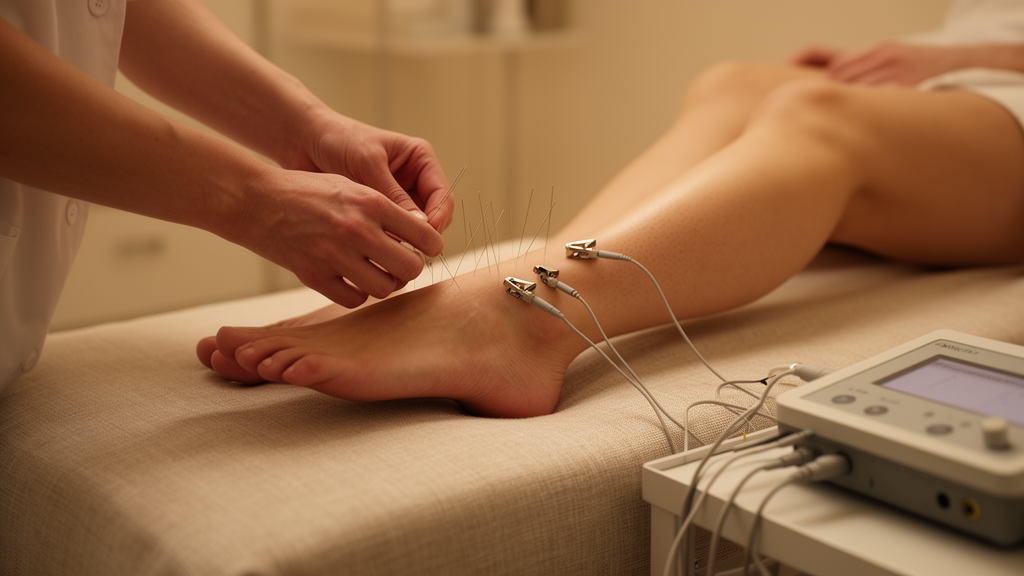
The strongest evidence that electroacupuncture can engage this pathway comes from animal studies, and the review grades that evidence carefully. In mouse models of sepsis-related lung injury, postoperative ileus, and acute pancreatitis, stimulation at the Zusanli acupoint (ST36) on the lower leg restored α7nAChR expression, inhibited NF-κB signaling, and reduced inflammatory cytokines—and, critically, these protective effects were abolished when researchers cut the vagus nerve or blocked the α7nAChR receptor with antagonists such as methyllycaconitine. Such pathway-disruption experiments provide direct evidence that the vagal–cholinergic axis mediates at least some of electroacupuncture’s anti-inflammatory effects. Other animal work, including studies in diabetic rats, shows that electroacupuncture increases AMPK, PGC-1α, and GLUT4 expression and raises skeletal muscle ATP, supporting the metabolic arm of the proposed framework, though these findings do not by themselves prove CAP involvement.
Human evidence is more indirect but broadly consistent. Clinical studies in healthy volunteers and patients with inflammatory conditions report that electroacupuncture alters heart rate variability in a frequency-dependent manner, increases high-frequency vagal components, reduces sympathetic stress indices, and lowers circulating TNF-α and IL-1β in conditions such as knee osteoarthritis. Functional neuroimaging shows that stimulation at ST36 modulates brain regions involved in somatosensory, limbic, and autonomic processing, and small clinical reports in long COVID patients describe improvements in fatigue, dyspnea, abnormal heart rate, and inflammatory markers alongside enhanced HRV. Because no human study has directly tested CAP dependence through pathway disruption, the authors classify all clinical findings as supportive rather than conclusive, a distinction they maintain throughout the review.
To organize these heterogeneous results, the authors propose an integrated EA–CAP–AMPK–SIRT1–PGC-1α model, in which electroacupuncture stimulation enhances vagal afferent input, activates central autonomic integration in the brainstem, releases acetylcholine onto α7nAChR-expressing immune cells, and thereby suppresses NF-κB and NLRP3 signaling while simultaneously supporting mitochondrial function through the metabolic axis. They supplement this with a Neural Resonance Modulation hypothesis, suggesting that frequency-specific somatosensory input may synchronize rhythmic activity within brainstem–hypothalamic circuits, and with a neuro–immune–metabolic loop framework describing how anti-inflammatory, metabolic, and central integrative processes reinforce one another. The model explicitly distinguishes directly supported links from inferred connections and clinical extrapolations, marking the proposed convergence between CAP signaling and metabolic recovery as biologically plausible but not yet experimentally confirmed.
Looking toward translation, the review outlines phenotype-oriented strategies for future trials, proposing candidate long COVID subgroups—an autonomic-dominant type defined by abnormal HRV and orthostatic intolerance, an inflammatory-immune type marked by elevated CRP and cytokines, a metabolic-mitochondrial type dominated by fatigue and exercise intolerance, and a mixed type—each with tailored acupoints, stimulation frequencies, and outcome measures. Low-frequency stimulation of two to fifteen hertz for twenty to thirty minutes, two to three times weekly, remains the most commonly used protocol. A randomized, sham-controlled trial protocol recently designed to test electroacupuncture for long COVID neuropsychiatric symptoms in 150 patients over 16 weeks may provide the first rigorous test, though results remain pending.
The authors acknowledge substantial obstacles: stimulation parameters and acupoint combinations vary widely across studies, indirect markers such as HRV lack specificity, and mechanistic research has typically examined single pathways rather than the multi-layered coupling their framework proposes. Progress, they argue, will require CAP-centered assessment systems that combine heart rate variability, immunomics, metabolomics, and functional neuroimaging, together with phenotype-stratified randomized trials and, eventually, AI-assisted closed-loop devices that adjust stimulation in real time based on physiological feedback. Whether electroacupuncture ultimately proves effective for long COVID remains an open question, but the review offers something the field has lacked: a structured, evidence-graded map of how a peripheral nerve intervention might plausibly reach the neural, immune, and metabolic networks that this perplexing disease disrupts.
Subject of Research: Electroacupuncture modulation of vagal cholinergic anti-inflammatory and neuro-immune-metabolic pathways in long COVID
Article Title: Integrative perspectives on electroacupuncture modulation of vagal–cholinergic and neuro–immune–metabolic regulation in long COVID
Article References: Wang, L., Hu, X., & Yan, D. (2026). Integrative perspectives on electroacupuncture modulation of vagal–cholinergic and neuro–immune–metabolic regulation in long COVID. Frontiers in Integrative Neuroscience, 20, Article 1775007. https://doi.org/10.3389/fnint.2026.1775007
Image Credits: AI Generated
DOI: 10.3389/fnint.2026.1775007
Keywords: long COVID, electroacupuncture, vagus nerve, cholinergic anti-inflammatory pathway, alpha7 nicotinic acetylcholine receptor, NF-kB, NLRP3 inflammasome, AMPK, SIRT1, PGC-1alpha, mitochondrial dysfunction, autonomic dysfunction
News Source: Ophelia Keating. (October 16, 2026). Electroacupuncture May Retune the Vagus Nerve to Calm Long COVID Inflammation. Scienmag.