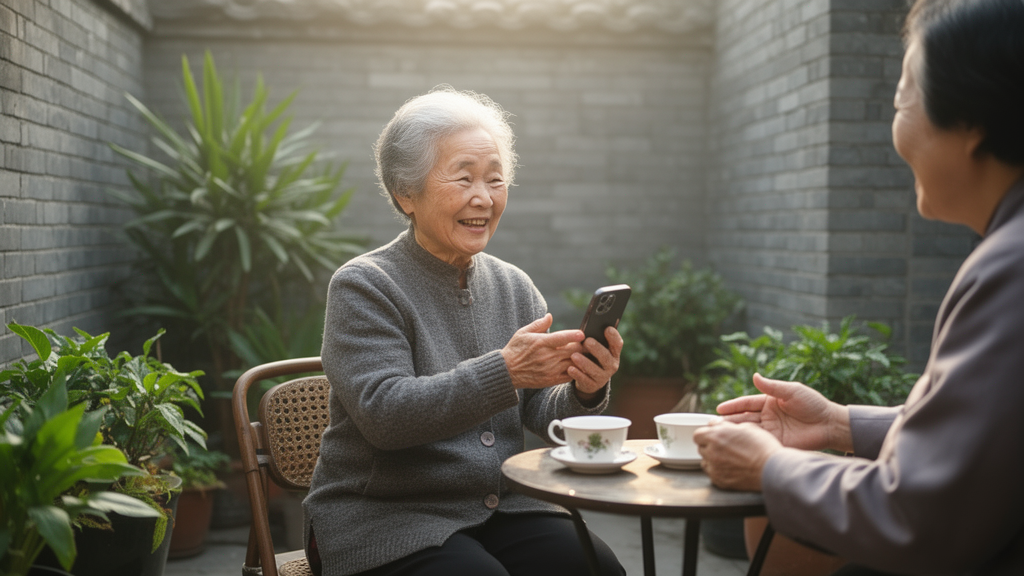
Staying socially active may do far more than lift the spirits in later life. A sweeping seven-year study of more than 14,000 middle-aged and older Chinese adults suggests that people who keep up both face-to-face and online social engagement experience measurably slower cognitive decline and slower physical frailty than those who withdraw from social life altogether. The research, published in the International Journal of Public Health, is among the first to track how these two very different forms of social participation evolve together over time and to link those patterns to the twin threats of aging: a fading mind and a weakening body.
The findings arrive at a moment when the arithmetic of global aging looks increasingly grim. According to the World Alzheimer Report 2023, the number of people living with dementia is projected to surge from 55 million in 2019 to 139 million by 2050, while annual costs are expected to climb from 1.3 trillion US dollars to 2.8 trillion by 2030. Frailty, a state of heightened vulnerability to falls, hospitalization, and disability, is likewise spreading, with an estimated global incidence of 43.4 new cases of frailty and 150.6 new cases of prefrailty per 1,000 person-years among community-dwelling older adults. Because cognitive decline and frailty share underlying biological mechanisms, researchers are intensifying the hunt for modifiable behaviors that might delay both processes at once.
Enter social activity, in two flavors. Offline social participation encompasses the classic building blocks of a connected life: interacting with friends, playing mahjong or cards, joining sports or community clubs, volunteering, attending educational courses, and taking part in local organizations. Online engagement, by contrast, involves using the internet as a social tool, along with digitally mediated activities such as online investment. Decades of research support the intuitive appeal of the first category, echoing the well-known use it or lose it principle: sustained mental, physical, and social activity appears to help maintain neural and physiological function. Social participation theory adds that these activities buffer stress and depression, themselves established risk factors for both cognitive decline and frailty. What remained unclear was how the two modes of engagement unfold jointly over the years, and whether their combination confers extra protection.
To find out, a team at Xi’an Jiaotong University mined the China Health and Retirement Longitudinal Study, a nationally representative survey of adults aged 45 and older that enrolled more than 17,000 participants across 28 provinces in 2011 and has followed them with face-to-face interviews roughly every two years. After exclusions, 14,340 participants formed the trajectory analysis sample, with outcome-specific samples of 10,323 for cognition and 13,960 for frailty. The researchers used group-based multi-trajectory modeling, a statistical technique that sorts individuals into latent groups sharing similar longitudinal patterns, to map the joint evolution of online and offline engagement between 2011 and 2018.
The modeling revealed three distinct social worlds within the cohort. Nearly half of participants, 47.8 percent, belonged to a Persistently Low Social Activity Engagement group, keeping little contact with either digital or in-person social arenas. Another 47.0 percent formed an Offline Social Activity Dominant group, participating in relatively more face-to-face activities while largely ignoring the internet. The final 5.2 percent, labeled the Online Social Activity Increasing group, combined growing online engagement with substantial offline participation. That third group stood out demographically: its members were younger, averaging 53.3 years at baseline, far more educated, far more urban, and far more affluent than the cohort overall, with 88.7 percent above the median household income and only 15.5 percent living in rural areas.
The health trajectories of these groups diverged sharply. Over the seven-year window, global cognition, measured as a standardized composite of memory, orientation, and executive function, declined significantly across the cohort, at a rate of 0.055 standard deviation units per year. Frailty, assessed through a 34-deficit index covering chronic diseases, physical function, mobility, and sensory impairments, increased at 0.095 standard deviation units per year. But relative to the persistently low-engagement group, the offline-dominant participants showed cognitive decline slowed by 0.010 standard deviation units per year and frailty progression slowed by 0.014 units per year. The online-increasing group fared dramatically better: their cognitive decline was attenuated by 0.044 units per year and their frailty progression by 0.041 units per year, roughly four times the protection seen in the offline group.
Domain-specific analyses sharpened the picture. The protective associations were most evident for memory, the cognitive function most closely tied to early dementia. The offline-dominant group showed memory decline slowed by 0.022 standard deviation units per year, while the online-increasing group’s memory decline was attenuated by 0.073 units per year, the strongest single effect in the study. The online group also experienced slower decline in executive function, though neither group showed significant protection for orientation. The authors interpret this pattern through the lens of cognitive reserve, the brain’s accumulated capacity to withstand pathology: diverse online and offline activities engage memory, executive control, and problem-solving, potentially building resilience against age-related deterioration.
Why might the digitally fluent group enjoy stronger protection? The researchers propose complementary pathways. Offline activities such as sports, clubs, and volunteering involve physical movement and social connection that help maintain muscle strength and mobility, countering the sarcopenia and functional decline that drive frailty. Online engagement, meanwhile, may work indirectly by enabling health information seeking, medication reminders, chronic disease self-monitoring, and easier communication with support networks. Together, digital engagement may boost health literacy and self-regulation while offline activity preserves the physical machinery of independence, with each mode potentially reinforcing the other over time. Notably, exploratory subgroup analyses found no significant effect modification by gender, age, urban or rural residence, or income, hinting that the associations hold broadly across the population, though the small size of the online group makes stratified estimates imprecise.
The team ran extensive sensitivity analyses to test the robustness of these associations, and the findings survived each one. Using raw rather than standardized scores, adjusting for baseline depressive symptoms, excluding participants with baseline cognitive impairment or frailty to reduce reverse causation, redefining online activity using internet use alone rather than including stock investment, and reconstructing the frailty index with stricter coding all left the conclusions materially unchanged. Still, the authors are careful about causation. Because social activity trajectories and health outcomes were measured over the same period, temporal precedence cannot be established; healthier people may simply be more able and inclined to socialize. Selective attrition also complicates the cognitive findings, since excluded participants were older, less educated, and had poorer baseline cognition. The results should therefore be read as longitudinal associations rather than causal effects.
The implications are nonetheless striking, particularly for health policy in rapidly aging societies. If integrated social engagement is even partly protective, then programs that pair accessible digital tools with community-based social, cognitive, and physical activities could become a scalable pillar of healthy aging strategy. But the study also carries a warning about inequality. The group showing the strongest associations was small and socioeconomically privileged, while most of the cohort, 88.4 percent with less than a high school education and 61.4 percent rural, remained largely offline. As health and social services digitize, unequal access to technology risks widening health disparities rather than closing them. The authors call for larger studies with richer measures of digital engagement, and for digital inclusion to be woven into healthy aging policy, ensuring that the cognitive and physical benefits of a connected life do not remain the preserve of the connected few.
Subject of Research: Associations of joint online and offline social activity trajectories with cognitive decline and frailty progression in aging adults in China
Article Title: Joint trajectories of online and offline social activity, cognitive decline, and frailty progression among middle-aged and older adults in China
Article References: Sun, X., Sun, D., Zhou, Z., & Lu, J. (2026). Joint trajectories of online and offline social activity, cognitive decline, and frailty progression among middle-aged and older adults in China. International Journal of Public Health, 71, Article 1610116. https://doi.org/10.3389/ijph.2026.1610116
Image Credits: AI Generated
DOI: 10.3389/ijph.2026.1610116
Keywords: social activity, cognitive decline, frailty, healthy aging, digital engagement, internet use, CHARLS, older adults, memory, cognitive reserve, public health, China
News Source: Beatrice Stafford. (October 16, 2026). Going Online and Getting Out: How Blended Social Lives Slow Aging in China. Scienmag.