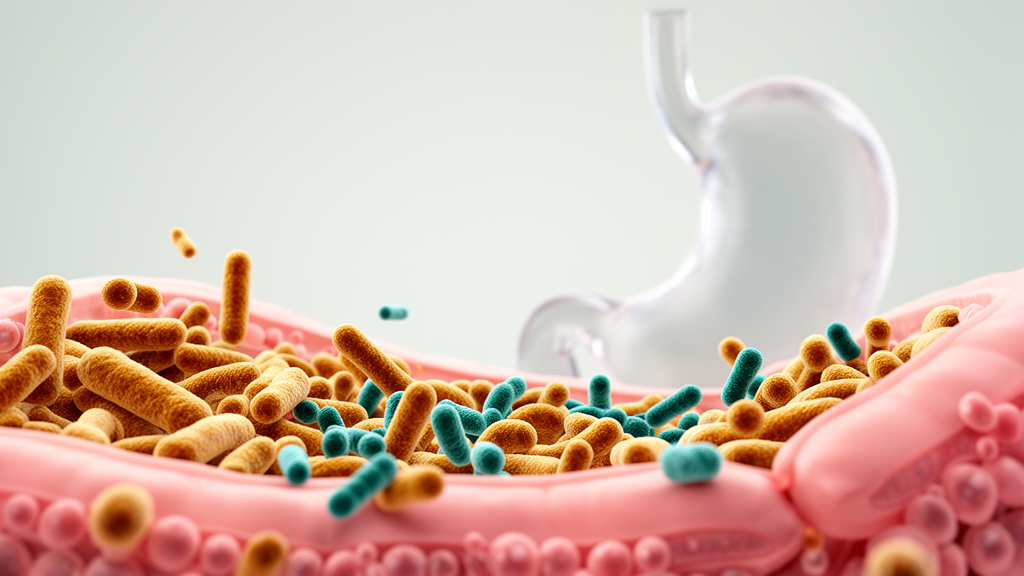
For decades, scientists have suspected that the trillions of microbes living in the human gut play a role in some of the most common yet poorly understood digestive complaints: irritable bowel syndrome and functional dyspepsia. Now, a team of researchers in China has taken a major step toward settling the question of whether these microbes actually cause the disorders or are merely innocent bystanders. Using a sophisticated genetic technique called bidirectional Mendelian randomization, the investigators identified five microbial taxa with potential causal links to these conditions, while also discovering that irritable bowel syndrome itself may reshape the composition of the gut microbiome.
The study, led by Yutong Cheng and Qiuai Shu of The Second Affiliated Hospital of Xi’an Jiaotong University and published in Experimental Biology and Medicine, addresses a persistent problem in microbiome research. Observational studies have repeatedly reported microbial alterations in patients with functional gastrointestinal disorders, but the findings have been frustratingly inconsistent. Some studies found lower abundances of certain bacteria in patients compared with healthy controls, while others reported the opposite pattern or no difference at all. Without a way to establish the direction of these associations, it remained unclear whether the reported microbial changes were causes, consequences, or simply correlates of the disorders.
Mendelian randomization offers a way around this impasse by exploiting the random allocation of genetic variants at conception. Because single nucleotide polymorphisms are inherited independently of environmental factors and remain stable throughout life, they can serve as natural instruments for testing whether an observational association between an exposure and an outcome is consistent with a causal effect. The researchers drew their genetic data from genome-wide association studies of gut microbiota involving 14,306 individuals and from the FinnGen biobank, which provided summary statistics for irritable bowel syndrome based on 187,028 individuals and for functional dyspepsia based on 194,071 individuals, all of European ancestry.
The team selected 196 bacterial traits classified from phylum to genus level and applied rigorous quality control criteria to identify suitable instrumental variables. They used a relaxed significance threshold of P less than 5.0 times 10 to the negative 6 to obtain enough variants, performed linkage disequilibrium clumping with a threshold of r squared less than 0.001 and a window size of 10,000 kilobases, and calculated F statistics to ensure that all instruments exceeded the conventional threshold of 10, minimizing weak instrument bias. The inverse-variance-weighted method served as the primary analysis, with weighted median estimation as an auxiliary approach and a battery of sensitivity analyses to assess robustness.
The results revealed a striking asymmetry between the two disorders. For irritable bowel syndrome, higher genetically predicted abundances of the order Bifidobacteriales were associated with a lower risk of the condition, with an odds ratio of 0.741 and a 95 percent confidence interval of 0.570 to 0.963. The genus Eubacterium ventriosum group showed a similar protective pattern, with an odds ratio of 0.684 and a confidence interval of 0.524 to 0.893. Both associations were supported by both the inverse-variance-weighted and weighted median estimators, strengthening the case for their reliability.
For functional dyspepsia, the picture was more complex. A higher genetically predicted abundance of the genus Lachnospiraceae NK4A136 group was associated with an increased risk of the disorder, with an odds ratio of 1.368 and a confidence interval of 1.086 to 1.722. In contrast, the family Desulfovibrionaceae and the order Desulfovibrionales were protective, with an odds ratio of 0.649 and a confidence interval of 0.471 to 0.893. The researchers noted that the Desulfovibrionaceae and Desulfovibrionales analyses used the same seven instrumental variants and yielded nearly identical estimates, suggesting these represent highly overlapping rather than independent signals.
Sensitivity analyses provided strong support for the validity of these findings. Cochran’s Q test showed little evidence of heterogeneity among the variant-specific causal estimates. The MR-Egger intercept tests, which detect directional horizontal pleiotropy, returned P values ranging from 0.698 to 1.000 across the five significant associations, providing no evidence that the results were driven by pleiotropic pathways. MR-PRESSO global tests detected no overall pleiotropy and identified no outlier variants. Leave-one-out analyses confirmed that no single genetic variant disproportionately influenced any of the associations.
The reverse direction of the analysis yielded equally intriguing results. When the researchers asked whether genetically predicted disease risk influenced microbial abundance, they found that irritable bowel syndrome risk was associated with lower abundances of the genera Turicibacter and Slackia. The Turicibacter association was supported by both estimators, with a beta of negative 0.167 and a confidence interval of negative 0.283 to negative 0.052 in the primary analysis. No robust reverse associations were observed for functional dyspepsia. This bidirectional pattern suggests that the relationship between gut microbes and irritable bowel syndrome may be a two-way street, with the disorder itself capable of reshaping the microbial community.
The biological plausibility of these findings is supported by existing experimental evidence. Certain Bifidobacterium species can generate gamma-aminobutyric acid, an inhibitory neurotransmitter that may influence visceral sensitivity through the microbiota-gut-brain axis. A randomized controlled trial previously reported that a specific Bifidobacterium strain improved abdominal pain in women with irritable bowel syndrome. The Eubacterium ventriosum group includes butyrate-producing bacteria that support epithelial barrier integrity and mucosal immune regulation. Experimental studies have shown that Turicibacter interacts bidirectionally with host serotonergic signaling, providing a possible mechanistic link to the gut-brain communication pathway.
The authors are careful to frame these findings as hypothesis-generating rather than definitive. They emphasize that the identified microbial taxa are candidates for further mechanistic and clinical validation rather than established risk factors or therapeutic targets. The study has limitations, including the restriction to European ancestry populations, the limited number of instrumental variants for some microbial traits, and the reliance on 16S rRNA gene sequencing, which constrains analysis to the genus level and above. The fecal samples used in the microbiome studies may not represent the microbial composition at the gastroduodenal site most relevant to functional dyspepsia. Future studies should replicate these associations in independent and ancestrally diverse cohorts, employ strain-resolved shotgun metagenomics, and evaluate candidate strains and metabolites in mechanistic models before advancing to adequately powered intervention trials. Such stepwise validation could ultimately inform the development of more targeted and individualized microbiota-based strategies for these common and debilitating disorders.
Subject of Research: Genetics
Article Title: Causal effects of gut microbiota on functional gastrointestinal disorders: a bidirectional Mendelian randomization study
Article References: Cheng, Y., Shu, Q., Wang, Z., Wu, J., Peng, Y., Xie, J., Liang, X., Tao, Z., Shi, H., Wei, Z., Wang, J., & Xie, N. (2026). Causal effects of gut microbiota on functional gastrointestinal disorders: a bidirectional Mendelian randomization study. Experimental Biology and Medicine, 251, Article 11023. https://doi.org/10.3389/ebm.2026.11023
Image Credits: AI Generated
Keywords: gut microbiota, Mendelian randomization, irritable bowel syndrome, functional dyspepsia, functional gastrointestinal disorders, GWAS, Bifidobacteriales, Eubacterium ventriosum group, Lachnospiraceae NK4A136 group, Desulfovibrionaceae, gut-brain axis, causality
News Source: Juliet Wilcox. (October 16, 2026). Gut Microbes and the Genetic Case for Causality in IBS and Functional Dyspepsia. Scienmag.