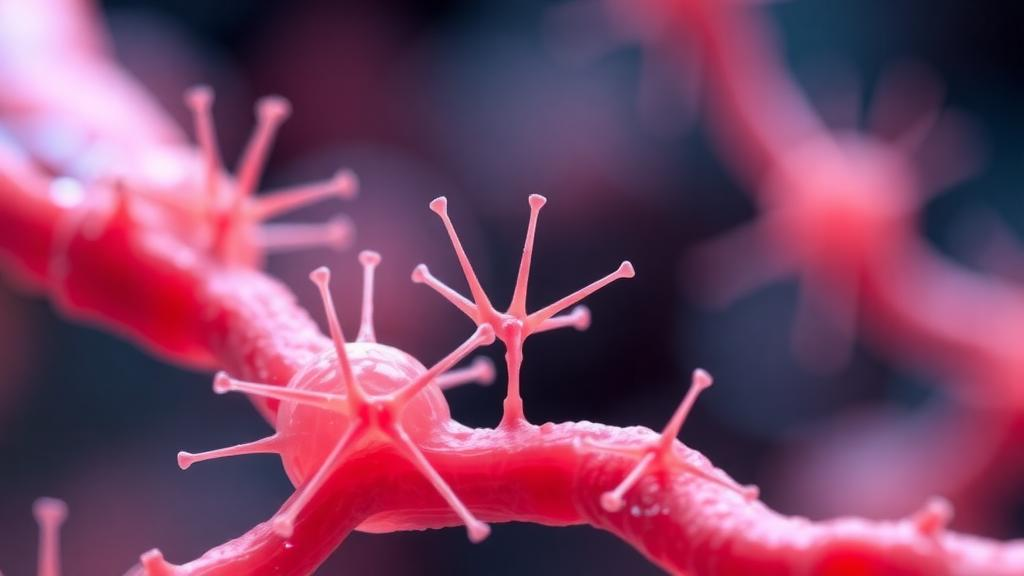
Deep inside the liver, the cells that line the bile ducts are equipped with a remarkable piece of biological engineering: a single, hair-like projection that extends from each cell surface into the flowing bile itself. These structures, known as primary cilia, have long been dismissed as evolutionary leftovers, but a comprehensive new review published in Nature Reviews Gastroenterology & Hepatology makes the case that they are among the most important sensory organelles in the biliary system. Written by Hannah Esser of the Medical University of Innsbruck and Erasmus MC, and Sofia Ferreira-Gonzalez of the University of Edinburgh, the review synthesizes decades of work showing that primary cilia act as chemosensors, mechanosensors and osmosensors, constantly sampling the composition, flow and tonicity of bile to keep the biliary tree in a state of delicate equilibrium. When these antennae fail, the consequences can be devastating, producing a family of disorders the authors call biliary ciliopathies.
Primary cilia are found on nearly every vertebrate cell, and their evolutionary roots run deep. Comparative phylogenetic studies of ciliary genes reveal that the basic blueprint of this organelle has been conserved across vast stretches of life’s history, underscoring how fundamentally important it is to cellular physiology. Structurally, the primary cilium is built around a microtubule-based skeleton called the axoneme, which grows out of a modified centriole known as the basal body. Unlike the beating, motile cilia that line the airways, primary cilia are generally non-motile, and their nine pairs of microtubules are arranged in the classic 9+0 configuration rather than the 9+2 arrangement that powers movement. The entire organelle is sheathed in a specialized extension of the plasma membrane, and its interior is physically separated from the cytoplasm at the base by a selective barrier called the transition zone, which functions as a gatekeeper controlling which proteins can enter.
Building and maintaining a cilium is an energy-intensive logistical operation. The organelle contains no machinery for protein synthesis, so every component must be ferried in from the cell body along the axonemal microtubules. This transport system, called intraflagellar transport, or IFT, uses molecular motors such as KIF3AB and KIF17 to haul cargo building blocks toward the ciliary tip, while dynein motors carry return traffic back to the base. Recent work characterizing the IFT cycle has revealed how trains of these motors are coordinated, and how the number of active motors governs transport velocity under load. A multi-protein complex known as the BBSome, named for its role in Bardet-Biedl syndrome, acts as a cargo adaptor that exports specific signalling proteins from the cilium, adding another layer of control. Disrupting any element of this delivery network can compromise the organelle’s composition and, by extension, its ability to relay signals.
The review emphasizes that cholangiocyte primary cilia are exquisitely positioned to monitor the biliary microenvironment, projecting directly into the lumen of the bile duct. Seminal experiments demonstrated that these cilia detect changes in luminal fluid flow and translate mechanical stimulation into intracellular calcium and cyclic AMP signals, establishing them as bona fide mechanosensors. The polycystin proteins, encoded by genes mutated in polycystic kidney disease, are central to this flow-sensing machinery, a discovery first made in kidney epithelial cells and later extended to the biliary system. On the chemical front, cilia carry an impressive array of receptors: the bitter-taste-like bile acid receptor TGR5 sits in the ciliary membrane, where its precise subcellular localization determines how cholangiocytes respond to bile acid signals, and P2Y12 purinergic receptors allow cilia to detect biliary nucleotides. Osmosensing is handled by ion channels such as TRPV4, which respond to changes in luminal tonicity and trigger bicarbonate secretion, a process critical to maintaining the so-called bicarbonate umbrella that protects cholangiocytes from the detergent-like toxicity of bile acids.
Beyond their sensory role, primary cilia serve as cellular command centres for key developmental and tissue-maintenance signalling pathways. The best studied of these is Hedgehog signalling, which requires the cilium for signal transduction in vertebrate cells. Components of the Hedgehog pathway must traffic through the ciliary compartment for the pathway to be activated, and proteins such as Numb have been shown to positively regulate the signal at the ciliary pocket. In the liver, Hedgehog signalling coordinates the behaviour of hepatic progenitor cells, modulates the response to bile duct injury and even influences hepatic lipid metabolism through GLI transcription factors. Cilia also regulate nutrient and growth pathways including mTORC1, which they control through Lkb1, and they maintain compartmentalized pools of cyclic AMP that differ from those in the rest of the cell, allowing vertebrate cells to interpret ciliary and extracellular cyclic AMP in distinct ways. Critically, cilia are coupled to the cell cycle: most cells resorb their cilium before entering mitosis, and experimental biosensors have shown that cilium persistence after the G1/S transition shapes how cells divide and differentiate.
When the structure or function of cholangiocyte cilia goes awry, the result is a biliary ciliopathy. The most prominent examples are the fibrocystic liver diseases that accompany polycystic kidney disorders. In autosomal recessive polycystic kidney disease, mutations in genes such as PKHD1 and DZIP1L, the latter encoding a transition-zone protein, produce dilated, malformed bile ducts through defective remodelling of the embryonic ductal plate. In autosomal dominant polycystic kidney and liver disease, mutations in genes encoding polycystin-1 and its functional effectors, including the glucosidase II alpha subunit GANAB, drive progressive hepatic cystogenesis. Recent mechanistic work has shown that a transforming growth factor beta axis linking the extracellular matrix to integrin signalling physically reconfigures the bile duct wall to promote cyst expansion, while abnormal positioning of ion transporters and water channels in the cyst-lining epithelium fuels fluid secretion into the cyst lumen. Syndromic ciliopathies add to this spectrum: Meckel-Gruber syndrome, frequently lethal in utero, features absent or defective cilia and gross liver malformations; Bardet-Biedl syndrome and Alström syndrome produce hepatic cystic and fibrotic changes alongside their multisystem features, with the ALMS1 protein shown to regulate TGF-beta signalling and cilium morphology; Joubert syndrome commonly involves congenital hepatic fibrosis; and Sensenbrenner syndrome, a cranioectodermal dysplasia, can progress to end-stage liver disease requiring transplantation.
The reach of ciliary dysfunction extends to acquired and neonatal biliary disease as well. Biliary atresia, the leading indication for paediatric liver transplantation, has long been considered an acquired inflammatory obstruction of the bile ducts, yet genome-wide sequencing of patients has uncovered a broad array of ciliary gene mutations in both syndromic and non-syndromic cases. Morphological studies have repeatedly documented abnormal cholangiocyte cilia in affected infants, and organoid models derived from biliary atresia tissue reveal delayed epithelial development and impaired barrier function. Neonatal sclerosing cholangitis caused by mutations in DCDC2, which encodes a protein that disrupts Wnt signalling when lost, further cements the link between ciliary and biliary pathology. Even in adult medicine, the review points to tantalizing connections: ciliary defects in cholangiocytes trigger sustained epidermal growth factor receptor signalling that drives proliferation and cystic lesions in experimental models, andXIAP-mediated degradation of the IFT protein IFT88 in hepatic stellate cells promotes fibrosis, suggesting that cilium loss in different liver cell populations converges on shared fibrogenic pathways.
Perhaps the most provocative frontier involves liver regeneration and cancer. Cholangiocytes have been identified as facultative liver stem cells capable of replenishing hepatocytes when hepatocyte regeneration fails, and the review argues that primary cilia are central regulators of the biliary regenerative response, including in the context of liver transplantation, where biliary injury, senescence and repair intersect. In cholangiocarcinoma, the outlook is strikingly different: ciliary loss appears to promote tumour growth, driven in part by dysregulated microRNAs that induce overexpression of the deacetylase HDAC6 and a cilia-degrading autophagy process called ciliophagy. Encouragingly, pharmacological HDAC6 inhibition restores ciliary expression and reduces tumour growth in preclinical models, providing proof of principle that the cilium itself can be a drug target. The organelle also participates in DNA damage response and repair, meaning that ciliary status may influence how biliary epithelial cells tolerate the genotoxic stress of chronic inflammation.
The methodological toolbox for studying cilia has expanded dramatically, and the review highlights resources that are accelerating discovery. Curated gene compendia such as CiliaCarta, the SYSCILIA gold standard and the predictive database CilioGenics now catalogue well over a thousand ciliary genes, while spatial proteomics has revealed intrinsic heterogeneity among primary cilia that was previously invisible. Advanced experimental platforms range from conditional mouse models with fluorescently labelled cilia to cholangiocyte organoids and functional ciliated cholangiocytes generated from human pluripotent stem cells, which together allow disease mechanisms to be dissected in human-relevant contexts. Computational simulations of ciliary dynamics in oscillatory flow are refining our understanding of how mechanical signals are encoded, and better fixation protocols are improving the reliability of ciliary immunostaining, an issue that has historically complicated comparisons between studies.
The overarching message of the review is one of therapeutic optimism tempered by unmet need. Most biliary ciliopathies currently lack treatments that address their underlying mechanisms; management relies on symptomatic interventions such as drainage of cysts, transplantation or supportive care. By defining the cilium as a signalling hub where mechanical, chemical and osmotic information converges on pathways such as calcium handling, cyclic AMP signalling, Hedgehog signalling, mTORC1 and TGF-beta, the authors lay the groundwork for interventions that could restore ciliary function or correct the downstream signalling errors it produces. With existing drugs already capable of modulating some of these nodes, and with ciliary biology increasingly understood as a common thread linking inherited fibrocystic disease to acquired conditions like sclerosing cholangitis, biliary atresia and post-transplant strictures, these cellular antennae may soon graduate from anatomical curiosities to clinically actionable targets in hepatology.
Subject of Research: The role of cholangiocyte primary cilia in biliary homeostasis and the pathogenesis of biliary ciliopathies
Article Title: Primary cilia: sensors of biliary homeostasis and disease
Article References: Esser, H., & Ferreira-Gonzalez, S. (2026). Primary cilia: sensors of biliary homeostasis and disease. Nature Reviews Gastroenterology & Hepatology. https://doi.org/10.1038/s41575-026-01262-0
Image Credits: AI Generated
DOI: 10.1038/s41575-026-01262-0
Keywords: primary cilia, cholangiocytes, bile ducts, biliary ciliopathies, intraflagellar transport, polycystic liver disease, Hedgehog signalling, biliary atresia, liver fibrosis, mechanosensing, TGR5, liver regeneration
News Source: Nathaniel Bowman. (October 13, 2026). Tiny Antennae on Bile Duct Cells Emerge as Master Sensors of Liver Health and Disease. Scienmag.