One of the most persistent headaches in synthetic biology is that a genetic circuit painstakingly tuned in one microbe often refuses to function in another. Bacteria and yeasts, separated by billions of years of evolution, read their genes according to fundamentally different rules, and the DNA control sequences that work beautifully in one are frequently meaningless to the other. Researchers at the Korea Advanced Institute of Science and Technology (KAIST) have now reported a way around this barrier: a synthetic promoter, the stretch of DNA that switches a gene on, that functions in both the bacterium Escherichia coli and the yeast Saccharomyces cerevisiae. The study, led by Professor Juyoung Lee of the Graduate School of Engineering Biology, was published in Nucleic Acids Research, with So-Hee Son, Soo Young Moon, and Nan-Yeong An of KAIST serving as co-first authors.
To understand why this matters, it helps to recall what a promoter actually does. For a microbe to manufacture a useful compound, whether a pharmaceutical ingredient, a fragrance molecule, or an industrial chemical, the genes encoding the production pathway must first be transcribed into RNA. The promoter sits immediately upstream of each gene and acts like a volume dial, determining how strongly the cellular transcription machinery engages. In E. coli, that machinery recognizes short, well-characterized DNA motifs positioned at precise distances from the transcription start site. In yeast, an entirely different set of proteins binds a different repertoire of sequence elements, and the architecture of the transcription start region differs as well. A promoter optimized for one host therefore typically shows little or no activity in the other, forcing engineers to redesign and revalidate their expression systems every time they switch organisms.
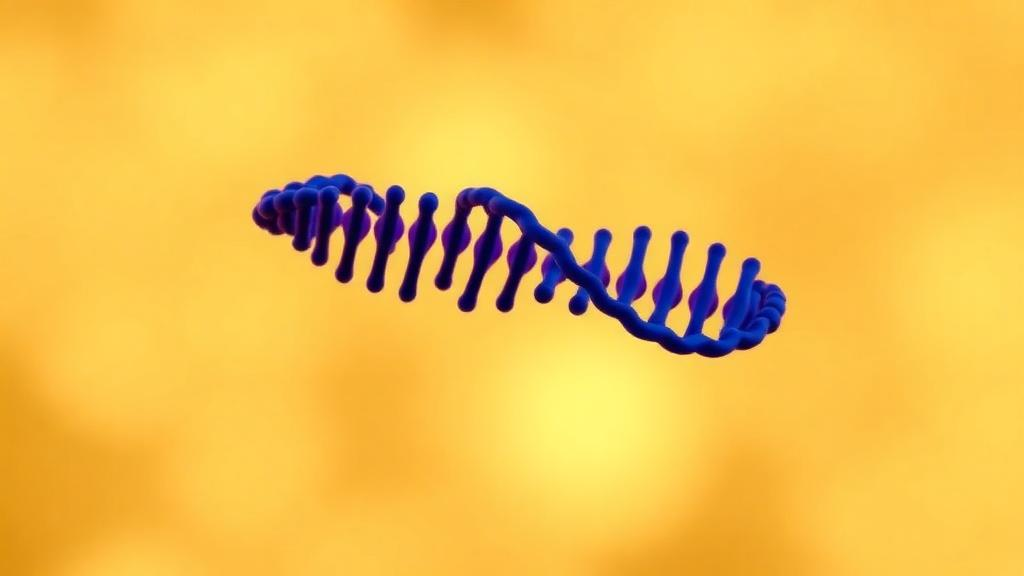
The KAIST team’s solution was to build what they call a hybrid promoter, a single DNA sequence that embeds the recognition elements of both kingdoms side by side. In effect, the construct is a shared control element written in two languages at once: the bacterial RNA polymerase and its associated factors can find the bacterial signals, while the yeast transcription apparatus can find the yeast signals, even though the two hosts interpret the surrounding sequence in completely different ways. Crucially, the design is modular. By varying the combination of the core promoter elements from each host and pairing them with translation initiation elements compatible with each organism, the researchers assembled a library of hybrid promoters whose strengths could be tuned deliberately rather than left to chance.
That tunability proved to be one of the most important features of the system. Synthetic biology depends on being able to dial gene expression up and down, because producing a complex compound often requires balancing the output of several enzymes so that intermediates do not accumulate or starve the pathway. The KAIST team showed that their hybrid promoter series spans a range of strengths from weak to strong, and, remarkably, that the relative hierarchy is preserved across hosts. A promoter combination that ranks strong in E. coli generally ranks strong in yeast as well. The researchers are careful to note what this does and does not mean: the two microbes do not necessarily produce equal absolute amounts of a compound, but the ordering of promoter strengths, the ranking from weakest to strongest, carries over from one organism to the other. That consistency is precisely what conventional, host-specific promoters fail to deliver.
To test whether the system could handle something more demanding than switching on a single gene, the team turned to a green pigment whose biosynthesis requires three genes acting in sequence. This kind of multi-step pathway is a realistic proxy for the metabolic engineering challenges faced in industry, where a single mis-tuned gene can throttle the entire production line. Under the strongest hybrid promoter, pigment output rose to roughly 3.1 times the level achieved under the weakest promoter in E. coli, and about 2.6 times in yeast. The result demonstrates that the cross-kingdom control element can regulate not just individual genes but coordinated, multi-gene compound production in both organisms. The team also confirmed that the promoters functioned in other types of bacteria and yeast, suggesting the approach generalizes beyond the two flagship hosts.
The practical implications reach into one of the central workflows of modern biotechnology: the design-build-test-learn cycle. In conventional metabolic engineering, when a production strain underperforms, researchers may move the pathway to a different host, perhaps from a bacterium to a yeast, in search of better yields or more favorable metabolism. Each such move has traditionally demanded selecting a new promoter for every gene, redesigning the expression system from scratch, and screening combinations host by host, a process that consumes considerable time and resources. With a promoter system whose relative strength hierarchy is maintained across hosts, the same expression design can be carried intact into multiple organisms. Performance can then be compared directly, side by side, across phylogenetically distant microbes, allowing researchers to identify which host is genuinely best suited to producing a given compound without rebuilding the genetic architecture each time.
This capability is expected to be particularly valuable in biofoundries, the automated facilities that design, construct, and test engineered microbes at high throughput. Because a single expression design can be validated rapidly and benchmarked across diverse hosts, the search space for the optimal combination of genes, host organism, and pathway tuning can be explored far more efficiently. Once the best-performing configuration is identified, the optimized pathway can be scaled up for biomanufacturing. The researchers anticipate applications in the production of pharmaceuticals, eco-friendly materials, high-value compounds, and other products, where choosing the right microbial chassis early in development can save months of iterative engineering.
Professor Juyoung Lee framed the advance in terms of predictability. What matters about the work, she said, is that it provides a common design principle, one that lets researchers predict a promoter’s relative strength even when the microbe changes. She added that she expects the approach to speed up biomanufacturing by making it faster to design and compare a range of microbial cell factories. That framing captures the shift the study represents: from treating each host as a bespoke engineering problem to treating gene expression as a transferable design that behaves consistently across biological boundaries.
The authors are careful not to overclaim. Improving the actual output of a production strain will still require host-specific tuning, since factors such as enzyme folding, cofactor availability, and metabolic flux differ between organisms and no promoter system can erase those differences. What the hybrid promoter eliminates is the need to redesign the control layer from scratch with every host change. The paper, titled Modular synthetic cross-kingdom promoters enable coordinated expression in Escherichia coli and Saccharomyces cerevisiae, first appeared online on September 8 and was published in the journal on September 23. The work was supported by the Ministry of Science and ICT and the National Research Foundation of Korea through the Bio & Medical Technology Development Program and the Basic Science Research Program, with additional support from the Korea-US Collaborative Research Fund funded by the Ministry of Science and ICT and the Ministry of Health & Welfare. If the approach continues to generalize, the humble promoter, long a host-locked component, may become a portable part that travels freely across the tree of life.
Subject of Research: Cross-kingdom synthetic promoters enabling coordinated gene expression in bacteria and yeast
Article Title: KAIST develops a genetic switch that works in both bacteria and yeast
Article References: KAIST develops a genetic switch that works in both bacteria and yeast. (n.d.). Original publication
Image Credits: AI Generated
DOI: Not provided
Keywords: synthetic biology, hybrid promoter, Escherichia coli, Saccharomyces cerevisiae, gene expression, metabolic engineering, microbial cell factories, biomanufacturing, biofoundries, KAIST, Nucleic Acids Research, cross-kingdom gene control
News Source: Juliet Wilcox. (October 13, 2026). Single Genetic Switch Drives Gene Expression in Both Bacteria and Yeast. Scienmag.