• HOME
  • NEWS
  • EXPLORE
    • CAREER
      • Companies
      • Jobs
    • EVENTS
    • iGEM
      • News
      • Team
    • PHOTOS
    • VIDEO
    • WIKI
  • BLOG
  • COMMUNITY
    • FACEBOOK
    • INSTAGRAM
    • TWITTER
Wednesday, August 19, 2026
BIOENGINEER.ORG
No Result
View All Result
  • Login
  • HOME
  • NEWS
  • EXPLORE
    • CAREER
      • Companies
      • Jobs
        • Lecturer
        • PhD Studentship
        • Postdoc
        • Research Assistant
    • EVENTS
    • iGEM
      • News
      • Team
    • PHOTOS
    • VIDEO
    • WIKI
  • BLOG
  • COMMUNITY
    • FACEBOOK
    • INSTAGRAM
    • TWITTER
  • HOME
  • NEWS
  • EXPLORE
    • CAREER
      • Companies
      • Jobs
        • Lecturer
        • PhD Studentship
        • Postdoc
        • Research Assistant
    • EVENTS
    • iGEM
      • News
      • Team
    • PHOTOS
    • VIDEO
    • WIKI
  • BLOG
  • COMMUNITY
    • FACEBOOK
    • INSTAGRAM
    • TWITTER
No Result
View All Result
Bioengineer.org
No Result
View All Result
Home NEWS Science News Cancer

30-year puzzle in breast cancer solved

Bioengineer by Bioengineer
May 2, 2014
in Cancer
Reading Time: 2 mins read
0
Share on FacebookShare on TwitterShare on LinkedinShare on RedditShare on Telegram

In a new study published today in Cell Reports, scientists at the Fred Hutchinson Cancer Research Center demonstrate that mice lacking one copy of a gene called CTCF have abnormal DNA methylation and are markedly predisposed to cancer. CTCF is a very well-studied DNA binding protein that exerts a major influence on the architecture of the human genome, but had not been previously linked to cancer.
30-year puzzle in breast cancer solved

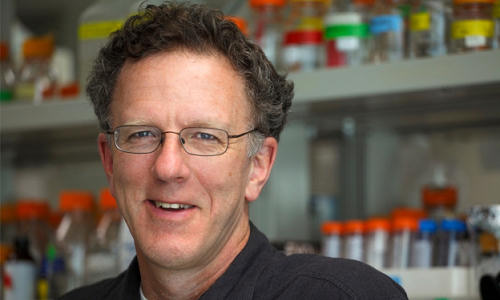
Dr. Christopher Kemp

Over 30 years ago, frequent loss of one copy of chromosome 16 was first reported in breast cancer but the gene or genes responsible remained to be identified. Dr. Gala Filippova, staff scientist at Fred Hutch and co-author of the study, originally cloned the human CTCF gene and mapped it to chromosome 16, within the same region that is frequently lost in human cancers. That same year, Dr. Chris Kemp of the Human Biology Division at Fred Hutch, co-authored a paper demonstrating that, in contrast to the predominant “two hit” theory on tumor suppressor genes, it was not necessary to lose both copies, one hit was enough. However, CTCF was ruled out as a candidate breast cancer gene on chromosome 16 simply because it did not conform to the “two hit” model.

“In this current study we explored whether loss of just one copy of the CTCF gene could trigger epigenetic changes and predispose to tumor development,” said Dr. Filippova of Fred Hutch. The study demonstrates that indeed, loss of one copy of CTCF caused large scale epigenetic changes and greatly enhanced tumor formation in multiple tissues. In addition, recent large scale analysis of the human cancer genome revealed that deletions or mutations in CTCF are one of the most common events in breast, endometrial, and other human cancers.

Collectively, these findings indicate that CTCF is major tumor suppressor gene in human cancer and highlights the power of the mouse models to prove that a candidate gene has a function in cancer. These results have implications for understanding the origin of DNA methylation alterations in cancer and suggest that epigenetic instability may both precede and accelerate the emergence of cancer.
“This answers a 30 year riddle in cancer research”, said Dr. Kemp. “And it shows once again, as we first showed in 1998, that one hit is enough”.

Story Source:

The above story is based on materials provided by Fred Hutchinson Cancer Research Center.

Share12Tweet8Share2ShareShareShare2

Related Posts

βIII-Tubulin’s Roles in Tumor Biology and Cancer Drug Resistance Revealed

August 19, 2026

Workshop Advances Pediatric Therapeutic Development for Osteosarcoma

August 18, 2026

Internationally recognized physician-scientist Charles W.M. Roberts named St. Jude president and CEO

August 18, 2026

Cancer Treatment Saves Lives Without Dangerous Side Effects

August 18, 2026
Please login to join discussion

POPULAR NEWS

  • Harvard’s George Church to Present at 13th ARDD Meeting in Boston

    29 shares
    Share 12 Tweet 7
  • Tuning Endergonic Triplet Photosensitization Enables Bicyclo[1.1.0]butane–Alkene Cycloadditions

    29 shares
    Share 12 Tweet 7
  • China’s tire-derived chemical pollution may rise despite growing vehicle electrification

    29 shares
    Share 12 Tweet 7
  • βIII-Tubulin’s Roles in Tumor Biology and Cancer Drug Resistance Revealed

    29 shares
    Share 12 Tweet 7

About

We bring you the latest biotechnology news from best research centers and universities around the world. Check our website.

Follow us

Recent News

Harvard’s George Church to Present at 13th ARDD Meeting in Boston

Tuning Endergonic Triplet Photosensitization Enables Bicyclo[1.1.0]butane–Alkene Cycloadditions

China’s tire-derived chemical pollution may rise despite growing vehicle electrification

Subscribe to Blog via Email

Enter your email address to subscribe to this blog and receive notifications of new posts by email.

Join 85 other subscribers
  • Contact Us

Bioengineer.org © Copyright 2023 All Rights Reserved.

Welcome Back!

Login to your account below

Forgotten Password?

Retrieve your password

Please enter your username or email address to reset your password.

Log In
No Result
View All Result
  • Homepages
    • Home Page 1
    • Home Page 2
  • News
  • National
  • Business
  • Health
  • Lifestyle
  • Science

Bioengineer.org © Copyright 2023 All Rights Reserved.