Colorectal cancer remains one of the deadliest malignancies worldwide, accounting for well over a million new diagnoses each year, and yet the molecular events that drive its growth are still being mapped in painstaking detail. Now, a team of researchers in China has added a striking new piece to that map: a circular RNA molecule called circMTCL1 that behaves like a built-in brake on tumor cells. According to a study published in the journal Medical Oncology, circMTCL1 is dramatically depleted in colorectal cancer tissue compared with healthy neighboring tissue, and restoring it in laboratory models sharply curtails the ability of cancer cells to proliferate, migrate, and invade. The finding positions this previously underappreciated molecule as both a potential diagnostic marker and a candidate target for future therapies.
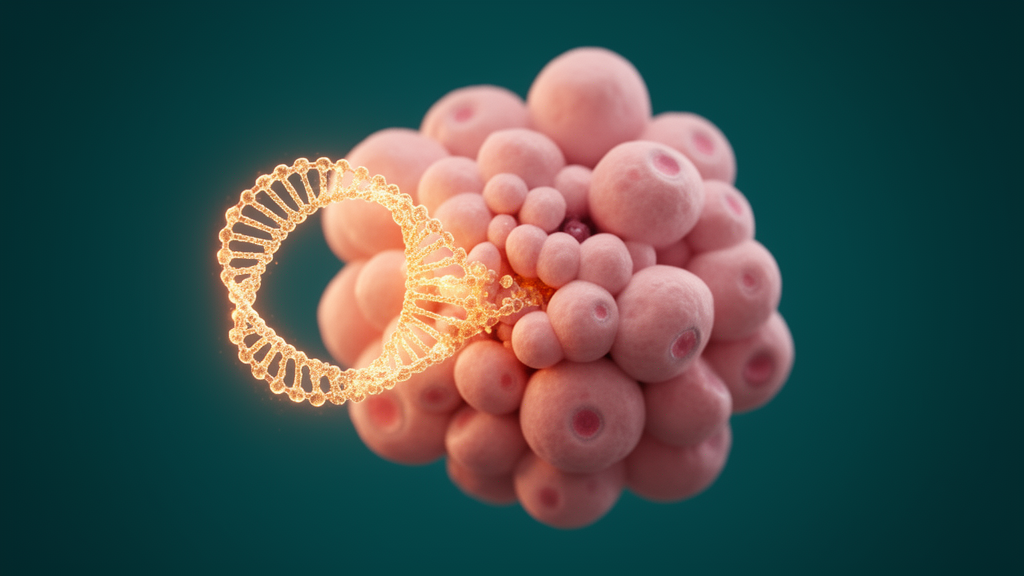
Circular RNAs, or circRNAs, are an unusual class of genetic material. Unlike the linear messenger RNAs that carry instructions for building proteins, circRNAs are produced when a stretch of RNA is spliced so that its ends join together, forming a closed loop. That loop makes them extraordinarily stable, because the enzymes that normally chew up RNA from its ends cannot get a grip on a molecule with no ends. For decades these loops were dismissed as transcriptional noise, but researchers have come to appreciate that many circRNAs play active roles in regulating gene expression, and that their dysregulation is a recurring theme in cancer biology.
The new study, led by Liyuan Liu and Dan Jiang of the People’s Hospital of Ningxia Hui Autonomous Region and Ningxia Medical University, together with colleagues, focused on circMTCL1, a loop derived from the MTCL1 gene. Using quantitative real-time PCR to compare tumor samples with adjacent normal tissue, the team found that circMTCL1 was present at roughly seventeen-fold lower levels in colorectal cancer tissue, a difference that was highly statistically significant. The magnitude of that depletion immediately suggested that the molecule might be doing something protective, and that tumors may benefit from silencing it.
To test that idea, the researchers manipulated circMTCL1 levels in colorectal cancer cell lines, both by forcing the cells to overproduce the loop and by using small interfering RNAs to knock it down. The results were unambiguous. When circMTCL1 was overexpressed, cell proliferation dropped by nearly four-fold, while migration and invasion fell by roughly 1.6-fold and 2-fold respectively, all with strong statistical support. In other words, the cells became markedly less aggressive in every behavior that matters for tumor progression and metastatic spread. Conversely, removing circMTCL1 released the cells to behave more like unchecked malignancies.
But the team wanted to know how the loop was exerting this effect, and the answer lies in one of the most elegant regulatory tricks in molecular biology. Many circRNAs act as competing endogenous RNAs, often described as molecular sponges. MicroRNAs are tiny RNA fragments that silence genes by binding to complementary sequences in messenger RNAs, and a single microRNA can restrain many different targets. When a circRNA carries matching binding sites, it can soak up that microRNA, preventing it from reaching its real targets and thereby indirectly boosting the expression of genes the microRNA would otherwise suppress.
Through a battery of complementary techniques, including fluorescence in situ hybridization to locate the molecule inside cells, nuclear-cytoplasmic fractionation to confirm where it resides, RNA immunoprecipitation to show physical association, and dual-luciferase reporter assays to prove direct binding, the researchers established that circMTCL1 specifically sponges a microRNA called miR-145-5p. Freed from microRNA suppression, the gene encoding Bone Morphogenetic Protein 3, or BMP3, was upregulated by about 1.6-fold when circMTCL1 was overexpressed. BMP3 is itself known from earlier work to suppress colon tumor formation, acting through signaling cascades that restrain cell growth, which makes the entire circuit coherent: more circMTCL1 means less free miR-145-5p, which means more BMP3, which means slower tumor growth.
The downstream consequences of this circuit were traced to the MAPK signaling pathway, a canonical growth-promoting cascade that relays signals from the cell surface to the nucleus through a chain of protein activations. The MAPK pathway, encompassing the well-known RAS, RAF, MEK, and ERK proteins, is one of the most frequently hyperactivated pathways in human cancer, and drugs targeting components of this cascade have transformed treatment for several tumor types. In this study, the researchers showed that circMTCL1 overexpression suppresses the activation of the MAPK pathway, providing a mechanistic bridge between a non-coding RNA loop and one of cancer biology’s central growth engines.
What makes the finding particularly compelling is the context from previous research. CircMTCL1 has a very different reputation in other cancers: an earlier study found that it promotes progression in advanced laryngeal squamous cell carcinoma by stabilizing a different protein and activating beta-catenin signaling. The new work shows that the same circular RNA can act as a tumor suppressor in colorectal cancer, a reminder that the function of a regulatory RNA is dictated by the network of microRNAs and target genes available in a given tissue rather than by any intrinsic property of the loop itself. Context, in molecular oncology as elsewhere, is everything.
The study also carries implications for diagnosis. Because circRNAs are structurally stable and often detectable in tissue and body fluids, molecules that are consistently and dramatically altered in tumors are attractive candidates for biomarker development. A seventeen-fold depletion in tumor tissue, confirmed with receiver operating characteristic analysis in the study’s framework, suggests that circMTCL1 levels could potentially help distinguish malignant from normal colorectal tissue, although the authors are careful to frame this as a foundation for future work rather than a ready-made clinical test. Validation in large, independent patient cohorts would be an essential next step before any diagnostic or prognostic claims could enter practice.
Therapeutically, the road is longer but the destination is intriguing. Restoring a tumor-suppressive RNA in cancer cells is a formidable delivery challenge, since RNA molecules are fragile and must reach the cytoplasm of tumor cells in sufficient quantities to matter. Yet the conceptual payoff is significant: rather than blocking an oncogene, which most current drugs do, a circMTCL1-based approach would re-engage the body’s own anti-growth circuitry, lifting BMP3 expression and damping MAPK signaling simultaneously. As the authors conclude, their findings offer a new perspective on how colorectal cancer arises and point toward a molecular axis that could, with enough engineering and validation, become a genuine target for clinical intervention in a disease that urgently needs new options.
Subject of Research: The tumor-suppressive role of the circMTCL1/miR-145-5p/BMP3 axis in colorectal cancer via MAPK signaling
Article Title: The circMTCL1/miR-145-5p/BMP3 axis suppresses colorectal cancer cell growth by mediating the MAPK signaling pathway
Article References: Liu, L., Jiang, D., Jia, Y., Dong, Y., & Zhao, W. (2026). The circMTCL1/miR-145-5p/BMP3 axis suppresses colorectal cancer cell growth by mediating the MAPK signaling pathway. Medical Oncology, 43(11), Article 328. https://doi.org/10.1007/s12032-026-03414-3
Image Credits: AI Generated
DOI: 10.1007/s12032-026-03414-3
Keywords: circMTCL1, colorectal cancer, circular RNA, miR-145-5p, BMP3, MAPK pathway, ceRNA, tumor suppressor, microRNA sponge, non-coding RNA, biomarker, Medical Oncology
News Source: Nathaniel Bowman. (October 9, 2026). Circular RNA Revealed as Hidden Brake on Colorectal Cancer Growth. Scienmag.