Few genes loom as large in Alzheimer’s disease research as apolipoprotein E, or APOE, the strongest genetic risk factor for the most common form of dementia. Carried on chromosome 19, APOE comes in three major flavors in humans: APOE2, APOE3, and APOE4. APOE4 raises the risk of developing Alzheimer’s disease substantially, while APOE2 appears to protect against it. Yet most people who carry the risky allele do not carry it in isolation. Millions of individuals worldwide are heterozygous, holding one APOE4 allele alongside another variant, and the most intriguing of these combinations is APOE2/4, in which the strongest known protective allele sits on the same pair of chromosomes as the strongest known risk allele. What actually happens inside the brains of people with this mixed genetic hand has remained largely a mystery, because the two alleles could, in principle, cancel each other out, add together, or interact in entirely unexpected ways.
A new study published in Nature Communications by Kai Chen, Na Zhao, and colleagues at the Mayo Clinic in Jacksonville, Florida, together with collaborators at St. Jude Children’s Research Hospital, the University of Texas Health Science Center at San Antonio, the University of Tennessee Health Science Center, and Washington University in St. Louis, set out to answer that question directly. The team engineered mice to carry different pairs of human APOE alleles and crossed them with 5xFAD mice, a widely used model that develops amyloid-beta plaques rapidly and mirrors key features of Alzheimer’s pathology. Crucially, the researchers compared littermates, animals born to the same parents and raised under identical conditions, so that genetic background and environment were held constant. This littermate-controlled design is a technical strength that eliminates many of the confounds that have muddied earlier comparisons between independently bred mouse lines.
The genotypes examined formed a precise ladder of comparison. APOE3/3 mice served as the neutral baseline, representing the most common human genotype. APOE2/3 mice carried one protective allele. APOE3/4 mice carried one risk allele, and APOE2/4 mice carried both a risk and a protective allele together. By measuring amyloid-beta deposition, immune cell behavior, brain-wide protein abundance, and blood-borne lipid profiles across all four groups, the investigators could ask not only what each allele does on its own but also what happens when the protective and risky variants are forced to share a single animal, and a single set of cells.
The results were striking. APOE3/4 mice showed the expected worsening: more amyloid-beta deposited in their brains, a pattern of microglial activation that the authors describe as maladaptive, and, notably, reduced physical interaction between microglia and the plaques themselves. Microglia are the brain’s resident immune cells, and in Alzheimer’s disease their behavior is a double-edged sword. When functioning well, they cluster around amyloid plaques, walling them off and helping to clear debris. When they adopt a maladaptive state, they release inflammatory signals that can damage nearby neurons while failing to contain the plaques effectively. The finding that APOE4-bearing microglia engaged less with plaques suggests that the risk allele may impair this containment process, allowing amyloid pathology to spread more freely through brain tissue.
In APOE2/4 mice, however, this entire cascade of damage was visibly blunted. Amyloid deposition was reduced relative to APOE3/4 animals, the maladaptive microglial response was attenuated, and microglial interactions with plaques were partially restored. In other words, the protective allele did not merely coexist with the risk allele; it actively counteracted many of the harmful effects that APOE4 would otherwise produce. This is a biologically meaningful result, because it demonstrates that APOE alleles are not simply additive. The presence of a single APOE2 copy was sufficient to shift the disease trajectory of an APOE4-carrying brain toward a milder phenotype, at least in this mouse model.
To understand what was happening at the molecular level, the team performed proteomic analysis, cataloguing the abundance of thousands of proteins across the brains of the different genotypes. The proteomic profile of APOE2/4 mice turned out to resemble that of APOE3/3 and APOE2/3 mice far more closely than that of APOE3/4 mice. This is a remarkable finding in itself: at the level of the brain’s entire protein landscape, the protective allele appeared to pull the APOE4-carrying brain back toward normalcy. It suggests that APOE2’s influence is broad, touching pathways that extend well beyond amyloid handling alone, and that the molecular consequences of carrying APOE4 can be substantially overridden by its protective partner.
One particularly intriguing detail emerged from the proteomics data. Myelin basic protein, or MBP, a core structural component of the fatty sheaths that insulate nerve fibers and enable rapid electrical signaling, was increased in APOE2/3 mice compared with other genotypes. This elevation was not observed in APOE2/4 mice, however, indicating that the protective allele’s effects on myelin-related biology depend on which allele it is paired with. Myelin integrity is increasingly recognized as relevant to Alzheimer’s disease, since myelin breakdown is an early feature of brain aging and may both contribute to and result from neurodegeneration. The genotype-specific pattern of MBP abundance hints that different APOE allele combinations may shape white matter health in distinct and previously underappreciated ways.
The study did not stop at the brain. Because APOE is a lipid transport protein expressed throughout the body, the researchers also conducted plasma lipidomics, measuring the full complement of fats circulating in the blood of each genotype group. Here a different picture emerged. APOE3/4 and APOE2/4 mice shared alterations in their plasma lipid profiles, suggesting that at the systemic level, the presence of the APOE4 allele leaves a detectable lipid signature regardless of whether APOE2 is also present. Meanwhile, APOE2/3 mice displayed their own distinct lipidomic signature, separate from both APOE4-carrying groups. This dissociation between brain and blood is scientifically important: it implies that the protective action of APOE2 in the brain does not simply mirror its systemic metabolic effects, and that peripheral lipid changes may not be reliable proxies for the cerebral processes that matter most in Alzheimer’s disease.
Taken together, these findings define what the authors call allele interaction-dependent effects of APOE on brain and systemic phenotypes. The concept matters because human genetics is full of heterozygous combinations that are often treated as averages of their parts. This study shows that for APOE, at least, such averaging is misleading. The APOE2/4 genotype, which in human epidemiological studies carries an intermediate risk between APOE3/3 and APOE4/4, now has a mechanistic explanation grounded in observable biology: the protective allele attenuates amyloid pathology, reshapes microglial behavior, and normalizes the brain proteomic landscape, even while systemic lipid metabolism retains traces of the risk allele’s influence. The work provides a framework for interpreting the biological consequences of the APOE2/4 genotype that goes well beyond statistical risk estimates.
The implications for therapy are tantalizing, though the authors and the field alike will caution that mouse models, even well-controlled ones, capture only part of Alzheimer’s biology, and results in 5xFAD mice do not guarantee translation to human patients. Still, the study strengthens the case for APOE-targeted interventions, an area of intense current interest that includes gene therapy approaches designed to convert APOE4 into APOE3 or APOE2-like variants, and small molecules aimed at modulating APOE lipidation. If a single copy of APOE2 can meaningfully blunt the toxicity associated with APOE4 in a living brain, then strategies that mimic even a fraction of that protective activity could hold real therapeutic promise. The research was supported by the Cure Alzheimer’s Fund, the Mayo Clinic Kogod Center on Aging, and the National Institutes of Health, and it exemplifies how carefully controlled animal genetics, combined with modern proteomics and lipidomics, can turn an epidemiological puzzle into a mechanistic roadmap for one of medicine’s most stubborn diseases.
Subject of Research: Interaction between the APOE2 and APOE4 alleles in modulating amyloid pathology and neuroinflammation in an Alzheimer's disease mouse model
Article Title: APOE2 attenuates APOE4-associated amyloid pathology and related toxicity in a mouse model of Alzheimer’s disease
Article References: Chen, K., Chen, Y., Ren, Y., Wang, Z., Huang, Y., Pan, M., Li, Z., Casey, M. C., Qiao, W., Shi, J., Kong, D., Xhafkollari, G., Santhakumar, H., Wetmore, A. M., Thompson, E. A., Wang, X., Dickson, D. W., Holtzman, D. M., Bu, G., … Zhao, N. (2026). APOE2 attenuates APOE4-associated amyloid pathology and related toxicity in a mouse model of Alzheimer’s disease. Nature Communications. https://doi.org/10.1038/s41467-026-78407-x
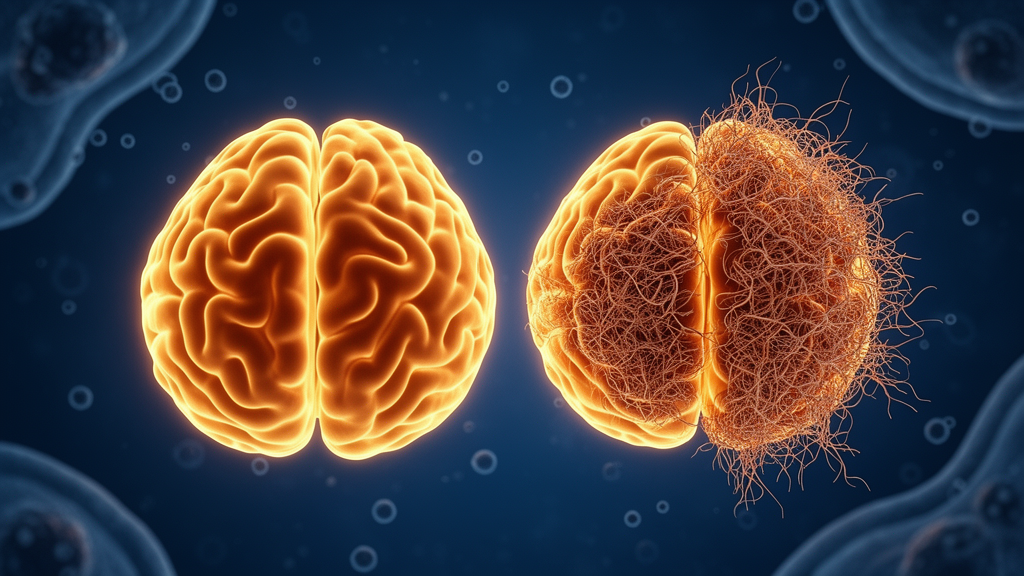
Image Credits: AI Generated
DOI: 10.1038/s41467-026-78407-x
Keywords: Alzheimer's disease, APOE, APOE2, APOE4, amyloid-beta, microglia, proteomics, lipidomics, myelin basic protein, 5xFAD mouse model, genetics, neurodegeneration
News Source: Cassandra Pierce. (October 8, 2026). Protective APOE2 Gene Softens the Damage Wrought by Alzheimer’s Risk Gene APOE4. Scienmag.