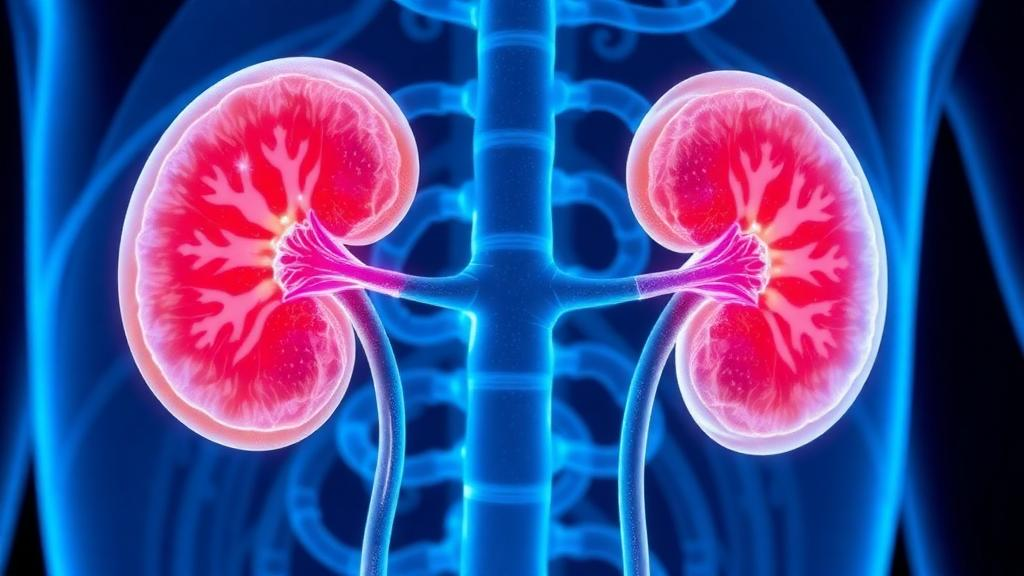
Chronic kidney disease quietly erodes the lives of hundreds of millions of people worldwide, and one of its most stubborn mysteries has been why injured kidneys so often fail to heal. A new study published in Nature Aging by Hyeonsoo Jeong, Blue B. Lake, Kun Zhang and colleagues offers a striking answer rooted in the deepest layers of cellular memory: the DNA methylome. By mapping chemical marks on DNA across individual cells in both human and mouse kidneys, the team discovered that diseased kidney cells, particularly the hardworking tubular epithelial cells that form the bulk of the organ, show hallmarks of dramatically accelerated biological aging. In effect, a chronically injured kidney does not merely malfunction; its epithelial cells appear epigenetically older than the person they belong to, blurring the line between disease and aging itself.
The technical achievement behind this finding is considerable. The researchers applied a combinatorial indexing method called sciMET to generate single-cell DNA methylation profiles from 57,619 high-quality nuclei, drawn from twelve human donors, seven with kidney disease and five healthy age-matched controls, and six mice, three young and three aged. Each cell yielded a median of roughly 0.91 million measured CpG sites, about 3.1 percent of the human genome, enough to identify every major kidney cell type from methylation patterns alone. The team then layered on matched single-cell multiome data capturing gene expression and chromatin accessibility, spatial transcriptomics maps generated with the Xenium platform covering nearly 384,000 cells, and a cutting-edge technique called single-cell methyl-Hi-C that simultaneously reads DNA methylation and three-dimensional genome folding within the same nucleus.
DNA methylation is uniquely suited to this kind of investigation because it provides a stable, long-term record of cellular identity and history. Unlike gene expression, which fluctuates moment to moment, methylation patterns persist across cell divisions and can be used to estimate biological age through so-called epigenetic clocks. When the researchers applied a principal-component-based version of the Horvath multi-tissue clock to their single-cell methylomes, they found that sample-level methylomes from diseased kidneys were significantly age-accelerated compared with healthy controls. But the real surprise emerged when they broke the signal down by cell type. Epithelial cell pseudobulk methylomes from disease patients showed an average clock acceleration of 4.8 years relative to healthy controls, a difference that was highly statistically significant, while non-epithelial populations such as fibroblasts and immune cells showed no meaningful acceleration at all.
Crucially, the team ruled out a simple compositional explanation. Diseased kidneys do contain more fibroblasts and immune cells than healthy ones, but the proportion of epithelial cells was similar between groups, indicating that the accelerated aging of epithelial cells reflects cell-intrinsic epigenetic change rather than a shifting cellular census. The finding was independently validated using bulk whole-genome bisulfite sequencing data from laser-microdissected kidney compartments. After using the single-cell atlas to deconvolve cell-type proportions in those bulk samples, the researchers confirmed that age acceleration was most pronounced in tubulointerstitial tissue, which is enriched for the very tubular epithelial cells flagged in the single-cell analysis.
The cross-species design added an evolutionary dimension to the story. Comparing human and mouse methylomes across 40,284 one-to-one orthologous genomic bins, the team found that core renal physiology is governed by evolutionarily stable methylation patterns, conserved at transcription start sites and Polycomb-repressed chromatin where silencing of alternative lineage programs maintains cell identity. But epithelial cell types displayed significantly greater inter-species methylation divergence than non-epithelial populations, concentrated in distal enhancer regions with weaker underlying sequence conservation. Divergent proximal tubule regions were enriched for motifs of stress-response regulators such as AP-1 and MYC, and for functional terms tied to genome maintenance, protein repair and cellular senescence. This suggests that the very regulatory elements most prone to evolutionary drift are also those governing stress responses, potentially explaining why human epithelial cells are especially vulnerable to age-related epigenetic decay.
In the aging mouse kidney, the atlas revealed that epigenetic decay strikes with remarkable selectivity. Regulatory elements that are unique to individual cell types, particularly low-methylated regions functioning as distal enhancers, gained methylation with age far more rapidly than elements shared across cell types. Even more telling, the magnitude of age-related methylation change at a cell type’s specific enhancers tracked how closely related the observing cell type was on the epigenetic dendrogram: the regulatory regions defining closely related cell types were the most vulnerable to age-associated dysregulation. The result is a progressive blurring of epigenetic identity, in which one cell type drifts toward the methylation signature of its neighbors. Strikingly, these age-associated differentially methylated regions were significantly enriched within chromatin regions that become accessible after kidney injury, identifying regulatory loci responsive to both aging and injury.
Zooming in on the proximal tubule, the segment of the nephron most critical for solute reabsorption and most vulnerable in chronic disease, the researchers compared altered-state and healthy-state cells within the same donors, a design that controls for genetics, age and sex. They identified nearly 9,000 differentially methylated regions, with a trend toward methylation gain, and found that methylation changes correlated inversely with the expression of neighboring genes. Single-molecule co-methylation analysis revealed that altered-state cells had reduced coordination among neighboring CpG sites and increased methylation entropy, a signature of eroding methylome integrity. The genes most affected were preferentially those lacking CpG islands, a class typically buried in repressive heterochromatin whose misexpression has previously been linked to degenerative aging. Moreover, the transcriptional program of altered tubule cells overlapped significantly with age-associated gene expression changes measured across 72 nondiseased human kidneys spanning ages 20 to 90, directly linking the diseased state to a normal aging program.
Spatial transcriptomics then anchored these molecular changes to tissue geography. Using Xenium maps of healthy, acutely injured and chronically diseased specimens, the team identified distinct repair niches: an early repair niche enriched in acute kidney injury samples showing stress-response and cell-cycle transcription factor activity, and a failed repair niche enriched in chronic disease showing activity of BHLHE40, MYC and MITF alongside elevated WNT signaling, a pathway associated with fibrosis. Genes that were hypermethylated and silenced in altered tubule cells, including PCK1, a key gluconeogenic enzyme essential for normal tubule function, mapped to healthy niches, while hypomethylated, upregulated genes involved in cell polarity and adhesion localized to the failed repair niches, consistent with a mesenchymal-like shift in the diseased epithelium.
Perhaps the most technically ambitious component was the single-cell methyl-Hi-C analysis, which captured both methylation and over 300 million long-range chromosomal contacts from a healthy reference donor. It revealed that epithelial cells rely more heavily on short-range chromatin contacts than non-epithelial cells, implying a greater dependence on local three-dimensional genome organization for gene regulation. When the researchers overlaid disease-associated methylation and expression changes onto this healthy reference architecture, they found that genes upregulated in altered tubule cells were enriched within tubule-specific inactive B compartments, while downregulated genes sat in active A compartments. They identified 107 regions consistent with a putative loss of epigenetic repression, containing inflammatory chemokines such as CXCL1, CXCL2 and CXCL3, profibrotic genes including ITGA2 and ANTXR1, and state-transition transcription factors like HMGA2 and BACH2. Notably, plasma levels of proteins encoded by several of these genes, including DSC2, DSG2 and TIMP2, were negatively associated with estimated glomerular filtration rate in more than 54,000 UK Biobank participants, tying these molecular events to clinically relevant kidney function.
The authors are candid about the limitations: the mouse aging and injury models cannot fully capture human chronic disease, the mouse cohort included only males despite known sex differences in tubule biology, the human disease cohort was small and heterogeneous, and the three-dimensional chromatin reference came from a single donor. Overlapping signatures of injury, inflammation and dedifferentiation also preclude definitive attribution of the aging-like state to true cellular senescence. Nevertheless, the atlas delivers a foundational resource and a compelling unifying idea: chronic kidney disease drives tubular epithelial cells into an aging-like epigenetic state, marked by eroding methylation integrity, loosened three-dimensional chromatin repression and spatially localized failed repair. If future longitudinal work confirms that this epigenetic drift is causal rather than merely correlative, preserving methylome integrity in epithelial cells could become a therapeutic strategy for slowing the progression of kidney disease, and perhaps of aging itself.
Subject of Research: Single-cell DNA methylation and 3D genome mapping of human and mouse kidneys across aging and disease
Article Title: A cross-species single-cell kidney epigenome atlas reveals epithelial-dominant aging-like states in disease
Article References: Jeong, H., Lake, B. B., Diep, D., Li, X., Yan, Q., Gisch, D. L., Kaushal, M., Reinert, S., Eadon, M. T., Gaut, J. P., Jain, S., & Zhang, K. (2026). A cross-species single-cell kidney epigenome atlas reveals epithelial-dominant aging-like states in disease. Nature Aging. https://doi.org/10.1038/s43587-026-01221-z
Image Credits: AI Generated
DOI: 10.1038/s43587-026-01221-z
Keywords: epigenetics, DNA methylation, kidney disease, chronic kidney disease, epigenetic clock, single-cell multiomics, tubular epithelial cells, chromatin architecture, aging, spatial transcriptomics, proximal tubule, repair niches
News Source: Ophelia Keating. (October 8, 2026). Diseased Kidneys Age Faster at the Cellular Level, Single-Cell Epigenome Atlas Reveals. Scienmag.