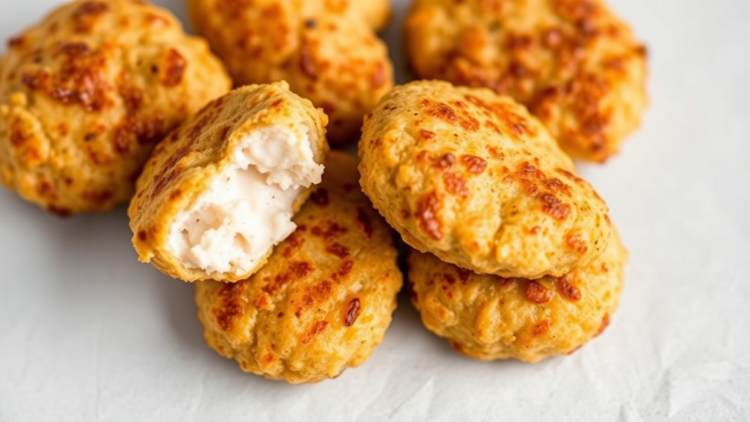
Researchers in Pakistan have shown that an edible coating made from fish scale gelatin and ajwain seed extract can dramatically improve the shelf life, oxidative stability, microbial safety, color, and sensory appeal of chicken nuggets stored under refrigeration. The study, published in Food Science of Animal Resources, examined combinations of fish scale gelatin, a halal-compatible protein extracted from the scales of the freshwater Rohu carp (Labeo rohita), and aqueous ajwain (Trachyspermum ammi) extract, a seed spice rich in phenolic compounds and the essential oil component thymol. Over a 14-day refrigerated storage trial, the formulation combining 2 percent ajwain extract with 3 percent fish scale gelatin consistently outperformed all other treatments and an uncoated control, offering a natural, halal, and sustainable alternative to synthetic preservatives in processed meat products.
The motivation behind the work reflects two converging pressures in the global food industry. First, demand for halal-certified ingredients is rising sharply, particularly in Muslim-majority countries where mammalian gelatin derived from pig skin or non-halal cattle sources is unacceptable. Second, gelatin production worldwide, estimated at between 3.75 and 4 million metric tons annually, still relies overwhelmingly on mammalian raw materials, with non-mammalian sources accounting for only about 2 percent of total output. Poultry by-products alone generate roughly 9.5 million tons of material each year that could serve as alternative gelatin feedstock, and fish processing waste, including scales, represents a similarly underutilized reservoir of collagen suitable for extraction. By sourcing gelatin from Rohu fish scales collected at local fish markets in Faisalabad, the researchers turned a low-value by-product into a functional food ingredient.
Ajwain brings its own biochemical arsenal to the coating. The seeds of this Apiaceae family spice contain 2 to 4 percent essential oil, with thymol as the dominant active compound, alongside p-cymene, gamma-terpinene, and alpha- and beta-pinene. The seeds also carry appreciable quantities of phenolics, flavonoids, tannins, alkaloids, and saponins, plus minerals such as calcium, iron, and phosphorus. Traditionally used against gastrointestinal and respiratory ailments, ajwain exhibits well-documented antimicrobial, antioxidant, anti-inflammatory, and antihypertensive properties. Embedding such bioactive compounds in an edible coating delivers them directly to the food surface, the site where oxidation and microbial contamination typically begin, rather than dispersing them throughout the bulk of the product where they are less effective.
The experimental design was thorough. Fish scales were washed, treated with 1 percent food-grade acetic acid for 40 minutes to swell the collagen, and then extracted in distilled water at a 1:7 ratio in a 60 degree Celsius water bath for two hours. The filtrate was concentrated, dried, and ground into gelatin powder. Ajwain seeds were soaked overnight in distilled water, ground, and filtered through muslin cloth to yield the aqueous extract. Fresh chicken mince was marinated, shaped into nuggets, coated with one of six AE-FSG combinations ranging from 1 percent ajwain with 2 percent gelatin up to 2 percent ajwain with 3 percent gelatin, and deep-fried. Nuggets were then stored refrigerated for 14 days and sampled at days 0, 3, 7, and 14.
Antioxidant performance was assessed using the DPPH radical scavenging assay and total phenolic content measured by the Folin-Ciocalteu method. At day 0, nuggets coated with AE2% plus FSG3% recorded the highest radical scavenging activity and the highest phenolic content, while the uncoated control recorded the lowest. Although antioxidant capacity declined in all samples over storage, a pattern attributed to the depletion of antioxidant compounds through oxidative reactions, the coated nuggets maintained significantly higher DPPH values and phenolic levels than controls throughout the trial. The phenolic compounds contributed by ajwain extract, sheltered within the gelatin film matrix, degraded more slowly than they would in an unprotected system, effectively extending the product’s intrinsic antioxidant defenses.
Lipid oxidation, the principal chemical culprit behind rancidity in cooked meat, was tracked with two complementary assays: thiobarbituric acid reactive substances (TBARS), which quantify malonaldehyde as a marker of secondary oxidation, and peroxide value (POV), which measures lipid hydroperoxides formed during primary oxidation. Both indicators rose steadily in all samples during refrigeration, but coated nuggets, and especially the AE2% plus FSG3% group, showed significantly lower TBARS and POV values at every interval. The authors attribute this dual protection to the antioxidant constituents of ajwain, which interrupt the free radical chain reactions driving peroxide formation, and to the oxygen-barrier behavior of the gelatin film, which physically limits oxygen diffusion to the nugget surface. Similar findings have been reported for pomegranate peel, quinoa flour, and black cumin coatings in other meat systems.
Microbiological results were equally striking. Total aerobic counts rose with storage time in all samples, but uncoated controls consistently carried the highest microbial loads while the AE2% plus FSG3% nuggets carried the lowest. Coliform bacteria, a hygiene indicator group, were either undetectable or present at very low levels in the best-coated samples early in storage and remained significantly below control levels throughout. The effect likely stems from two mechanisms working in tandem: the direct antimicrobial action of thymol and other ajwain phenolics against bacterial membranes and metabolic enzymes, and the gelatin film’s suppression of oxygen and moisture transfer across the nugget surface, conditions that otherwise favor bacterial proliferation.
Color and sensory analyses confirmed the practical value of the coating. Hunter colorimeter readings showed that coated nuggets retained higher L* lightness, a* redness, and b* yellowness values than controls, indicating better color stability over the two-week period, with the natural pigments of ajwain contributing to the yellow component. A trained 15-member sensory panel, using a nine-point hedonic scale after formal training sessions, rated coated nuggets significantly higher than uncoated ones for appearance, texture, odor, taste, and overall acceptability, with the advantage persisting across the entire storage trial. Improved texture and odor scores align with the reduced lipid oxidation and microbial growth, both of which are major drivers of off-flavor and surface deterioration in fried chicken products.
The statistical analysis, a two-way ANOVA with treatment and storage day as fixed factors followed by Fisher’s LSD post-hoc comparisons, confirmed that treatment and time effects were significant at p < 0.05 for every parameter measured, with all experiments run in triplicate. This rigor strengthens the central conclusion that coating formulation, not random batch variation, drove the observed differences. The study also situates itself within a growing literature on bioactive edible coatings, including chitosan-gelatin-starch composites with bitter orange peel extract, aloe vera coatings, and citrus honey treatments, all of which support the concept that surface-delivered natural preservatives can rival or exceed conventional synthetic additives in maintaining meat quality.
The broader implications extend beyond chicken nuggets. The work demonstrates a circular-economy pathway in which fish processing waste is upgraded into a halal gelatin carrier, paired with a locally grown medicinal spice, and deployed as an active packaging layer for a globally popular convenience food. For processors, this could translate into longer refrigerated shelf life, reduced food waste, cleaner ingredient labels free of synthetic antioxidants such as BHT, and access to halal-sensitive markets. For consumers, it promises nuggets that stay safer, tastier, and more visually appealing for up to two weeks in the refrigerator. While scale-up questions remain, including coating application at industrial speeds and cost optimization of gelatin extraction, the study provides compelling evidence that fish scale gelatin fortified with 2 percent ajwain extract is an effective, natural, and culturally appropriate preservation technology for modern meat products.
Subject of Research: Fish gelatin and ajwain extract edible coatings for extending the shelf life and quality of chicken nuggets
Article Title: Natural fish gelatin-ajwain edible coatings improve shelf life and quality of chicken nuggets
Article References: Siddiq, M., Bilal, M., Husnain, G., Shabbir, A., Zeeshan, M., Bajwa, M. A., Ramadan, M. F., & Arshad, M. S. (2026). Natural fish gelatin-ajwain edible coatings improve shelf life and quality of chicken nuggets. Food Science of Animal Resources, 46(1), Article 89. https://doi.org/10.1007/s44463-026-00093-6
Image Credits: AI Generated
DOI: 10.1007/s44463-026-00093-6
Keywords: edible coating, fish gelatin, ajwain, chicken nuggets, shelf life, lipid oxidation, antioxidant activity, microbial stability, food safety, halal ingredients, sensory quality, meat preservation
Cite Scienmag News
APA
MLA
Chicago
Alan Morgan. (September 21, 2026). Fish Scale Gelatin and Ajwain Coatings Extend Chicken Nugget Shelf Life. Scienmag. https://scienmag.com/fish-scale-gelatin-and-ajwain-coatings-extend-chicken-nugget-shelf-life/
Alan Morgan. “Fish Scale Gelatin and Ajwain Coatings Extend Chicken Nugget Shelf Life.” Scienmag, 21 September 2026, https://scienmag.com/fish-scale-gelatin-and-ajwain-coatings-extend-chicken-nugget-shelf-life/. Accessed 21 September 2026.
Alan Morgan. “Fish Scale Gelatin and Ajwain Coatings Extend Chicken Nugget Shelf Life.” Scienmag. September 21, 2026. https://scienmag.com/fish-scale-gelatin-and-ajwain-coatings-extend-chicken-nugget-shelf-life/
Copy citation
Download RIS
Tags: ajwainantioxidant activitychicken nuggetsedible coatingfish gelatinfood safetyhalal ingredientslipid oxidationmeat preservationmicrobial stabilitysensory qualityshelf life