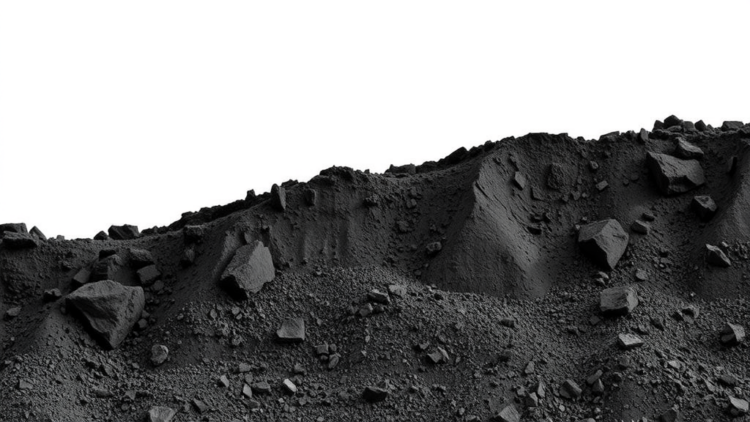
An aluminium industry waste stream that could one day replace scarce cement ingredients has just received a remarkably accessible environmental check-up, and the tool that did it cost nothing to license. In a new study published in Discover Green Chemistry, researcher Juhyun Lee of the Ministry of Climate, Energy and Environment in the Republic of Korea demonstrates that a fully open, script-based life cycle assessment workflow can deliver screening-level climate results for vitrified bauxite residue, or VBR, that closely reproduce a published industrial-scale process model. The reproduced global warming potential came out at 0.497 kilograms of carbon dioxide equivalent per kilogram of VBR, within roughly five percent of the 0.472 kilograms reported by the benchmark study that relied on conventional commercial tools.
The significance of that five-percent agreement extends well beyond a single material. Conventional life cycle assessment depends heavily on proprietary software and commercial background databases such as ecoinvent or GaBi, resources that are financially out of reach for many small and medium-sized enterprises, public institutions, and independent practitioners. This has made ex-ante assessment, the practice of estimating environmental impacts before a technology reaches commercial maturity, something of a specialist activity. The new work shows that openLCA, the Brightway Python framework, and the freely available European Reference Life Cycle Database, ELCD 3.2, can be stitched together into a transparent, reproducible pipeline that lowers those barriers dramatically.
Vitrified bauxite residue itself is a compelling case. Bauxite residue is the caustic red waste left behind when alumina is extracted from bauxite ore, and billions of tonnes of it sit in global storage facilities. Vitrification, melting the residue at around 1200 degrees Celsius in an electric induction furnace, transforms it into a glassy material that could serve as a supplementary cementitious material, a class of additives that includes the fly ash rapidly disappearing from supply as coal plants close. Because the cement and construction sector accounts for nearly 37 percent of global energy-related carbon dioxide emissions, waste-derived alternatives like VBR are strategically important. Yet at low technology readiness levels, no industrial operating data exist, which is precisely where early screening matters most.
The methodological heart of the study lies in how the open toolchain handles data plumbing. A well-known pitfall arises when importing ELCD data into Brightway: ELCD separates elementary flows into many compartment-specific sub-flows, distinguishing, for example, carbon dioxide emissions to indoor versus outdoor air, or discharges to freshwater, seawater, and groundwater, whereas the default Brightway biosphere database groups these more coarsely. ELCD contains 56 carbon dioxide-related elementary flows against only 21 in the default structure, so naive mapping can silently merge flows and destroy characterisation factors. Lee’s workflow solves this by importing each flow through openLCA’s IPC server interface using its unique identifier, or UUID, preserving a strict one-to-one correspondence and ensuring impact results that match those computed directly in openLCA.
The foreground model represents an industrial vitrification plant through a chain of mixing, pelletising, furnace processing, cooling, and milling. Rather than employing expensive process simulators like Aspen Plus, the furnace was modelled from first-principles thermodynamics, summing reaction enthalpy, sensible heat, and moisture evaporation into a minimum heat requirement of roughly 0.54 kilowatt-hours per kilogram of VBR. Assuming a best-available-technology efficiency of 75 percent, consistent with well-operated industrial induction furnaces, the implied electricity demand was about 0.73 kilowatt-hours per kilogram. Direct furnace emissions of carbon dioxide, arising from limestone decomposition and coke oxidation, were estimated stoichiometrically at 0.138 kilograms of carbon dioxide equivalent per kilogram of VBR.
One subtlety the study highlights is the role of milling. Pilot-scale measurements suggested grinding energy of about 0.67 kilowatt-hours per kilogram of VBR, nearly the same order as furnace electricity, so scale effects could not be ignored. A dedicated scale-up based on the Bond Work Index method, using grindability data for blast furnace ironmaking slag as a proxy and assuming product fineness of 50 micrometres, was applied to estimate industrial milling demand. Transport of raw materials was modelled uniformly at 0.05 tonne-kilometres per kilogram of VBR, while bauxite residue itself carried no upstream burden under the cut-off approach appropriate for waste materials.
The sensitivity analysis delivered perhaps the most striking finding. Varying the electricity mix across five ELCD configurations spanning a broad range of grid carbon intensities changed total global warming potential roughly four-fold, from 0.19 kilograms of carbon dioxide equivalent per kilogram of VBR for Norway’s almost entirely hydropower-based grid to 0.81 for Poland’s coal-dominated system. France, with 78 percent nuclear generation, yielded 0.26. By contrast, furnace efficiency and uncertainty in direct emission estimates exerted a smaller but non-negligible influence, shifting results by around ten percent. Since the ELCD electricity mix reflects pre-2020 European conditions, differences between the open workflow and the benchmark model were largely explained by grid carbon intensity alone.
Non-climate impact categories told a more cautious story. While global warming potential, fossil fuel potential, and ozone depletion potential tracked the reference results closely, categories such as freshwater and marine ecotoxicity, human toxicity, and land occupation showed substantial discrepancies, with several systematically lower in the open model. Inspection revealed that ELCD contains 105 dummy processes, limited upstream linkage, and no elementary flows mapped to agricultural land occupation at all. Because toxicity indicators depend heavily on trace emission speciation, the lower scores reflect database coverage rather than genuinely lower environmental burdens. The study is explicit that these indicators require further validation with updated and multiple background databases before firm conclusions can be drawn.
The practical payoff is accessibility. All data, model parameters, and analysis scripts are publicly available in a GitHub repository, meaning that any laboratory, startup, or regulatory body with Python skills can replicate, audit, or adapt the workflow for comparable high-temperature waste-derived materials. The author cautions that the contribution is methodological rather than numerical: the specific VBR inventory is not directly transferable, and new applications demand case-specific data, assumptions, and validation. The workflow is also demonstrated only with ELCD 3.2; extending it to other openLCA-compatible databases such as USLCI would require additional harmonisation and benchmarking.
Still, the message is clear. As the world races to decarbonise construction materials, thousands of candidate technologies at laboratory and pilot scale need early environmental triage, and proprietary assessment tools cannot scale to meet that demand affordably. This study shows that a careful combination of open software, preserved data identifiers, and physically grounded foreground modelling can produce decision-relevant climate screening results under data scarcity, while honestly flagging where open data fall short. For emerging green cement chemistries and similar energy-intensive recycling routes, transparent environmental screening is no longer a luxury reserved for well-funded organisations.
Subject of Research: An open-source life cycle assessment workflow for early environmental screening of vitrified bauxite residue as a supplementary cementitious material.
Article Title: A fully open workflow for early environmental screening of vitrified bauxite residue
Article References: Lee, J. (2026). A fully open workflow for early environmental screening of vitrified bauxite residue. Discover Green Chemistry, 1(1), Article 19. https://doi.org/10.1007/s44509-026-00021-3
Image Credits: AI Generated
DOI: 10.1007/s44509-026-00021-3
Keywords: vitrified bauxite residue, life cycle assessment, open source, ex-ante LCA, ELCD, Brightway, openLCA, supplementary cementitious materials, global warming potential, electricity mix, green chemistry, construction materials
Cite Scienmag News
APA
MLA
Chicago
Bethany Barker. (September 21, 2026). Free Open-Source Workflow Matches Costly Software in Screening Bauxite Residue’s Climate Footprint. Scienmag. https://scienmag.com/free-open-source-workflow-matches-costly-software-in-screening-bauxite-residues-climate-footprint/
Bethany Barker. “Free Open-Source Workflow Matches Costly Software in Screening Bauxite Residue’s Climate Footprint.” Scienmag, 21 September 2026, https://scienmag.com/free-open-source-workflow-matches-costly-software-in-screening-bauxite-residues-climate-footprint/. Accessed 21 September 2026.
Bethany Barker. “Free Open-Source Workflow Matches Costly Software in Screening Bauxite Residue’s Climate Footprint.” Scienmag. September 21, 2026. https://scienmag.com/free-open-source-workflow-matches-costly-software-in-screening-bauxite-residues-climate-footprint/
Copy citation
Download RIS
Tags: Brightwayconstruction materialsELCDelectricity mixex-ante LCAglobal warming potentialgreen chemistryLife Cycle Assessmentopen-sourceopenLCAsupplementary cementitious materialsvitrified bauxite residue