Researchers report that metformin, one of the most widely prescribed drugs in the world, can dial down the runaway inflammatory signaling that drives a rare but devastating genetic condition known as STAT1 gain-of-function disease, by fundamentally rewiring the metabolism of dendritic cells, the sentinels of the immune system. The new study, published in Cell Death & Discovery, offers a mechanistic explanation for why an old diabetes drug might benefit patients whose immune systems are trapped in a permanent antiviral state, and it adds fresh momentum to the growing field of immunometabolism, where cellular energy handling is treated not as background housekeeping but as a master regulator of immune behavior.
STAT1 gain-of-function disease is caused by mutations in the gene encoding signal transducer and activator of transcription 1, a protein that sits at the receiving end of type I interferon signaling. In a healthy immune system, interferons are emergency messengers: when a cell detects viral invasion, it releases interferon, which instructs neighboring cells to switch on hundreds of interferon-stimulated genes that establish an antiviral state. STAT1 is the intracellular relay that carries this instruction from the interferon receptor at the cell surface to the DNA in the nucleus. The gain-of-function mutations lock the relay partially in the on position. Even in the absence of any infection, STAT1 accumulates in the nucleus, interferon-stimulated genes remain constitutively active, and the body behaves as though it is fighting a virus that never clears. The clinical consequences, first systematically described in 2011 and now known to underlie many cases of what was historically called chronic mucocutaneous candidiasis disease, include recurrent fungal and viral infections, autoimmunity, enteropathy, interstitial lung disease, and a strikingly elevated risk of aneurysms and cancers of the immune system. Because the mutation is dominant and acts by amplifying normal signaling rather than destroying the protein, simply removing the gene is not an option, and the condition is often severe enough that hematopoietic stem cell transplantation, with all its risks, has been the only curative approach.
The new work focuses on dendritic cells, the professional antigen-presenting cells that patrol tissues, swallow debris and pathogens, and then travel to lymph nodes to present captured fragments to T lymphocytes. Dendritic cells are uniquely sensitive to type I interferon, which matures them from quiet scouts into inflammatory commanders. In STAT1 gain-of-function, dendritic cells exist in a chronic state of interferon-driven activation, and this chronicity is thought to fuel much of the autoimmune and tissue-destructive pathology seen in patients. The researchers set out to determine whether the inflammatory program in these cells could be disengaged not by blocking interferon signaling directly, but by manipulating the metabolic machinery that fuels it.
The tool they chose was metformin. For decades the first-line therapy for type 2 diabetes, metformin works in large part by inhibiting complex I of the mitochondrial electron transport chain, gently restricting the cell’s capacity to generate ATP through oxidative phosphorylation. The resulting mild energetic stress activates AMP-activated protein kinase, or AMPK, the cell’s fuel gauge, which responds by shifting metabolism toward catabolic, glucose- and fatty-acid-oxidation-based energy production while suppressing anabolic, growth-oriented programs. Over the past fifteen years it has become clear that immune cells are exquisitely dependent on these metabolic switches. Activated dendritic cells normally abandon oxidative phosphorylation in favor of aerobic glycolysis, the rapid-burn sugar metabolism that supports the biosynthetic demands of inflammation. Metformin, by stressing mitochondrial respiration and activating AMPK, counteracts this glycolytic shift and pushes cells back toward a calmer, oxidative metabolic profile.
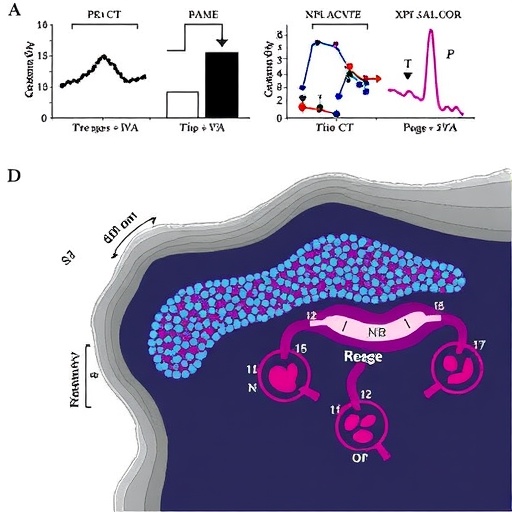
In their experiments, the researchers used dendritic cells carrying STAT1 gain-of-function mutations and demonstrated that metformin treatment produced what they describe as an immunometabolic rewiring: the drug attenuated the type I interferon-driven inflammatory phenotype that defines the disease state. At the molecular level, this means dampening the constitutive activity of interferon-stimulated genes and reducing the production of the inflammatory mediators that activated dendritic cells normally pour out, including the cytokines and chemokines that recruit and polarize T cells. The study’s central insight is that the pathological interferon signaling in STAT1 gain-of-function is not merely a linear signaling problem that must be blocked at the receptor or at STAT1 itself; it is embedded in, and supported by, a metabolic state that can be pharmacologically disassembled from an entirely different angle.
This angle matters because directly suppressing type I interferon signaling in patients is fraught. JAK inhibitors, which block the kinase signaling downstream of interferon receptors, have shown clinical benefit in STAT1 gain-of-function patients and are increasingly used, but they are broad immunosuppressants that also impair beneficial cytokine pathways, raising infection risks in patients who are already vulnerable. Antifungal prophylaxis, immunoglobulin replacement, and biologics such as anti-interferon-gamma antibodies address symptoms or downstream consequences but leave the fundamental amplification defect intact. A metabolic intervention that specifically takes the heat out of the chronically activated dendritic cell, without wholesale immune paralysis, would represent a genuinely different therapeutic modality: less an off switch than a thermostat adjustment.
The concept of targeting immunometabolism in interferonopathies has been building for several years. Metformin has shown benefit in mouse models of lupus, another interferon-driven condition, where it was found to reverse the inflammatory metabolic profile of patrolling monocytes. Metabolic reprogramming is also being explored in Behçet’s disease, systemic lupus erythematosus, and the rare monogenic interferonopathies such as Aicardi-Goutières syndrome. The appeal of repurposing metformin is obvious: the drug has an unmatched safety record across hundreds of millions of patient-years, is inexpensive, is available generically worldwide, and has a well-characterized pharmacology. If its interferon-damping effects in STAT1 gain-of-function translate to patients, the barrier to clinical testing is remarkably low compared with the development of a bespoke inhibitor.
The study, led by Zuzana Parackova, Katerina Sabatkova, and Miloslav Kolarik with colleagues, published in Cell Death & Discovery in 2026 under the title “Metformin-mediated immunometabolic rewiring attenuates type I interferon-driven dendritic cell inflammation in STAT1 gain-of-function,” positions dendritic cells as the fulcrum of the disease. This cellular focus is scientifically well-motivated. Dendritic cells are among the most metabolically plastic cells in the immune system, and their activation state is tightly coupled to their metabolic state. When dendritic cells sense danger through pattern-recognition receptors, they upregulate glucose transporters and glycolytic enzymes within hours, a program that supports fatty acid synthesis, protein production, and the massive secretory output of an activated cell. In STAT1 gain-of-function, the constitutive interferon signal plausibly locks this program in place, and the new data indicate that metformin can unlock it. By inhibiting mitochondrial complex I and activating AMPK, the drug forces the cell to make an energetic trade-off, and under energetic constraint the expensive, interferon-driven inflammatory program is scaled back.
There are, of course, caveats that the researchers and clinicians will be weighing carefully. Evidence from patient-derived cells and cellular models, however rigorous, does not guarantee clinical efficacy. Dendritic cells in a dish behave differently from dendritic cells navigating inflamed tissue, and the doses of metformin achievable in patients, while sufficient to activate AMPK in many tissues, produce blood concentrations far below those used in many cell-culture experiments. There is also a question of whether partially suppressing mitochondrial respiration in patients who may already have tissue damage, including lung disease, could have unintended consequences. And because STAT1 gain-of-function affects many cell types, including T cells, B cells, and stromal cells, correcting dendritic cell behavior alone may not resolve every manifestation of the disease. Nonetheless, the mechanistic clarity of the finding is its strength: it identifies a specific, druggable node in the disease circuitry and demonstrates a measurable reduction in the defining pathological signal.
The broader significance of the study lies in its framing of metabolic state as a therapeutic target for genetic inflammatory disease. STAT1 gain-of-function is, at root, a signaling mutation, and the intuitive approach is to attack the signaling pathway. But cells are not wiring diagrams; they are economies. A constitutive interferon signal must be paid for, and it is paid for in glucose, in mitochondrial capacity, in biosynthetic precursors. A drug that changes the exchange rate, that makes inflammation metabolically expensive, can achieve what signaling blockers achieve through an entirely orthogonal route, and potentially with a different and milder side-effect profile. This is the promise of immunometabolism as a discipline: it converts chronic, self-sustaining inflammation from a signaling problem into a supply problem, and supply problems can often be solved with old, safe drugs.
For the families affected by STAT1 gain-of-function disease, a condition so rare that diagnosis often takes years and affected children may endure recurrent infections, autoimmunity, and organ complications before a genetic test names their illness, any credible path toward a repurposed oral therapy is welcome. Clinical trials of metformin in interferonopathies would be a logical next step, and the mechanistic data from this study provide the rationale and the biomarkers, interferon-stimulated gene expression and dendritic cell inflammatory output, that such trials would need. If the rewiring observed in the laboratory holds in patients, a drug discovered in the 1920s and dispensed daily for diabetes since the 1950s could add a chapter to its already remarkable history: taming the antiviral alarm that never shuts off.
Subject of Research: Immunometabolic effects of metformin on dendritic cell inflammation in STAT1 gain-of-function disease
Subject of Research: Medicine
Article Title: Metformin-mediated immunometabolic rewiring attenuates type I interferon-driven dendritic cell inflammation in STAT1 gain-of-function
Article References: Parackova, Z., Sabatkova, K., Kolarik, M., Vladyka, O., Sisakht, F. H., Zentsova, I., Vrabcova, P., Bakardjieva-Mihaylova, V., Sediva, A., Bloomfield, M., & Starkova, J. (2026). Metformin-mediated immunometabolic rewiring attenuates type I interferon-driven dendritic cell inflammation in STAT1 gain-of-function. Cell Death Discovery. https://doi.org/10.1038/s41420-026-03334-1
Image Credits: AI Generated
DOI: 10.1038/s41420-026-03334-1
Keywords: STAT1 gain-of-function, metformin, dendritic cells, type I interferon, immunometabolism, AMPK, interferon-stimulated genes, metabolic reprogramming, JAK-STAT signaling, primary immunodeficiency
Cite Scienmag News
APA
MLA
Chicago
Kristina Jarvis. (September 10, 2026). Metformin eases interferon-driven dendritic cell inflammation in STAT1 gain-of-function disease. Scienmag. https://scienmag.com/metformin-eases-interferon-driven-dendritic-cell-inflammation-in-stat1-gain-of-function-disease/
Kristina Jarvis. “Metformin eases interferon-driven dendritic cell inflammation in STAT1 gain-of-function disease.” Scienmag, 10 September 2026, https://scienmag.com/metformin-eases-interferon-driven-dendritic-cell-inflammation-in-stat1-gain-of-function-disease/. Accessed 10 September 2026.
Kristina Jarvis. “Metformin eases interferon-driven dendritic cell inflammation in STAT1 gain-of-function disease.” Scienmag. September 10, 2026. https://scienmag.com/metformin-eases-interferon-driven-dendritic-cell-inflammation-in-stat1-gain-of-function-disease/
Copy citation
Download RIS
Tags: antiviral immune responseantiviral immune response regulationcellular energy metabolism in immunitydendritic cell inflammationgenetic immune diseasesgenetic immune disordersimmune system signaling pathwaysimmunometabolism and immune regulationimmunometabolism in autoimmune disordersinflammation control in autoimmune diseasesinflammation control through cellular metabolisminterferon signaling pathwayinterferon signaling regulationmetabolic rewiring of immune cellsMetformin and immune modulationMetformin immune modulationrepurposing diabetes drugs for immune disorderssignal transducer and activator of transcription (STAT) proteinsSTAT1 gain-of-function diseaseSTAT1 gain-of-function mutationstype I interferon pathway