In a new study led by researchers examining environmental chemical exposure in South America, pregnant women living in Suriname’s different landscapes showed strikingly different profiles of per- and polyfluoroalkyl substances (PFAS). PFAS are long-lasting “forever chemicals” used in industrial products and household materials, and they can accumulate in human blood.
The investigation compared serum PFAS concentrations among women residing in urban, rural, and remote rainforest communities. By focusing on pregnancy—a period of heightened biological sensitivity—the team sought to clarify how everyday environmental contact patterns may translate into internal exposure during critical developmental windows.
Using a targeted analytical approach, the researchers measured multiple PFAS compounds in participants’ serum. This allowed the authors to move beyond single-chemical narratives and instead map broader exposure signatures across communities. Such multi-compound profiling is important because PFAS mixtures can behave differently in the body and reflect distinct contamination sources.
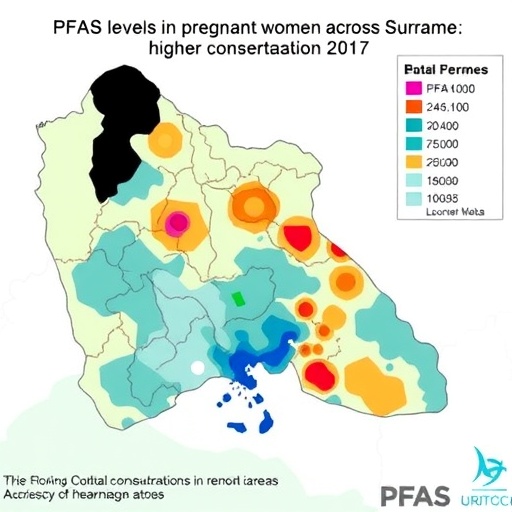
The study’s central finding indicates that women in remote rainforest communities had higher serum concentrations than their counterparts in more accessible areas. While the mechanisms remain under investigation, the result suggests that location-related pathways—such as differences in local water sources, food chains, or environmental reservoirs—may meaningfully shape PFAS uptake.
PFAS are known to persist in soil and water, and they can travel through ecosystems, ultimately entering human diets. In remote settings, reduced infrastructure may also influence how communities obtain and manage drinking water, potentially altering exposure routes compared with urban environments.
Because the researchers analyzed pregnant participants rather than general adult populations, the data also contribute to growing concern about prenatal vulnerability. PFAS have been associated in previous research with changes in immune function and metabolic outcomes, and pregnancy may magnify potential risks.
Importantly, the work underscores that PFAS exposure is not uniform across geography. Even within a single country, serum levels can differ sharply depending on how people interact with their surrounding environment and supply systems.
Public health implications are immediate: mitigation strategies may need to be tailored to community structure, water access, and local ecosystem characteristics rather than relying on broad, one-size-fits-all assumptions.
Ultimately, the findings highlight the urgency of expanding PFAS monitoring beyond major urban centers. As policymakers grapple with PFAS regulation and remediation, studies like this provide evidence that remote communities may face overlooked exposure burdens.
Subject of Research: Per- and polyfluoroalkyl substances (PFAS) exposure during pregnancy
Article Title: Per- and polyfluoroalkyl substances (PFAS) exposure profiles for pregnant women living in urban, rural, and remote areas of Suriname, South America suggest higher serum concentrations in remote rainforest communities.
Article References: Honan, J.K., Abdoel Wahid, F., Gokoel, A. et al. J Expo Sci Environ Epidemiol (2026). https://doi.org/10.1038/s41370-026-00950-y
DOI: 10.1038/s41370-026-00950-y
Image Credits: AI Generated
Keywords: PFAS, pregnancy, serum exposure, Suriname, urban-rural-remote comparison
Tags: differential exposure in urban vs. rural areasenvironmental chemical contamination in South Americaenvironmental sources of PFAS in Surinamehealth risks of PFAS during pregnancyimpact of geography on chemical exposureimplications of persistent chemicals in developing fetusinfluence of water and food sources on PFAS uptakelong-lasting industrial chemicals in human bloodmulti-compound chemical profiling in environmental healthPFAS exposure in pregnant womenPFAS levels in remote rainforest communitiesserum PFAS concentration measurement