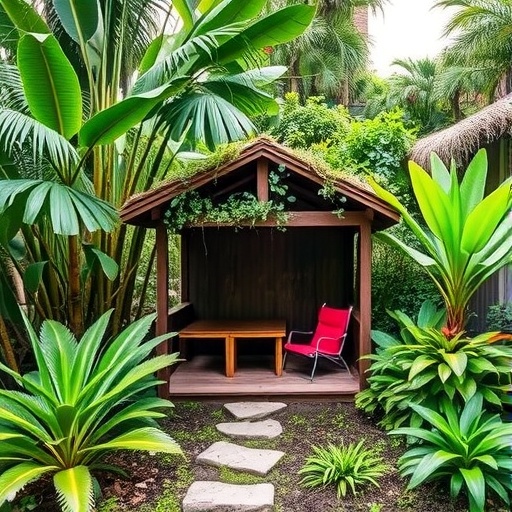
In tropical cities that expand faster than ecosystems can adapt, a new study highlights an unexpected biodiversity ally: sacred natural sites. Researchers report that these culturally protected landscapes can function as refuges for native plant diversity, even when surrounding areas are heavily urbanized.
The work, published in Nature Cities, focuses on how urbanization reshapes vegetation and what types of land-use patterns still allow indigenous species to persist. Rather than treating conservation as a purely technical exercise, the authors frame sacred places as long-term, people-maintained habitats with distinct ecological conditions.
Using field-based vegetation assessments across an urbanized tropical landscape, the team compared plant communities in and around sacred sites. They then quantified how native richness, composition, and ecological structure differed under varying degrees of disturbance, fragmentation, and human influence.
Results indicate that sacred sites retain a higher proportion of native plant species than nearby urban or transformed areas. The protective status of these sites appears to buffer local flora against the typical impacts of city growth—such as habitat loss, soil disruption, and altered microclimates caused by surrounding development.
Importantly, the study does not suggest sacred sites are untouched “wilderness.” Instead, it argues that cultural practices can limit destructive land management while still permitting a level of human presence that does not fully erase ecological complexity.
From a technical standpoint, the researchers emphasize that conservation benefits are linked to habitat continuity and reduced disturbance. Plant communities in protected sacred areas show greater stability in species presence, which can support seed dispersal and long-term survival of less competitive natives.
The findings add evidence to a growing concept in conservation science: biodiversity hotspots are not only created by geography and policy, but also by cultural governance that shapes land-use decisions over decades.
For cities facing accelerating growth in tropical regions, integrating sacred site stewardship into planning could become a practical strategy. The study suggests that protecting culturally meaningful patches may be a scalable way to maintain native plant diversity within the urban matrix.
If urban development is an ecological filter, sacred sites may act as an exception—creating pockets where native plants can persist and evolve alongside modern life. In the next wave of “viral” urban conservation conversations, this message is hard to ignore.
Subject of Research: Urban biodiversity conservation and native plant diversity in tropical landscapes
Article Title: Sacred sites as refuges for native plant diversity in an urbanized tropical landscape
Article References: Schmid, L., Grêt-Regamey, A., Nambinintsoa Nomenjanahary, H. et al. (2026). Nat Cities. https://doi.org/10.1038/s44284-026-00489-x
Image Credits: AI Generated
DOI: https://doi.org/10.1038/s44284-026-00489-x
Tags: biodiversity refuges in rapidly expanding citiescommunity-led conservation in urban environmentscultural protection of ecological landscapesecological benefits of culturally protected landscapeseffects of land-use change on native floraintegrating cultural practices into urban biodiversity conservationnative plant diversity in tropical citiesrole of sacred sites in habitat preservationsacred natural sites urban biodiversity hotspotstropical urban landscape restorationurban biodiversity conservationurbanization impact on indigenous plant species