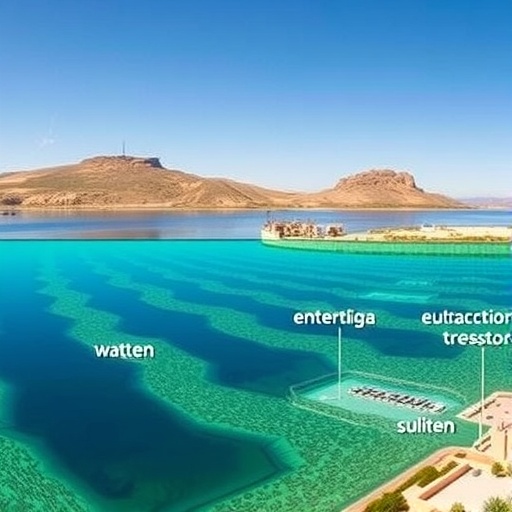
For the first time in Spain, researchers have deployed a floating platform equipped with eddy covariance technology to continuously measure greenhouse gas emissions from a reservoir, unveiling new insights into the dynamics of carbon exchange in these critical aquatic ecosystems. This pioneering study, conducted on the Cubillas reservoir by an interdisciplinary team from the University of Granada, leverages advanced micrometeorological methods to capture real-time fluxes of methane and carbon dioxide over extended periods.
Lakes and reservoirs, despite covering a small fraction of the Earth’s surface, are significant players in the global carbon cycle. Recent estimates suggest that they contribute to over 40 percent of global methane emissions, yet available data have traditionally relied on sporadic measurements, which fail to fully characterize temporal variations. The eddy covariance system applied here circumvented such limitations by continuously quantifying gas exchanges over large areas, revealing complex emission patterns inaccessible through conventional sampling.
The floating platform, designed to be both stable and sensitive, provided continuous two-year data under varying hydrological conditions. Remarkably, measurements identified the reservoir as a consistent source of both methane and carbon dioxide. Methane emissions exhibited pronounced fluctuations, including sudden episodic releases and daily cycles, phenomena that often go undetected with snapshot sampling techniques. Conversely, carbon dioxide emissions remained relatively stable, suggesting divergent controls on these gases’ fluxes.
Significant increases in methane emissions were observed during drier years and periods of declining water levels. These conditions enhance biogeochemical processes in sediment, such as anaerobic decomposition and bubble-mediated gas transport, intensifying methane release. Additional factors like wind dynamics and eutrophication also modulated emission intensity, underscoring the multifaceted nature of these aquatic systems’ gas exchange mechanisms.
These findings carry profound implications for climate science, especially given methane’s potent short-term greenhouse effect compared to carbon dioxide. The results emphasize the imperative for continuous monitoring technologies to elucidate the response of reservoirs to climate variability and anthropogenic impacts. They also highlight the need for integrating such detailed emission data into global carbon budgets to refine predictions of greenhouse gas fluxes.
By advancing understanding of the drivers and variability of methane emissions in Mediterranean freshwater systems, this research contributes valuable knowledge toward developing more effective water resource management and climate mitigation strategies. As droughts and nutrient loading are expected to increase with ongoing climate change, these reservoirs could emerge as even more critical sources of greenhouse gases.
The innovative use of floating platforms for eddy covariance measurements sets a new benchmark for future studies aiming to monitor and mitigate greenhouse gas emissions from continental waters. The approach offers potential for widespread application across diverse aquatic environments, fostering improved climate resilience and sustainability.
Subject of Research: Not applicable
Article Title: A drier year markedly enhances methane, but not carbon dioxide, emissions in a Mediterranean reservoir
News Publication Date: 8-Jul-2026
Web References: http://dx.doi.org/10.1111/gcb.70979
Image Credits: University of Granada
Keywords: methane emissions, carbon dioxide, eddy covariance, floating platform, Mediterranean reservoir, greenhouse gases, climate change, aquatic ecosystems
Tags: advanced micrometeorological methods in environmental studiesaquatic carbon exchange dynamicscontinuous greenhouse gas measurementeffects of reservoir drought on greenhouse gasesepisodic methane release events in reservoirsfloating eddy covariance technologyglobal methane contribution from lakes and reservoirsimpact of reservoir water levels on methane releaseinnovative methods for long-term greenhouse gas monitoringreal-time carbon flux data collectionReservoir methane emissionssignificance of aquatic ecosystems in global carbon cycle