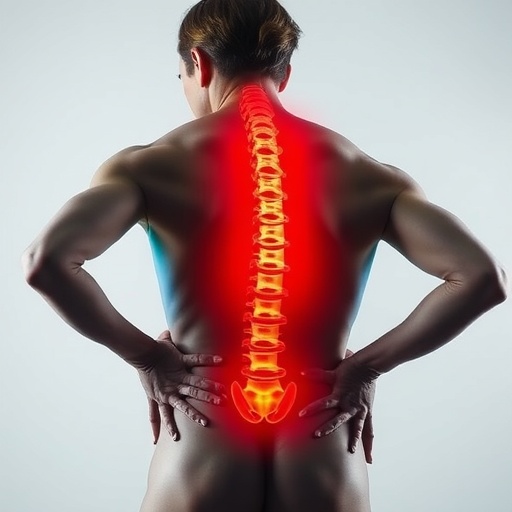
Low back pain stands as one of the most pervasive and debilitating health conditions globally, affecting nearly everyone at some stage in their lives. While acute back pain episodes often resolve quickly, approximately 20% of those afflicted see their pain transition into a chronic state, resulting in persistent suffering and substantial economic burden. In the United States alone, managing low back pain commands more healthcare resources than any other condition, underscoring the imperative to refine prevention strategies aimed at halting the progression from acute to chronic pain.
The complexity of low back pain’s trajectory necessitates innovative intervention approaches that extend beyond conventional medical treatments. Recent advancements in clinical research illuminate that empowering individuals through personalized self-management programs—structured and facilitated by trained physical therapists or chiropractors—can markedly reduce the risk of developing chronic, high-impact pain. This evidence contrasts with reliance solely on standard medical care or solitary hands-on manipulation therapies, which, although somewhat effective, fail to address the multifactorial nature of pain chronicity.
Published in the June 2026 issue of JAMA Internal Medicine, the randomized controlled PACBACK trial offers compelling insights into these dynamics. Enrolling over 1,000 participants across the University of Pittsburgh and the University of Minnesota, the study distinguished itself by targeting adults with acute or subacute low back pain who exhibited moderate to high risk factors for chronic pain development. Unlike prior research that often cast a wide net encompassing heterogeneous patient populations, PACBACK employed a validated screening tool to integrate both physical and psychological predictors, refining participant selection and enhancing the relevance of its findings.
The trial meticulously compared four distinct treatment protocols over an eight-week intervention period, followed by longitudinal assessment for one year. The arms included a Supported Self-Management (SSM) approach, which blended pain education, individualized physical exercises, relaxation practices, and cognitive reframing strategies delivered one-on-one by clinicians. Another arm utilized Spinal Manipulation Therapy (SMT), featuring manual techniques commonly practiced within chiropractic and physical therapy disciplines. A third combined both interventions, while the final arm relied on guideline-based medical care emphasizing pharmaceutical management with anti-inflammatory and muscle relaxant medications.
Outcomes underscored the efficacy of Supported Self-Management as a potent modality for reducing chronic low back pain impact. Participants engaged in this personalized self-care regimen reported significantly diminished pain severity and enhanced functional status at 10 to 12 months post-intervention compared to those receiving standard medical care. Notably, 64% of individuals in the SSM cohort achieved a clinically meaningful reduction in pain impact—defined as at least a 50% improvement—highlighting the transformative potential of tailored psychosocial and physical interventions.
Conversely, spinal manipulation alone demonstrated equivalency to medical care in moderating pain impact but did not surpass the benefits afforded by the SSM protocol. Moreover, integrating spinal manipulation with self-management techniques did not yield discernible additive effects, suggesting that empowering patients through cognitive and behavioral self-regulation strategies may constitute the critical therapeutic element in preventing chronicity. This delineation challenges prevailing assumptions about the primacy of hands-on manual therapy in back pain treatment.
A pivotal contribution of the PACBACK trial lies in elucidating the psychosocial mechanisms underpinning treatment success. Approximately three-quarters of the observed therapeutic effect was attributable to enhancements in patients’ self-efficacy, attenuation of fear-avoidance behaviors, and cognitive shifts away from maladaptive pain beliefs. These psychological variables were targeted and cultivated through clinician-guided dialogue and tailored messaging, illustrating the necessity of a biopsychosocial framework in chronic pain interventions.
Carol Greco, Ph.D., who spearheaded the development of the psychoeducational components within the trial, emphasized the critical role of patient-centered communication. Her training protocols encouraged clinicians to engage in iterative conversations rather than prescriptive instruction, fostering robust therapeutic alliances and promoting active patient participation. Language nuances were carefully calibrated; for instance, affirming the safety of exercises with sentences like “this is safe” rather than “this won’t hurt you” capitalized on cognitive processing patterns to mitigate apprehension and reinforce positive expectancy.
The intricate interplay between pain perception and psychological response elucidates why some patients respond favorably to manipulation while others do not. Acute low back pain sufferers devoid of fear of movement often experience rapid improvements post-manipulation. However, those exhibiting heightened fear and psychological vulnerabilities require interventions that explicitly target these barriers. Supported self-management effectively addresses these dimensions, equipping patients with psychological tools to gradually re-engage with physical activity and overcome disabling fears.
The collaborative environment fostered by the University of Pittsburgh enhances translational potential by bridging chiropractic and physical therapy disciplines within a rigorous research framework. Home to the nation’s first Doctor of Chiropractic program at a research-intensive public university alongside a leading Doctor of Physical Therapy program, Pitt embodies a nexus for integrative musculoskeletal care innovation. Their partnership with UPMC’s Center for Integrative Medicine further expands patient access to evidence-based complementary therapies, including acupuncture and chiropractic services, thereby broadening the spectrum of personalized pain management options.
Future research trajectories aim to dissect longitudinal pain patterns and discern patient characteristics predictive of response to specific interventions. By mapping weekly pain outcomes over extended follow-up periods and integrating multifactorial data, the PACBACK team aspires to develop stratified care algorithms. Such precision medicine approaches promise to optimize therapeutic matching, ensuring patients receive interventions most likely to yield durable benefit and informing clinical guidelines for acute and subacute low back pain management.
Funded by the National Center for Complementary and Integrative Health at the National Institutes of Health, the PACBACK trial represents a seminal contribution to advancing understanding of chronic low back pain prevention. Its rigorous design, encompassing multiple universities and an independent data coordinating center, underscores the robust scientific foundation supporting the integration of psychosocial strategies with physical modalities. This paradigm shift towards holistic, personalized care holds significant promise for mitigating the profound public health and economic impact of chronic low back pain globally.
Subject of Research: Chronic low back pain prevention through clinician-supported self-management and spinal manipulation therapies.
Article Title: Spinal Manipulation and Clinician-Supported Self-Management for Preventing Chronic Low Back Pain Impact
News Publication Date: 1-Jun-2026
Web References:
https://jamanetwork.com/journals/jamainternalmedicine/fullarticle/2849746
http://dx.doi.org/10.1001/jamainternmed.2026.1893
Keywords: Back pain, chronic low back pain, self-management, spinal manipulation therapy, physical therapy, chiropractic care, pain psychology, fear-avoidance, pain education, integrative medicine, randomized clinical trial, pain prevention
Tags: chiropractic care and back painchronic back pain prevention strategieseconomic impact of chronic back paininnovative interventions for low back painmultifactorial approach to pain managementPACBACK clinical trial findingspatient empowerment in pain treatmentpersistent low back pain managementphysical therapy for chronic low back painrandomized controlled trial on back painreducing chronic pain through self-careself-management programs for back pain