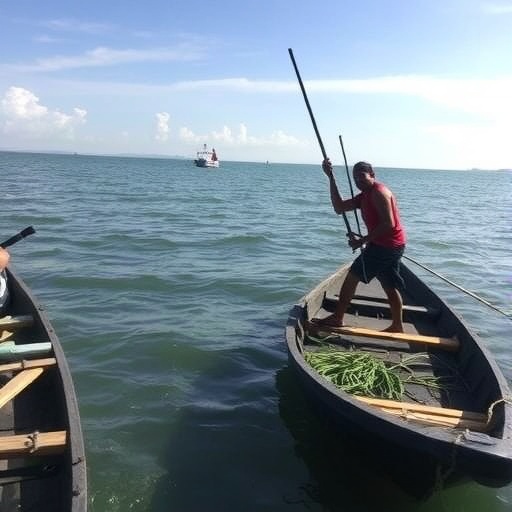
In a groundbreaking study published in Nature Communications, an international team of researchers has unveiled the complex and far-reaching impacts of marine conservation strategies on coastal livelihoods across Eastern Indonesia. This extensive investigation delves into the delicate balance between environmental preservation and the socio-economic realities of communities deeply intertwined with marine ecosystems. Through sophisticated modeling and nuanced socio-economic analysis, the study reveals how marine protected areas (MPAs) shape not only the health of aquatic biodiversity but also the distribution of benefits and challenges within these coastal societies.
Eastern Indonesia, a region rich in marine biodiversity and cultural heritage, has become a hotspot for conservation efforts aimed at safeguarding vital marine habitats. However, while the ecological benefits of MPAs are widely acknowledged, this new research highlights that the social and economic outcomes are far more variable and context-dependent than previously understood. The core of the study lies in dissecting how conservation policies translate into tangible impacts on fishing communities, whose livelihoods depend heavily on access to marine resources.
Utilizing a combination of ecological and economic data, the authors constructed an integrative framework that captures both the spatial and temporal dimensions of marine conservation effects. This innovative approach allowed the researchers to simulate different management scenarios and assess their implications on fish stocks, income distribution, and community well-being over time. Notably, the study pioneers in highlighting distributional effects—that is, how the gains and losses from marine conservation are unevenly experienced across different socioeconomic groups within coastal villages.
One of the pivotal findings is that while MPAs can bolster fish populations and support ecosystem resilience, the immediate costs are often borne disproportionately by small-scale fishers and marginalized groups. These stakeholders frequently face restricted access to traditional fishing grounds, leading to income reductions and increased vulnerability. Conversely, those with alternative livelihoods or capital to adapt appear to benefit more readily from the ecological improvements associated with conservation initiatives. This disparity underscores the critical need for auxiliary support mechanisms to ensure equitable benefit sharing and sustainable social outcomes.
Importantly, the research employs a spatially explicit modeling technique that integrates ecological data such as fish biomass and habitat quality with socioeconomic indicators including income levels, dependence on fisheries, and access rights. This sophisticated tool enables the prediction of nuanced outcomes under varying conservation zoning schemes, providing policymakers with actionable insights tailored to the multifaceted nature of marine resource governance.
The findings also draw attention to the dynamic nature of conservation impacts. Short-term hardships observed in some communities may give way to longer-term benefits as fish stocks recover and fisheries stabilize. However, this temporal lag poses significant challenges for communities that rely on immediate resource use for subsistence and economic survival. The authors emphasize that without targeted interventions—such as alternative income programs, capacity building, and participatory governance processes—these initial inequities may erode local support for conservation initiatives, risking their long-term success.
A further layer of complexity is introduced by cultural and institutional factors unique to the Eastern Indonesian context. The study meticulously documents how customary marine tenure systems, local leadership structures, and community engagement levels mediate the effectiveness and equity of conservation efforts. This insight challenges one-size-fits-all approaches and argues for adaptive management strategies that respect and incorporate indigenous knowledge and social dynamics.
In addition to providing empirical evidence, the authors advocate for the integration of social justice principles into marine conservation frameworks. They suggest that equitable marine spatial planning must account for historical marginalization and current socioeconomic disparities to foster inclusive and sustainable outcomes. By doing so, conservation can become a vehicle for both biodiversity protection and social empowerment, rather than a source of conflict and exclusion.
The environmental stakes of this research are equally significant. Eastern Indonesia is a marine biodiversity hotspot, featuring coral reefs, seagrass beds, and mangroves that sustain myriad species and provide critical ecosystem services. Effective protection of these habitats is essential not only for regional ecological integrity but also for global climate resilience through blue carbon sequestration and fisheries productivity. Thus, understanding the social dimensions of marine conservation has profound implications for global sustainability agendas.
Technically, the study builds upon the latest advancements in coupled human-natural systems modeling. By aligning spatial fisheries data with socioeconomic surveys, the researchers harness a multidisciplinary toolkit capable of unpacking the interdependencies between ecological health and human well-being. This methodological innovation represents a leap forward in marine conservation science, bridging gaps that have traditionally hindered integrated management.
Moreover, the implications of this research transcend Eastern Indonesia, offering lessons applicable to marine conservation worldwide. As governments and international bodies push for ambitious ocean protection targets under agreements such as the Convention on Biological Diversity, understanding how conservation measures affect different social strata becomes imperative. This study provides a template for assessing and mitigating unintended socio-economic consequences to ensure that marine conservation is both effective and just.
In conclusion, this study marks a critical advancement in our understanding of marine conservation’s distributional impacts. By illustrating the complex trade-offs and social nuances inherent in establishing MPAs, it urges a paradigm shift toward approaches that are ecologically sound, socially equitable, and culturally attuned. The future of marine biodiversity and coastal livelihoods depends on embracing such integrated perspectives, ensuring that conservation serves the dual goals of environmental stewardship and human prosperity.
The insights gained here also underscore the importance of long-term monitoring and adaptive policy frameworks. Dynamic feedback between ecological changes and social responses demands continuous assessment and flexibility in management to navigate emerging challenges. Ultimately, the success of marine conservation will rest on fostering resilient ecosystems alongside resilient communities, a balance that this landmark study compellingly illuminates.
Subject of Research: Distributional effects of marine conservation on coastal livelihoods in Eastern Indonesia, focusing on the socio-economic impacts of marine protected areas.
Article Title: Distributional effects of marine conservation on coastal livelihoods in Eastern Indonesia
Article References:
Le, D.T., Ahmadia, G.N., Ratih, I.A. et al. Distributional effects of marine conservation on coastal livelihoods in Eastern Indonesia. Nat Commun 17, 4690 (2026). https://doi.org/10.1038/s41467-026-69081-0
Image Credits: AI Generated
DOI: https://doi.org/10.1038/s41467-026-69081-0
Tags: biodiversity preservation in Eastern Indonesiachallenges of marine conservation policiescultural heritage and marine biodiversityecological and economic data in conservation studiesfishing communities and marine resource accessimpact of marine protected areas on coastal livelihoodsintegrative framework for marine conservation analysismarine conservation strategies in Eastern Indonesiamarine ecosystem health and community welfaresocio-economic effects of marine conservationspatial and temporal modeling of marine protectionsustainable livelihoods in coastal Indonesia