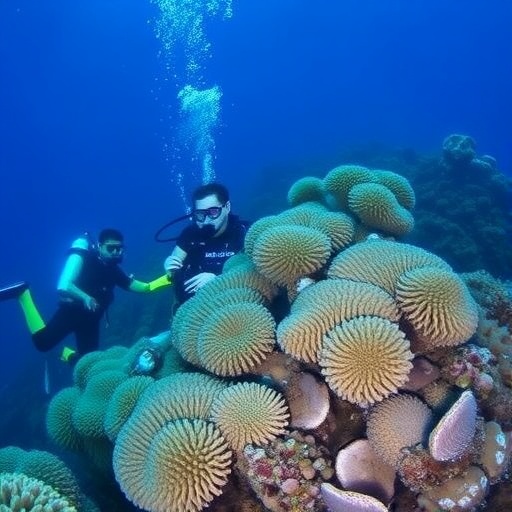
For decades, scuba diving tourism has been heralded as a sustainable gateway for ocean lovers to experience the mesmerizing beauty of coral reefs. Yet, groundbreaking research led by Dr. Bing Lin at the University of Sydney reveals a sobering truth: beneath the surface, this popular pastime may be inflicting widespread and often invisible damage to these fragile underwater ecosystems. The study, featured in the journal Conservation Letters, underscores the paradox that even well-meaning tourists are actively contributing to the degradation of coral habitats.
Dr. Lin and his team conducted an extensive observational study, documenting divers’ behaviors across renowned dive sites in Indonesia and the Philippines, including Bali and Nusa Penida. By meticulously recording over 300 hours of underwater activity involving 411 divers, the researchers amassed data on nearly 5,000 contacts between divers and the reef. Alarmingly, about 41% of these contacts caused tangible damage—ranging from the physical breakage of delicate coral structures to sediment stirring that suffocates reef organisms.
Notably, divers made reef contacts at an average rate of one every four minutes, sustaining physical contact with reef surfaces for nearly two seconds of every minute underwater. These findings highlight an ecosystem under silent siege where frequent interactions disrupt the ecological balance critical for reef survival. Dr. Lin emphasizes that this isn’t intentional sabotage but a pervasive and often subconscious pattern amplified by varying psychological biases common among divers.
Among the study’s most profound revelations is the disparity between divers’ perceptions of their own abilities and their actual underwater conduct. An overwhelming majority rated themselves as superior compared to peers in avoiding reef contact, a classic example of the “illusory superiority” effect. Coupled with this, the “Dunning-Kruger” phenomenon emerged prominently: less skilled individuals systematically overestimated their proficiency, unknowingly increasing reef damage. Consequently, divers consistently underestimated their reef contact frequency by almost fivefold.
This psychological disconnect presents a formidable challenge to marine conservation—people who view themselves as careful custodians of reefs may inadvertently be the most damaging. The research, therefore, calls for a reevaluation of how dive training programs convey environmental responsibility, arguing that enhancing diver self-awareness is critical to mitigating this unconscious harm.
Furthermore, certain equipment choices were linked to increased reef contacts. For instance, divers wielding underwater cameras, gloves, or pointer sticks had significantly elevated rates of reef touches. These tools, while enhancing the underwater experience, appear to decrease cautious spatial awareness, resulting in more frequent reef disturbances. The study also discovered a strong social mimicry effect: once one diver touched the reef, others were more likely to follow, magnifying cumulative damage in group settings.
Crucially, encounters with marine wildlife—often the pinnacle of the diving experience—dramatically increased both intentional and unintentional reef interactions. The presence of animals heightened intentional reef contacts by 220%, unintentional contacts by 85%, and overall damaging contacts by more than 100%. Divers instinctively approach or reposition themselves to observe elusive creatures better, frequently resulting in unintended consequences for the surrounding coral.
The study also identifies a disproportionate impact from a small subset of divers responsible for a significant share of reef damage. This finding opens a strategic window for targeted interventions to reclaim reef health without broadly restricting diving activities. Focused efforts on these “super-contact” divers through enhanced training or behavioral nudges could lead to outsized conservation benefits.
Dr. Lin stresses the difficulty in quantifying the precise scale of the impact, given the vast and complex nature of underwater tourism, but warns that unregulated diving tourism operates as an overlooked local threat compounding existing reef stressors. Coral reefs face an existential crisis from climate change, pollution, and overfishing; add to this the creeping toll of diver contact, and the outlook becomes increasingly tenuous.
Echoing previous work that linked coastal tourism to reef degradation across entire island archipelagos, this research underscores the urgency for systemic policy responses. The delicate balance between maintaining tourism’s economic lifeblood and protecting the marine treasures it depends on demands new frameworks. These should include stricter controls on dive equipment, immersive environmental briefings, and revamped certification standards emphasizing sustainable practices.
Technical solutions such as improved buoyancy control training stand out as effective measures to reduce reef contact. By equipping divers with precise underwater spatial skills, the likelihood of accidental reef collisions diminishes. Additionally, industry-wide adoption of higher environmental standards for dive operators and continuous monitoring could foster a culture of accountability and stewardship.
Ultimately, the findings pivot on one fundamental message: divers must first recognize their role in coral reef degradation before they can contribute to its preservation. Bridging the gap between perception and reality through rigorous education and psychological insight represents the next frontier for balancing human recreation with ecosystem resilience. Without this cultural shift, the very reefs drawing millions of visitors yearly may fade beneath the waves.
As global awareness grows, this research resounds as a call to action for scientists, policymakers, tourism operators, and enthusiasts alike. Protecting coral reefs demands a multifaceted approach that couples ecological science with behavioral psychology and practical training reforms. Only through such integrative efforts can the underwater landscapes that inspire wonder today endure for generations to come.
Subject of Research: People
Article Title: Causes and correlates of unsustainable scuba diving tourism on coral reefs
News Publication Date: 26-May-2026
Web References:
Conservation Letters: https://conbio.onlinelibrary.wiley.com/journal/1755263x
DOI link: http://dx.doi.org/10.1111/con4.70055
References:
Lin, B. et al (2026). Causes and correlates of unsustainable scuba diving tourism on coral reefs. Conservation Letters. DOI: 10.1111/con4.70055
Image Credits:
Dr. Bing Lin, University of Sydney
Keywords
Scuba diving, coral reefs, marine tourism, ecological impact, behavioral psychology, illusory superiority, Dunning-Kruger effect, reef damage, environmental conservation, dive training, buoyancy control, sustainable tourism
Tags: conservation strategies for dive sitescoral breakage due to recreational divingcoral reef conservation challengescoral reef ecosystem degradationecological balance disruption in reefsmarine biodiversity loss from tourismobservational study on diver interactionsphysical damage to coral reefsscuba diving tourism impact on coral reefssediment disturbance in coral habitatssustainable scuba diving practicesunderwater tourist behavior effects