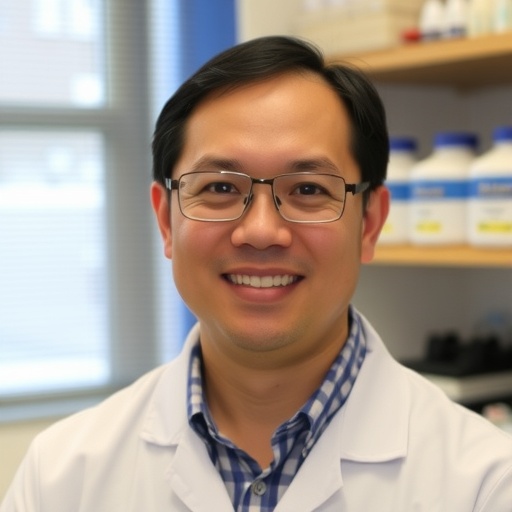
A groundbreaking breakthrough in cancer treatment has emerged from the laboratories of McMaster University, unveiling a novel therapeutic candidate that may revolutionize management of glioblastoma, the most aggressive and prevalent primary brain cancer in adults. This next-generation immunotherapy, articulated through advanced cellular engineering, has demonstrated unprecedented efficacy in preclinical trials, heralding a new frontier in combating a disease notoriously resistant to conventional modalities such as surgery, radiotherapy, and chemotherapy.
Published recently in Science Translational Medicine, the research delineates the development of a uPAR-specific Chimeric Antigen Receptor (CAR) T cell therapy, an innovative approach that co-opts the patient’s own immune system to target and eradicate glioblastoma cells. Glioblastoma’s intrinsic heterogeneity and invasive nature have historically thwarted effective treatment, culminating in a dismal median survival of less than 15 months post-diagnosis. The introduction of this uPAR-directed therapy offers a beacon of hope for altering this grim prognosis.
At the molecular level, the therapy exploits the expression of the urokinase plasminogen activator receptor (uPAR) on the surface of glioblastoma cells, a protein implicated in tumor proliferation, invasion, and angiogenesis. Notably, uPAR is not confined to malignant cells alone but also adorns adjacent stromal cells which nurture the tumor microenvironment, thus sustaining tumor growth and therapeutic resistance. By generating CAR T cells equipped with antibodies specifically engineered to recognize and bind uPAR, researchers have achieved selective tumor targeting while simultaneously dismantling the tumor-supportive niche, a dual mechanism poised to enhance therapeutic durability and prevent recurrence.
This pioneering immunotherapy was developed through a collaborative endeavor between McMaster University scientists and researchers from Canada’s National Research Council in Ottawa. The synergy of antibody engineering and cellular biology facilitated the creation of CAR constructs with high affinity and specificity for uPAR, enabling potent activation of cytotoxic T cells upon antigen recognition. Preclinical models have showcased not only robust tumor cell killing but also favorable safety profiles, underscoring the therapy’s translational potential.
The innovation signifies a paradigm shift in neuro-oncology, where therapeutic strategies have stagnated for over two decades, constrained by the blood-brain barrier and glioblastoma’s adaptive resistance mechanisms. Sheila Singh, the principal investigator and a renowned professor of surgery and neuro-oncology, emphasizes the urgent need for new treatments and expresses enthusiasm about transitioning this therapy toward clinical application. Her team’s multidisciplinary approach integrates bioengineering, immunology, and clinical neuroscience to overcome glioblastoma’s formidable defenses.
Further augmenting the promise of this research is its alignment with emerging oncology trends that identify uPAR as a universal cancer target beyond glioblastoma. Recent findings from leading institutions, including Memorial Sloan Kettering Cancer Center and Columbia University, corroborate uPAR’s critical role in malignancies such as lung and pancreatic cancers. This convergence propels a broader vision where uPAR-targeted therapies could be tailored to multiple challenging tumor types, amplifying the impact of this discovery.
William Maich, a postdoctoral fellow and first author on the study, reflects on the personal and professional fulfillment derived from this project. His involvement in the adaptive immune response intricacies and patient engagement initiatives highlights a comprehensive approach combining bench science with clinical empathy. The anticipation of providing patients with a new treatment avenue is both motivating and a testament to the translational aspirations driving contemporary cancer research.
Technically, the CAR T cells are bioengineered to express synthetic receptors comprising an extracellular single-chain variable fragment (scFv) derived from uPAR-specific antibodies, linked to intracellular signaling domains that activate T cell effector functions. Upon encountering uPAR-expressing cells, these CAR T cells undergo activation, proliferation, and cytolytic activity, releasing cytotoxins such as perforin and granzymes, resulting in targeted tumor cell apoptosis. Moreover, their ability to recognize stromal elements curtails the supportive matrix that often shelters glioblastoma cells from immune clearance.
Addressing safety concerns critical to CAR T cell therapies, especially in the central nervous system context, the research incorporates safety switches and rigorous off-target assessment protocols. This ensures that therapeutic T cells preferentially attack malignant and microenvironmental support cells without damaging normal brain tissues, mitigating risks of neurotoxicity. Ongoing studies aim to refine these parameters further to optimize clinical outcomes.
Patenting the therapy marks a significant milestone for Singh’s team, paving the path for regulatory discussions and potential commercialization. Collaborative efforts are underway to design and implement early-phase clinical trials, adhering to rigorous standards for first-in-human studies. The objective is to validate efficacy and safety in patients with recurrent glioblastoma, addressing a critical unmet medical need.
As the scientific community rallies around this promising candidate, the broader implications of harnessing immune system precision against refractory brain tumors become increasingly tangible. This research embodies the fusion of molecular innovation, immunotherapy, and translational ambition, potentially setting the stage for a new era in cancer therapeutics where previously incurable diseases might be subdued or eradicated.
In summation, the uPAR-targeted CAR T cell therapy from McMaster University represents a seminal advancement in glioblastoma treatment development. By innovatively targeting a shared oncogenic protein across tumor and stromal cells, this therapeutic approach challenges historical paradigms and offers renewed hope for extended survival and improved quality of life in patients facing this devastating diagnosis. The coming years will be pivotal as the therapy progresses from preclinical validation to the clinical trial landscape, potentially reshaping standards of care in neuro-oncology and beyond.
Subject of Research: Glioblastoma targeted immunotherapy using uPAR-specific CAR T cells
Article Title: uPAR is highly expressed in recurrent glioblastoma and represents a candidate CAR T cell target
News Publication Date: 13-May-2026
Web References:
Science Translational Medicine DOI: 10.1126/scitranslmed.aea8381
Keywords: Glioblastoma, CAR T cell therapy, uPAR, immunotherapy, brain cancer, neuro-oncology, tumor microenvironment, targeted therapy, molecular oncology, preclinical research, oncology innovation
Tags: advanced glioblastoma therapiesbrain cancer immunotherapyglioblastoma cellular engineeringglioblastoma treatment breakthroughinnovative glioblastoma immunotherapyMcMaster University cancer researchnext-generation cancer immunotherapynovel brain cancer drug candidatepreclinical cancer treatment trialstargeting tumor microenvironmentuPAR protein in canceruPAR-specific CAR T cell therapy