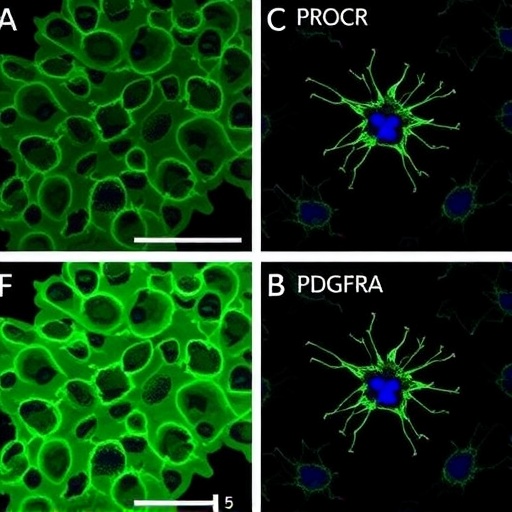
A groundbreaking international study led by researchers from the University of Liège and the Dana-Farber Cancer Institute has unveiled a sophisticated epigenetic mechanism that tumors employ to evade immune system detection. This discovery not only elucidates critical aspects of tumor biology but also paves the way for innovative therapeutic strategies that integrate epigenetic modulation with immunotherapy, promising enhanced treatment outcomes for cancer patients.
Whole-genome doubling (WGD), a phenomenon frequently observed in cancer cells, involves the duplication of an entire set of chromosomes, resulting in cells harboring twice the normal chromosomal content. This event is prevalent in roughly 37% of primary solid tumors and even more so in metastatic tumors, where it is detected in up to 56% of cases. Historically, WGD has been associated with poor prognosis, increased genomic instability, and treatment resistance, but the precise biological underpinnings remained elusive.
The latest research provides compelling evidence that WGD does far more than merely augment genomic content; it profoundly alters the interplay between tumor cells and the host immune system. Initially, genome doubling paradoxically enhances tumor cell visibility by increasing immune system recognition; however, this visibility prompts an adaptive response in the cancer cells aimed at achieving immune escape. Dr. Pierre Foidart, a leading oncologist and corresponding author, explains that cancer cells, after this initial heightened immune exposure, swiftly evolve mechanisms to conceal themselves from cytotoxic immune responses.
Central to immune recognition is the presentation of antigenic peptides on the surface of tumor cells via the major histocompatibility complex class I (MHC-I). This complex acts as a crucial “display window,” enabling cytotoxic CD8+ T lymphocytes to identify and target aberrant cells. The innate immune system complements this surveillance by producing interferon-gamma (IFN-γ), a cytokine that upregulates MHC-I expression and bolsters antigen presentation. This dynamic interplay establishes a positive feedback loop: activated CD8+ T cells further secrete IFN-γ, amplifying immune responses and enhancing tumor cell elimination.
Intriguingly, the study reveals that tumor cells undergoing whole-genome doubling eventually suppress the expression of genes encoding MHC-I molecules. This suppression results in a marked reduction of antigen presentation on the tumor cell surface, effectively rendering these cells invisible to CD8+ T lymphocytes. The cells also demonstrate an impaired response to IFN-γ signaling, breaking the positive feedback loop essential for effective immune-mediated clearance. Consequently, cytotoxic T cells fail to recognize and attack these genome-doubled tumor cells, allowing cancer proliferation despite immune presence.
Notably, this immunoevasive phenotype is governed not by genetic mutations but through epigenetic modifications—a suite of reversible molecular changes regulating gene expression without altering the underlying DNA sequence. Metabolic reprogramming in these WGD-positive cells leads to enhanced activity of the Polycomb Repressive Complex 2 (PRC2), a key epigenetic silencer. PRC2 mediates trimethylation of histone H3 at lysine 27 (H3K27me3), a mark associated with gene repression that effectively silences transcriptional regulators critical for antigen presentation.
Dr. Kornélia Polyak of Dana-Farber Cancer Institute highlights the therapeutic potential of targeting these epigenetic pathways: “By pharmacologically inhibiting the PRC2 complex, we can partially reverse the silencing of antigen presentation genes, restoring the immune system’s ability to detect and eliminate WGD-positive tumor cells.” This approach not only enhances immune recognition but also selectively hinders the growth of genome-doubled tumors, offering a dual therapeutic advantage.
The clinical implications of these findings are profound. Whole-genome doubling could serve as a highly informative biomarker, guiding oncologists in stratifying patients and tailoring treatments that combine epigenetic inhibitors with immunotherapeutic agents. This personalized medicine strategy promises to overcome the current limitations of immune checkpoint therapies that fail in tumors adept at immune evasion through antigen presentation loss.
However, several challenges remain before these insights translate into clinical practice. Whole-genome sequencing, the primary method for detecting WGD, is costly and not readily available in routine oncology settings. Addressing this, Dr. Foidart and collaborators are developing novel, accessible methodologies to detect genome doubling in tumors, facilitating widespread clinical adoption and patient benefit.
Beyond breast cancer, the phenomenon of WGD and its associated epigenetic immune evasion may extend to multiple solid tumor types. Understanding the molecular basis of this mechanism across diverse cancers could revolutionize how clinicians predict treatment response and develop combinatorial therapeutic regimens optimized for specific tumor genomic and epigenetic landscapes.
Moreover, the reversible nature of epigenetic modifications offers hope for durable treatment efficacy while potentially minimizing adverse effects commonly associated with irreversible genetic alterations. This reversibility imbues cancer therapy with a new degree of control, as drugs can modulate gene expression dynamically in response to therapeutic needs, improving long-term patient outcomes.
Future research will undoubtedly focus on refining pharmacological inhibitors of epigenetic regulators like PRC2, identifying biomarkers predictive of treatment response, and conducting clinical trials that merge epigenetic therapy with cutting-edge immunotherapies. Such multidisciplinary approaches are expected to unlock unprecedented strategies in cancer treatment, transforming grim prognoses into manageable or even curable conditions.
In summary, the identification of an epigenetic mechanism by which whole-genome doubling drives immune evasion marks a paradigm shift in our understanding of tumor-immune interactions. This research elevates the concept that cancer progression is not solely rooted in genetic mutations but also intricately linked to reversible epigenetic adaptations that alter cellular identity and immune visibility. Harnessing these insights through targeted therapies holds promise to significantly enhance the efficacy of cancer immunotherapy and improve survival rates for patients worldwide.
Subject of Research: Whole-genome doubling and its role in tumor immune evasion via epigenetic silencing of antigen presentation.
Article Title: Whole-genome doubling drives immune evasion by silencing antigen presentation
News Publication Date: 7-May-2026
Web References:
– DOI link: http://dx.doi.org/10.1016/j.ccell.2026.04.007
– University of Liège: http://www.uliege.be
– Dana-Farber Cancer Institute: https://www.dana-farber.org/
References:
Foidart et al., Whole-genome doubling drives immune evasion by silencing antigen presentation, Cancer Cell, Elsevier, May 2026
Image Credits: Foidart et al., Whole-genome doubling drives immune evasion by silencing antigen presentation, Cancer Cell, Elsevier, May 2026
Keywords: Whole-genome doubling, immune evasion, cancer immunotherapy, epigenetics, PRC2, antigen presentation, MHC-I, interferon gamma, CD8+ T lymphocytes, breast cancer, tumor biology, epigenetic therapy
Tags: breast cancer immune system interactioncancer treatment resistance mechanismschromosomal duplication in cancerepigenetic mechanisms in tumorsepigenetic modulation and immunotherapygenome-doubled breast tumorsgenomic instability in breast cancerinnovative cancer therapeutic strategiesmetastatic tumor genome doublingtumor immune evasion strategiestumor microenvironment and immune escapewhole-genome doubling in cancer