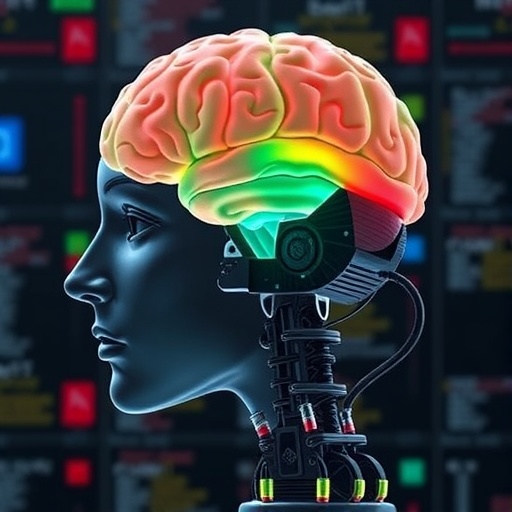
Brain-computer interfaces (BCIs) are rapidly transforming the landscape of robotic control, offering unprecedented opportunities for individuals with motor disabilities to regain independence through direct neural interaction. Unlike traditional assistive technologies that rely on residual muscle activity or mechanical input, BCIs leverage neural signals generated by the brain itself, translating these signals into control commands for external devices. This groundbreaking approach bypasses damaged motor pathways, enabling users to interact with their environment in novel ways that were previously unimaginable.
While early BCI applications have primarily focused on controlling simple devices like computer cursors or wheelchairs, enabling multidimensional control of robotic limbs presents a far more intricate challenge. The human upper limb is capable of complex, coordinated movements involving not only gross motor functions such as reaching and grasping but also fine dexterous manipulations including wrist rotations and individual finger articulations. Replicating this level of control requires decoding rich neural representations of motor intent and seamlessly translating them into precise robotic actions, a feat that necessitates significant advances in neural decoding algorithms and control paradigms.
Recent developments in the field have witnessed a surge in the integration of noninvasive BCIs with robotic systems, marking a pivotal shift towards practical, real-world applications. Noninvasive approaches, typically employing electroencephalography (EEG) or similar modalities, mitigate the risks and ethical considerations associated with implantable devices while offering sufficient neural signal fidelity for effective control. These systems capitalize on the latest breakthroughs in machine learning, particularly deep learning, to decipher complex neural activity patterns that encode user intentions with heightened accuracy and robustness.
Deep learning models have revolutionized BCI decoding paradigms by autonomously learning intricate, nonlinear mappings from raw neural data to intended motor commands. Unlike traditional methods reliant on handcrafted features that may overlook subtle signal dynamics, contemporary neural networks dynamically adapt to individual user characteristics and neural variability. This adaptability is crucial for real-time applications where decoding precision directly influences the fluidity and responsiveness of robotic control, thereby enhancing user experience and functional outcomes.
Beyond decoding, the concept of shared autonomy stands at the forefront of making BCI-controlled robotics more practicable and less cognitively demanding for users. In shared autonomy frameworks, the BCI conveys high-level goals—such as the intention to grasp an object—while the robot’s onboard intelligence manages the low-level execution details, including trajectory planning and collision avoidance. This symbiotic relationship reduces the user’s mental load, compensates for any decoding inaccuracies, and enables the completion of complex tasks that would otherwise be difficult or impossible using direct control alone.
Implementing shared autonomy hinges on sophisticated algorithms that integrate user inputs with environmental context and robotic capabilities. These systems employ real-time sensor feedback, probabilistic models, and adaptive control strategies to predict and assist in movement execution. Consequently, users experience a more intuitive and fluid interaction with robotic appendages, fostering greater acceptance and usability in daily life scenarios where speed and precision are paramount.
Despite encouraging advances, several critical challenges remain on the path towards widespread adoption of BCI-controlled robotic systems. Reliability over extended periods, comfort during daily wear, and ease of use continue to be significant barriers. Neural signals are inherently noisy and subject to fluctuations due to fatigue, attention shifts, or external interference. Addressing these challenges requires the development of adaptive decoding methods capable of continuous calibration and error correction without intrusive recalibration, thus ensuring a consistent and user-friendly interface.
User-centered design also assumes a paramount role in the evolution of BCIs. Long-term studies emphasizing ergonomic headset design, minimal invasiveness, and seamless integration into natural behaviors will dictate whether these technologies transcend laboratory prototypes and become practical assistive devices. Furthermore, training protocols that reduce learning time and cognitive burden are essential to facilitate broader acceptance by diverse user populations.
The interplay between neural decoding, robotic intelligence, and human factors encapsulates a multidisciplinary frontier where engineering, neuroscience, and machine learning converge. Advances in these domains collectively drive the creation of BCI-controlled robotic systems that not only interpret user intent with precision but also adapt intelligently to both user needs and environmental contingencies. Such systems represent a paradigm shift from experimental setups toward viable solutions supporting daily independence.
Looking towards the future, adaptive algorithms that harness ongoing neural feedback and robotic sensory inputs hold promise for creating fully autonomous yet user-compliant robotic assistants. These assistants would learn and anticipate user preferences, refine control schemes dynamically, and potentially negotiate complex environmental interactions without constant user intervention. Such developments will redefine human-robot symbiosis and unlock new possibilities for rehabilitative and augmentative technologies.
It is also critical to consider the ethical and social implications as BCIs mature. Privacy of neural data, informed consent, and equity of access require proactive frameworks to ensure that technological benefits are distributed fairly and safely. Collaboration among technologists, clinicians, ethicists, and end-users will be vital in shaping policies that safeguard users while fostering innovation.
In summary, the confluence of noninvasive neural recording techniques, deep learning-enabled decoding, and shared robotic autonomy heralds a transformative era in assistive robotics. These innovations promise to extend unprecedented capabilities to individuals with motor impairments, enabling not just restoration of lost functions but enhanced interaction with their surroundings. As research continues to bridge the gap between laboratory breakthroughs and everyday application, BCI-controlled robotic systems are poised to empower users with unprecedented independence and quality of life.
Subject of Research: Brain-computer interfaces, robotic control, neural decoding, shared autonomy, assistive technology
Article Title: Noninvasive Brain-Computer Interfaces: Revolutionizing Dexterous Robotic Control through Deep Learning and Shared Autonomy
Web References: http://dx.doi.org/10.1093/nsr/nwag269
Image Credits: ©Science China Press
Keywords
Applied sciences and engineering, Deep learning, Robot control, Brain, Nervous system
Tags: advanced control paradigms in BCIsassistive technology for paralysisbrain-driven robotic prostheticsdirect neural interaction with robotsfine motor control with BCIsmultidimensional robotic limb controlneural decoding algorithms for BCIsneural signal decoding for roboticsnoninvasive brain-computer interfacesovercoming motor pathway damage with BCIspractical applications of noninvasive BCIsrobotic assistance for motor disabilities