In the ever-evolving landscape of oncology, gastric cancer remains one of the most formidable adversaries, notorious for its molecular complexity and clinical heterogeneity. A groundbreaking study has shed new light on the nuanced interplay between genetic aberrations and the immune microenvironment in this malignancy. Specifically, researchers have turned their attention to CCNE1, a gene encoding Cyclin E1, which emerges as a pivotal driver in an intermediate state of gastric cancer biology that bridges the phenotypic spectrum defined by epithelial and mesenchymal characteristics.
While the epithelial-mesenchymal axis has long been recognized as a fundamental framework for understanding tumor heterogeneity in gastric cancer, it largely captures the disease’s phenotypic extremes. This binary classification, although insightful, omits the critical intermediate states that may harbor unique therapeutic vulnerabilities or resistance mechanisms. The recent publication by Gu et al. in the British Journal of Cancer delves into this gap, focusing on the clinicopathologic identity and immune landscape of gastric cancers marked by CCNE1 gain—a state characterized by either gene amplification or Cyclin E1 protein overexpression.
CCNE1 gain signifies more than a mere genetic alteration; it reflects a complex biological context often associated with heightened chromosomal instability. This instability fuels genomic chaos, enabling rapid tumor evolution and the emergence of treatment-resistant clones. The study’s findings underscore the lethal clinical outcomes linked to this genetic profile, positioning CCNE1 gain as a harbinger of refractory gastric cancer. This revelation adds a new dimension to our understanding of gastric cancer’s molecular underpinnings and presents both challenges and opportunities for clinical intervention.
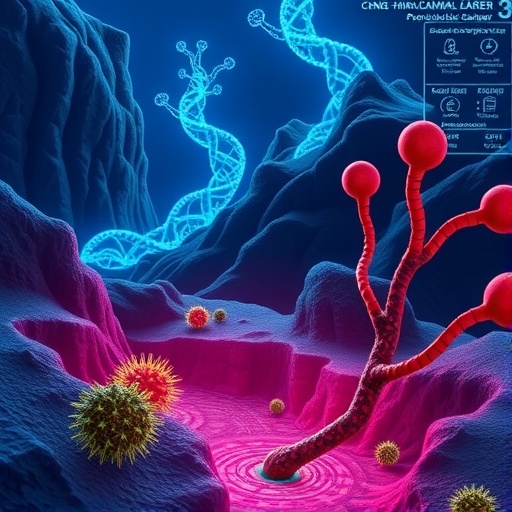
Integral to the study is the dissection of the immune microenvironment in CCNE1-amplified tumors. Intriguingly, these cancers exhibit an “immune desert” contexture—a stark absence of effective immune cell infiltration and activity. This phenotype starkly contrasts with the immune-rich landscapes seen in other gastric cancer subtypes where immunotherapy has shown promise. The immune desert milieu poses significant hurdles to immunotherapeutic strategies, necessitating a reevaluation of how these cancers can be targeted.
The linkage between CCNE1 gain and immune evasion mechanisms opens new investigative pathways. It suggests that the genomic instability driven by Cyclin E1 overexpression may orchestrate a suppressive tumor microenvironment, either by altering antigen presentation or by influencing the expression of immune checkpoint molecules. This hypothesis, if confirmed, could reshape current paradigms of immune-oncology in gastric cancer, urging the development of combinatorial regimens that simultaneously target cell cycle dysregulation and immune suppression.
From a clinical standpoint, identifying CCNE1 status in gastric cancer patients may become an essential step toward personalized medicine. Diagnostic advancements that accurately detect CCNE1 amplification or overexpression could refine prognostic models, guiding treatment decisions and improving patient stratification in clinical trials. As the study indicates, patients harboring this genetic abnormality typically face grim outcomes, emphasizing the urgent need for tailored therapeutic approaches.
Moreover, the discovery casts a critical spotlight on therapeutic resistance—a major barrier in treating gastric cancer. The molecular instability inherent to CCNE1 gain facilitates rapid adaptation to conventional chemotherapy, rendering these tumors notoriously refractory. Understanding the molecular circuitry governing this resistance offers a window of opportunity to develop novel agents that can overcome or circumvent these defense mechanisms.
This research additionally enriches the ongoing discourse on the epithelial-mesenchymal transition (EMT) and its relevance to cancer progression. By positioning CCNE1 gain as an intermediate state along the epithelial-mesenchymal continuum, it nuances our grasp of tumor plasticity. It suggests that the binary EMT model may oversimplify the biological reality within gastric cancers, where a spectrum or gradient of states exists, each with distinct therapeutic implications.
Importantly, the study’s methodology utilized integrated genomic and immunohistochemical analyses, ensuring robust characterization of tumor profiles. This comprehensive approach bolsters confidence in the conclusions drawn and sets a precedent for future investigations seeking to unravel the complexities of tumor heterogeneity.
The implications of this study transcend gastric cancer alone. CCNE1 amplification and Cyclin E1 overexpression have been implicated in various other malignancies, including breast and ovarian cancers. The insights gleaned regarding chromosomal instability and immune desertification may thus pave the way for cross-cancer therapeutic strategies, fostering a more unified approach to targeting aggressive, treatment-resistant tumors.
Beyond clinical applications, these findings highlight the necessity of reexamining how the tumor microenvironment is modeled and understood. The immune desert context presents biologic challenges that standard immunotherapy regimens may not overcome, suggesting a future in which bespoke immunomodulatory tactics—potentially involving microenvironmental remodeling or epigenetic reprogramming—could become the cornerstone of treatment.
In sum, Gu and colleagues have delivered a pioneering study that elucidates the dark corner of gastric cancer biology defined by CCNE1 gain. This intermediate phenotypic state, characterized by chromosomal instability and an immune desert microenvironment, accounts for some of the most lethal and refractory forms of the disease. The findings compel the oncology community to reconsider existing paradigms and fuel intensified research into novel diagnostic markers and therapeutic targets.
As precision oncology continues to advance, integrating molecular profiling with detailed immune characterization will undoubtedly enhance our capacity to combat gastric cancer more effectively. The convergence of genetic aberrations like CCNE1 gain and the immune milieu’s status is a paradigm ripe for exploitation, promising hope for patient populations long underserved by current treatments.
Ultimately, this study underscores that the intricacies of tumor biology extend far beyond simplistic dichotomies. The future of gastric cancer therapy lies in decoding the language of intermediate states such as those driven by CCNE1—a venture that promises to unlock new frontiers in cancer treatment and patient survival.
Subject of Research:
The clinicopathologic and immune features of gastric cancer harboring CCNE1 amplification and Cyclin E1 overexpression, focusing on their association with chromosomal instability, therapeutic resistance, and tumor microenvironment.
Article Title:
Lethal clinical outcome and immune desert contexture in refractory gastric cancer harboring CCNE1 amplification and overexpression.
Article References:
Gu, Y., Wang, J., Ling, Z. et al. Lethal clinical outcome and immune desert contexture in refractory gastric cancer harboring CCNE1 amplification and overexpression. Br J Cancer (2026). https://doi.org/10.1038/s41416-026-03461-7
Image Credits: AI Generated
Tags: cancer heterogeneity and immune evasionCCNE1-driven gastric cancerchromosomal instability in tumorsclinicopathologic features of CCNE1 gainCyclin E1 overexpression in cancerepithelial-mesenchymal transition in cancergastric cancer molecular complexitygenomic instability and tumor evolutionimmune desert tumor microenvironmentimmune microenvironment in gastric cancerintermediate phenotypic states in gastric cancertherapeutic resistance in CCNE1-amplified tumors