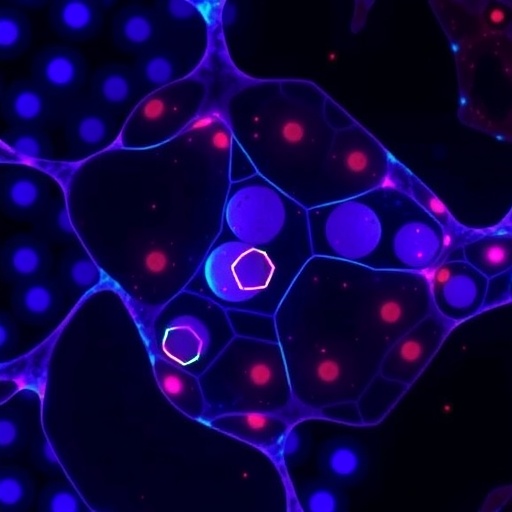
Recent breakthroughs in cancer research have revealed novel therapeutic strategies that hold significant promise for the treatment of various malignancies. One of the most intriguing advancements comes from a study focusing on the intricate interplay between the immune system and tumor proliferation. Ye, Yan, Sun, and their team have delved into the mechanisms that enable early-stage endometrial cancer to evade immune detection, presenting a compelling argument for the targeting of specific biological pathways in cancer therapy.
Understanding the immune evasion tactics of tumors is pivotal in developing successful treatments. In endometrial cancer, a complex relationship exists between tumor cells and the immune system, a relationship characterized by a delicate balance between proliferation and immunosuppression. At the core of this interaction is the CD47-HCK-LGALS9 axis, a signaling pathway that has emerged as a crucial player in cancer progression. The scientists have set out to unravel the specifics of this axis, revealing how it contributes to both proliferation and immune suppression in the tumor microenvironment.
The CD47 protein, often referred to as a “don’t eat me” signal, plays a critical role in protecting cancer cells from phagocytosis by macrophages, a key component of the immune system. By binding to its receptor, the signal transducer HCK, CD47 effectively inhibits the immune response that would typically target and destroy cancer cells. This process of immune evasion is a double-edged sword that allows tumors to proliferate unchecked while simultaneously suppressing the body’s natural defenses.
In their research, Ye and colleagues demonstrate that disrupting the interaction between CD47 and HCK can lead to enhanced immune activation. By targeting this interaction, they observed that immune cells become more proficient in recognizing and eliminating cancer cells. The implications of this finding are profound, as it suggests that therapeutic interventions focusing on this axis could potentiate the effects of existing immunotherapies, pushing the body’s immune response to be more aggressive against cancer.
Another crucial component of the CD47-HCK-LGALS9 signaling pathway is LGALS9, a galectin that has been implicated in various tumor-promoting processes. Ye’s research indicates that LGALS9 not only supports tumor growth by fostering an immunosuppressive environment but also works in tandem with CD47 to facilitate cancer cell survival. The dual role of LGALS9 highlights the complexity of tumor biology and the innovative approaches that can be taken to disrupt these deleterious signaling networks.
The ability to dissect such interactions bolsters the potential for combination therapies that integrate immunotherapeutic strategies with direct targeting of key molecular pathways. The research team’s findings suggest that by inhibiting the CD47-HCK-LGALS9 axis, oncologists could inject new life into current treatment regimens, particularly for patients diagnosed at an early stage. Early intervention is critical, as the chances of successful treatment significantly diminish as the disease progresses.
The study conducted by Ye and his team also emphasizes the importance of personalized medicine in oncology. By understanding the unique molecular signatures of different tumors, personalized therapies can be developed that are specifically tailored to each patient’s cancer profile. As research evolves, the hope is to create a world where cancer treatment is no longer a one-size-fits-all approach but rather an individualized plan that effectively targets the unique vulnerabilities of each tumor.
Moreover, the potential for these strategies to be applicable to other cancer types is an exciting prospect. While endometrial cancer is the focus of the current study, the mechanisms elucidated may also be relevant to other malignancies characterized by similar immune evasion tactics. Future research could pave the way for broader applications and potentially shift the treatment paradigm across multiple cancer types.
The implications of the CD47-HCK-LGALS9 axis extend beyond therapeutic interventions; they also foster a deeper understanding of the immunological landscape of tumors. Studying how tumors manipulate immune pathways not only helps identify novel therapeutic targets but also provides insights into cancer biology itself. This knowledge is essential for developing advanced treatment strategies that leverage the body’s immune system to combat cancer more effectively.
As the scientific community continues to make strides in uncovering the molecular mechanisms underpinning cancer biology, the collaborative efforts of researchers like Ye, Yan, and Sun are instrumental in driving innovation. Their work exemplifies the ongoing quest to decode the complexities of cancer and to translate this knowledge into meaningful advancements in patient care.
Without a doubt, the future of cancer treatment lies in harnessing the power of our immune system. The research on the CD47-HCK-LGALS9 axis represents a significant leap toward that goal, and as we move forward, the integration of molecular biology, immunology, and personalized medicine will be crucial. The hope is that by systematically dismantling the barriers cancer cells use for survival, we can usher in a new era of cancer therapy that is not only more effective but also less invasive for patients.
In summary, the study by Ye and colleagues sheds light on a promising area of cancer research that seeks to disrupt the immunosuppressive strategies employed by tumors, particularly in early-stage endometrial cancer. By targeting critical pathways, there is hope for improved outcomes and a more refined approach to cancer treatment that could ultimately save lives. The therapeutic potential tapping into the CD47-HCK-LGALS9 axis might just change the landscape of cancer treatment for years to come, as we remain vigilant in this relentless fight against one of humanity’s most challenging diseases.
Subject of Research: Targeting the CD47-HCK-LGALS9 axis in endometrial cancer.
Article Title: Targeting the CD47-HCK-LGALS9 axis disrupts proliferation-immunosuppression coupling in early-stage endometrial cancer.
Article References:
Ye, J., Yan, Y., Sun, X. et al. Targeting the CD47-HCK-LGALS9 axis disrupts proliferation-immunosuppression coupling in early-stage endometrial cancer.
Mol Cancer (2025). https://doi.org/10.1186/s12943-025-02534-0
Image Credits: AI Generated
DOI: 10.1186/s12943-025-02534-0
Keywords: endometrial cancer, CD47, HCK, LGALS9, immunotherapy, molecular pathways, cancer research
Tags: biological pathways in oncologycancer research advancementscancer therapy breakthroughsCD47-HCK-LGALS9 axisendometrial cancer treatment strategiesimmune evasion in cancerimmune system and tumor interactionimmunosuppression in tumorsphagocytosis and cancer cellssignaling pathways in cancer progressiontargeted cancer therapiestumor microenvironment dynamics