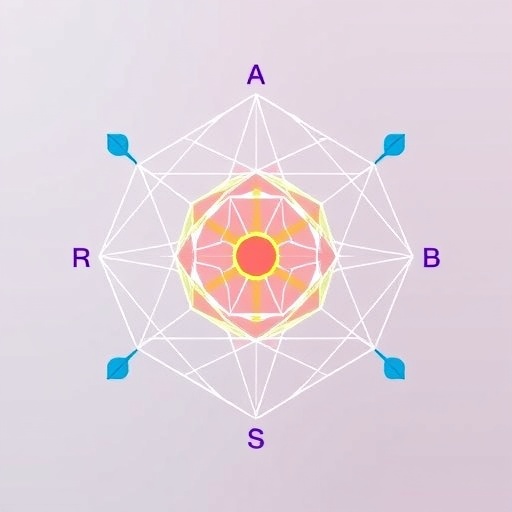
In a groundbreaking development that promises to reshape the future of quantum electronics, researchers have introduced a novel device concept known as the chiral fermionic valve. This innovation leverages the intricate quantum geometry of topological states to achieve an unprecedented control and manipulation of electronic degrees of freedom, setting the stage for transformative advances in electronic technologies. Unlike conventional devices that rely on charge or spin dynamics, this valve specifically filters chiral fermions — quasiparticles with a defined handedness — from trivial states, enabling a new paradigm in electronic conduction and control.
Traditional electronic devices primarily operate by modulating charge flow through semiconductors or manipulating electron spin through magnetism. Semiconductors form the backbone of transistors—the fundamental units of information processing—allowing charge flow to be switched on or off. On the other hand, magnets have enabled spin valves that control spin-polarized currents, serving as key components in memory storage and spintronics. The chiral fermionic valve transcends these modalities by directly exploiting the chirality inherent to fermions in topological materials, introducing an additional quantum degree of freedom for electronic control.
This valve operates on an ingenious principle that hinges on the quantum interference of chiral currents and the orbital angular momentum (OAM) dipole moment induced by an applied electric field. The experimental setup features a sophisticated three-arm device geometry, engineered to guide and filter fermionic currents based on their chirality. The key quantum mechanical quantity underpinning this mechanism is the difference in the orbital magnetic moment—represented by the OAM dipole (Delta boldsymbol{Omega}_{varepsilon}^{Gamma, mathrm{R}})—across the device arms. This dipole moment creates an asymmetry that segregates currents with opposite chiralities into different physical pathways, effectively acting as a valve that selectively transmits topological states while blocking trivial states.
A critical insight from the study is the identification of chiral currents carrying orbital magnetizations with opposite polarities in the left and right arms of the valve. These magnetizations arise from Chern-number-polarized topological states, a hallmark of materials exhibiting non-trivial band topology. The researchers demonstrated that by carefully tuning the orientation of an external magnetic field, they could modulate the occupancy and directionality of these chiral currents. This modulation provides a dynamic control mechanism over the valve’s filtering capability, effectively harnessing the quantum geometry of the material to manipulate charge transport pathways.
One of the most striking features of the chiral fermionic valve is its mesoscopic phase coherence, a quantum phenomenon observed at length scales where wave-like properties of electrons manifest prominently. The team confirmed this coherence through the construction of a Mach–Zehnder interferometer based on the valve’s structure. This interferometer revealed the quantum interference patterns of chiral currents, providing direct evidence that the valve not only filters electrons by chirality but also preserves their phase information over mesoscopic distances. Such coherence is vital for the development of quantum information devices and coherent electronic systems.
The theoretical and experimental foundation of this valve rests on a deep understanding of topological materials and their multifold band crossings. Unlike conventional conductors or insulators, these materials host quasiparticles that mimic relativistic chiral fermions, inherently linked to band topology. The device design harnesses this exotic physics, translating abstract topological concepts into tangible electronic functionality. By avoiding the need for magnetic fields, chemical doping, or electrostatic gating to access chiral states, this setup opens a new avenue for practical and scalable quantum devices.
The chiral fermionic valve’s analogy to a traditional transistor is compelling yet fundamentally distinct. While transistors use gate voltages as control knobs to regulate charge, the valve employs the electric-field-induced OAM dipole as a quasi-electrical tuning parameter. This novel “control knob” grants unprecedented access to the chiral degrees of freedom, enabling both the polarity and magnitude of current-induced orbital magnetizations to be finely adjusted. This level of control is not only academically intriguing but stands to impact technologies ranging from spintronics to quantum computing.
Beyond its immediate technological potential, the chiral fermionic valve introduces a versatile platform for fundamental scientific exploration. The ability to spatially separate chiral fermions of opposite handedness offers a unique experimental environment to study quantum interference effects, orbital magnetism, and the interplay between topology and electronic transport. The device’s sensitivity to external fields further permits dynamic tuning of these phenomena, positioning it as a powerful tool for probing the quantum world with exquisite precision.
Applications of this technology are far-reaching. In quantum information processing, for instance, the phase coherence and chiral selectivity of the valve could enable the encoding and manipulation of quantum bits based on chirality, potentially enhancing coherence times and resistance to decoherence. In electronic devices, the ability to control orbital magnetization with electric currents can lead to novel magnetoelectric effects, influencing sensor design and memory architectures. The valve also promises to stimulate new research directions in chiral electronics, a burgeoning field focused on exploiting chirality as an information carrier.
Crucially, this research broadens the scope of topological materials beyond traditional constraints. By demonstrating chiral fermionic filtering in multifold topological crossings without reliance on external magnetic fields or material modifications, the device significantly simplifies the practical realization of chiral electronic components. This democratization of access to topological states accelerates the integration of quantum geometry into device engineering, paving the way for scalable and robust quantum electronics.
The experimental team meticulously demonstrated these phenomena through a combination of transport measurements, magnetic field tuning, and interferometric studies. Their results confirm the operational principles of the valve and highlight the rich physics underlying the non-trivial quantum geometry associated with chiral fermions. The observations not only validate long-standing theoretical predictions but also inspire new theoretical frameworks to design next-generation quantum devices driven by chiral degrees of freedom.
As this technology matures, it will undoubtedly ignite multidisciplinary research collaborations spanning condensed matter physics, materials science, and electrical engineering. The chiral fermionic valve stands at the confluence of fundamental physics and applied technology, symbolizing how deep quantum mechanical principles can be harnessed to devise practical, impactful electronic devices. This breakthrough heralds a new chapter in the control of quantum matter, promising a suite of devices that surpass current limitations and embrace the full richness of quantum geometry and topology.
In summary, the advent of the chiral fermionic valve marks a revolutionary stride in quantum electronics, marrying theoretical elegance with experimental prowess. By channeling the unique properties of chiral fermions and their quantum geometric signatures, this device ushers in novel mechanisms for electronic control that could transform both fundamental science and applied technologies. As researchers continue to explore and refine this concept, the implications for quantum computing, spintronics, and electronic device engineering are profound, laying the groundwork for a future where chirality is a principal axis of control in quantum materials.
Subject of Research: Quantum geometry-driven chiral fermion filtering in topological materials.
Article Title: A chiral fermionic valve driven by quantum geometry.
Article References: Dixit, A., Sivakumar, P.K., Manna, K. et al. A chiral fermionic valve driven by quantum geometry. Nature 649, 47–52 (2026). https://doi.org/10.1038/s41586-025-09864-5
DOI: 10.1038/s41586-025-09864-5
Keywords: Chiral fermions, quantum geometry, topological states, orbital angular momentum dipole, mesoscopic phase coherence, Mach–Zehnder interferometer, Chern number, orbital magnetization, quantum interference, topological materials, quantum electronics.
Tags: chiral fermion valveelectronic degrees of freedominnovations in quantum electronicsmanipulation of chiral fermionsnew paradigms in electronic conductionorbital angular momentum in quantum systemsquantum geometryquantum interference in electronicsquasiparticles with defined handednessspintronics and memory storagetopological states in electronicstransformative advances in electronic technologies