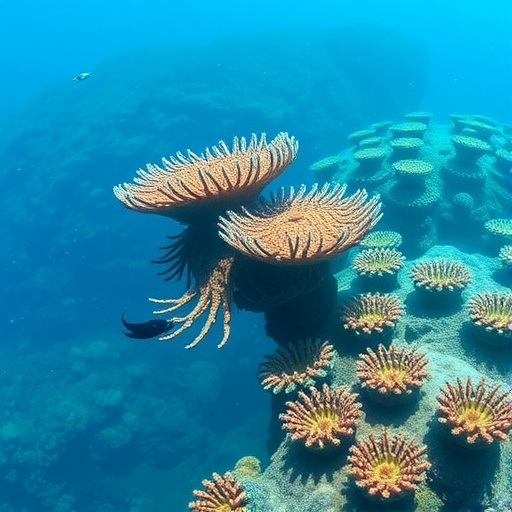
The intricate and ancient relationship between corals and their symbiotic microalgae is under unprecedented threat due to global climate change, yet new research has illuminated a remarkable capacity for resilience that stretches back hundreds of millions of years. Coral reefs, which underpin the survival of more than one-quarter of all marine species and support nearly a billion people globally, have been viewed as one of the most vulnerable ecosystems to contemporary environmental disruptions. However, a groundbreaking molecular phylogenetic analysis, incorporating hundreds of newly sequenced coral taxa, is reshaping our understanding of coral evolution and their adaptive strategies in the face of environmental upheaval.
This comprehensive study delves into the evolutionary history of scleractinian corals, the hard corals that construct the vast reefs both in shallow tropical seas and deeper marine environments. By harnessing time-calibrated molecular data, researchers have traced the origins of the scleractinians to approximately 460 million years ago, far predating previous estimates that often centered on the Mesozoic Era. This finding challenges conventional timelines and suggests that the earliest corals might have thrived in a markedly different ecological niche than the reef-building organisms we recognize today.
The ancestral scleractinian corals are posited to have been solitary, free-living organisms that did not depend on photosynthetic symbionts. Instead, these corals exhibited heterotrophic lifestyles, meaning they obtained nutrients independently rather than relying on algae. Fascinatingly, some may have reproduced by transverse division, a form of asexual reproduction that could facilitate rapid population expansion under favorable conditions. This flexible reproductive strategy would have allowed these ancient corals to inhabit a broad range of depths and substrates, from shallow coastal zones to deep-sea habitats.
One of the most striking revelations from this new phylogeny is the timing of the establishment of photosymbiosis—the symbiotic relationship between corals and photosynthetic dinoflagellates known as Symbiodiniaceae. The study situates the origin of this vital partnership around 300 million years ago, suggesting that photosymbiosis emerged well before the Mesozoic and Cenozoic coral radiations. The advent of photosymbiosis appears to have been a key innovation that triggered a pronounced diversification of coral lineages, enabling them to leverage sunlight for energy and thus colonize nutrient-poor tropical waters effectively.
Despite the evolutionary success afforded by photosymbiosis, the study notes that only a handful of these photosymbiotic coral lineages survived the severe environmental disruptions that punctuated the Mesozoic Era. Episodes of ocean acidification, temperature fluctuations, and widespread anoxia likely caused mass extinctions that wiped out many reef-building groups, underscoring their ecological vulnerability. In stark contrast, solitary heterotrophic corals with broad ecological tolerances thrived in deeper waters during these tumultuous periods, revealing an unexpected pattern of deep-sea refuge and persistence.
This dichotomy between photosymbiotic and non-photosymbiotic corals highlights the ecological trade-offs that have shaped coral evolution. While photosymbiosis confers enhanced growth rates and competitive advantages in stable, sunlit environments, it also entails heightened susceptibility to thermal stress and bleaching events. Conversely, heterotrophic corals, though generally slower growing and less reef-constructive, demonstrate greater resilience to fluctuating environmental conditions due to their opportunistic and flexible feeding strategies.
The implications of these findings extend directly to contemporary conservation concerns. Modern coral reefs are experiencing unprecedented stress from warming oceans, acidification, pollution, and overfishing, threatening the loss of biodiversity and the ecosystem services they provide. Yet, the deep-time resilience documented in this study offers a cautiously optimistic perspective that some coral lineages possess inherent capacities to withstand or adapt to ongoing environmental changes.
Current projections predict substantial coral decline and reef degradation in shallow tropical zones, where photosymbiotic corals dominate. However, the demonstrated persistence of solitary and heterotrophic corals in deep and variable habitats over hundreds of millions of years suggests these lineages might serve as reservoirs of genetic diversity and evolutionary potential. Conservation strategies could benefit from acknowledging and protecting these less conspicuous but ecologically significant coral groups.
Moreover, the research underscores the power of integrating molecular phylogenetics with paleobiology to illuminate the evolutionary trajectories of critical marine taxa. By constructing a robust global phylogeny based on newly generated genetic data, the study not only reconstructs lineage relationships but also maps historical shifts in ecological traits such as symbiosis, life form, and habitat preference. This nexus of genetics, ecology, and deep-time environmental context is crucial for forecasting coral reef futures under rapid anthropogenic impacts.
The study also challenges ecosystems scientists to reconsider the exclusive focus on shallow-water reef-building corals when assessing reef health and resilience. The discovery that deep-sea corals and solitary forms have navigated multiple past global changes highlights the complexity and heterogeneity of coral responses to environmental stressors across spatial and temporal scales.
Future research building on these findings can explore the genomic underpinnings of coral resilience mechanisms, such as stress tolerance pathways, symbiont acquisition flexibility, and reproductive strategies. Such insights could inform efforts to develop coral restoration approaches that harness natural adaptive capacities, including assisted gene flow or selective breeding programs.
In sum, this landmark phylogenetic study recalibrates our understanding of coral evolution and ecological dynamics. It reveals that, although coral reefs today face grave threats, the evolutionary legacy of corals is not solely one of vulnerability but also of remarkable endurance and adaptability throughout Earth’s complex environmental history. These deep-time perspectives inspire hope and urgency, reminding us that protecting coral diversity remains vital for maintaining the resilience and productivity of marine ecosystems well into the future.
As climate change continues to accelerate, informed conservation actions must integrate evolutionary biology insights to safeguard coral reefs and the myriad species and human communities that depend on them. This study represents a critical advance in that direction, uncovering hidden chapters in the story of coral life on Earth and pointing toward pathways for their survival amidst unprecedented challenges.
Subject of Research:
Evolutionary history and resilience of scleractinian corals and their symbiotic relationships through geological time.
Article Title:
A global coral phylogeny reveals resilience and vulnerability through deep time.
Article References:
Vaga, C.F., Quattrini, A.M., Galvão de Lossio e Seiblitz, I. et al. A global coral phylogeny reveals resilience and vulnerability through deep time. Nature (2025). https://doi.org/10.1038/s41586-025-09615-6
Image Credits: AI Generated
Tags: ancient coral adaptations and survivalcoral reef conservation strategiescoral resilience to climate changeecological niches of early coralsevolutionary history of scleractinian coralsglobal coral phylogeny researchimpacts of environmental disruptions on coralsmarine biodiversity and coral reefsmolecular phylogenetic analysis of coralssymbiotic relationships in coral ecosystemsthreats to coral reef ecosystemsunderstanding coral evolution and diversity