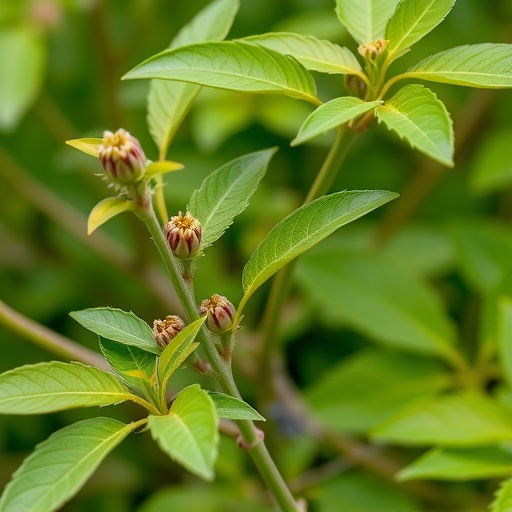
For decades, the elegant, spindle-shaped molecules of homoharringtonine have quietly waged war inside the bodies of patients with chronic myeloid leukemia. Harvested from the bark and leaves of the endangered plum yew tree, this plant alkaloid functions as a masterful saboteur, jamming the protein synthesis machinery of cancerous cells by binding to the ribosome’s A-site cleft and freezing the elongation cycle. Its clinical value is so profound that the US Food and Drug Administration approved a semisynthetic version, omacetaxine mepesuccinate, for cases resistant to frontline tyrosine kinase inhibitors. Yet, for all the medicinal triumphs, the molecular alchemy by which the Cephalotaxus tree actually constructs this chemical weapon has remained one of the most resilient enigmas in specialized plant metabolism. A new study led by researchers at Stanford University, published in Nature Chemical Biology, has now torn back the veil, revealing not merely a sequence of enzymatic steps but an entire botanical production model that shatters long-held assumptions about where and how this precious compound is born.
The supply chain that delivers homoharringtonine to the clinic is precariously perched on the slow-growing branches of a genus that conservationists classify as vulnerable. Cephalotaxus species, coniferous evergreens native to East Asia, produce the alkaloid skeleton cephalotaxine in vanishingly small quantities, and commercial extraction is both destructive and ecologically unsustainable. For years, chemists have been forced to rely on a semisynthetic route that harvests cephalotaxine from plant material and then appends a chiral side chain through a series of synthetic steps. The biosynthetic core, however, the pentacyclic fortress of cephalotaxine itself, could not be replicated in a fermenter or a heterologous host because its construction manual was missing. Without that manual, synthetic biology efforts to engineer yeast or tobacco cells into factories were grounded before takeoff. The Stanford team, cognizant of this bottleneck, set out not just to inch forward with a single enzyme discovery but to solve the pathway end-to-end, a task that required a fusion of two high-dimensional profiling technologies deployed with surgical precision.
Central to their strategy was a paired untargeted metabolomics and transcriptomics approach, a dual-omics pincer movement that allowed them to observe both the metabolic flux and the genetic blueprint simultaneously. They fed Cephalotaxus root cultures and intact seedlings with stable-isotope-labeled precursors—carbon-13–enriched phenylalanine and tyrosine, the aromatic amino acids long hypothesized to seed the alkaloid’s backbone—and then tracked the heavy atoms as they percolated through the biochemical network. High-resolution mass spectrometry captured the isotopic enrichment patterns of dozens of candidate intermediates, revealing a chronological cascade of structural transformations. In parallel, RNA sequencing of different tissues, meticulously separated into root tips, mature roots, stems, and leaves, provided the expression profiles of every gene that might encode a tailoring enzyme. The true genius of the method was the computational integration: they hunted for candidates whose transcript abundance in a given tissue correlated tightly with the accumulation of a particular mass-shifted metabolite in that same tissue following precursor feeding. This correlation-guided mining expedited what would otherwise have been an intractable fishing expedition across tens of thousands of genes.
The first thunderclap came when they mapped the spatial origin of biosynthesis. For decades, the prevailing assumption was that cephalotaxine was manufactured in the aerial parts of the plant, where it accumulates to its highest concentrations. The team’s stable-isotope labeling experiments, however, told a dramatically different story. When they systematically dissected plants and probed each organ for newly synthesized, isotopically labeled cephalotaxine, the signal lit up exclusively in the growing root tips. Meristematic cells at the very apex of the root, zones of rapid division and differentiation, were the sole biogenetic lighthouse. Mature roots, stems, and leaves contained substantial stores of cephalotaxine and its downstream derivative homoharringtonine, but these pools were metabolically inert—they could not incorporate the labeled precursors. This discovery upended the conventional view of alkaloid biosynthesis as a locally autonomous process and pointed instead toward a whole-plant division of labor, with the root tip operating as a chemical foundry and the rest of the plant serving as a storage warehouse and finishing facility.
That revelation set the stage for the term they coined: the whole-plant coordination model. In this framework, a late-stage intermediate they identified as cephalotaxinone is synthesized entirely within the root apical meristem, then loaded into the vascular system and transported acropetally to leaves and bark. There, a suite of tailoring enzymes, likely including methyltransferases and acyltransferases, converts this core intermediate into homoharringtonine and a constellation of related esters. The model explains why previous attempts to reconstitute the pathway in undifferentiated cell cultures had failed: callus cells lack the tissue-specific differentiation cues and intercellular transport infrastructure necessary to sustain the complete sequence. The root tip, with its unique hormonal milieu and redox poise, provides a privileged environment for the complex skeletal rearrangements that construct the cephalotaxine scaffold. The findings also resonate with a growing recognition in plant biology that bioactive alkaloids in species like Catharanthus roseus and Camptotheca acuminata are similarly orchestrated through spatially separated metabolic compartments, often bridging different organs or cell types.
With the geographic origin settled, the researchers turned to the chemical cartography of the pathway itself, identifying seven pathway intermediates that had never before been captured in a single unifying sequence. The journey begins with the condensation of phenethylisoquinoline building blocks, themselves derived from the aromatic amino acid L-phenylalanine, through a Pictet-Spengler-like enzymatic reaction to generate a benzylisoquinoline framework. This early skeleton then undergoes a breathtaking series of oxidative manipulations, each catalyzed by a different member of the cytochrome P450 superfamily. The first P450 installs a hydroxyl group at a precisely chosen position, priming the substrate for a subsequent oxidative coupling that knits together the A and B rings of the final pentacycle. A second P450 then executes an intramolecular cyclization to form the dihydrobenzazepine core, a strained seven-membered ring that is a hallmark of the Cephalotaxus alkaloids. The electron-rich aromatic rings dance under the influence of the heme iron, passing through fleeting epoxide and radical intermediates with stereochemical fidelity that organic chemists can only admire.
At this juncture, the pathway confronts a topological conundrum: the nascent alkaloid contains one carbon too many. To sculpt the final compact architecture of cephalotaxine, the molecule must undergo a carbon excision, a rare and chemically demanding transformation in which a methylene bridge is excised from the heterocyclic core, shrinking a six-membered ring to a five-membered ring. The enzyme responsible for this scalpel work is a 2-oxoglutarate-dependent dioxygenase (2-ODD), a non-heme iron enzyme that uses molecular oxygen and α-ketoglutarate as co-substrates to generate a high-valent iron-oxo species capable of abstracting a hydrogen atom. Through a radical rebound mechanism, the 2-ODD clips the carbon-carbon bond, releasing the extraneous carbon as formate or carbon dioxide and leaving behind the compact pyrrolidine ring that defines cephalotaxine’s E-ring. This carbon scission is reminiscent of the demethylation steps in gibberellin biosynthesis but is exceptionally uncommon in alkaloid metabolism, where carbon skeletons are typically built up rather than whittled down. The identification of this enzyme not only fills a mechanistic gap but also provides a biocatalytic tool that synthetic chemists might one day exploit for selective C–C bond cleavage in complex heterocycles.
Complementing the P450s and the 2-ODD is an atypical short-chain dehydrogenase/reductase (SDR) that catalyses a late-stage redox adjustment with an unusual twist. Most SDRs employ a conserved catalytic triad of serine, tyrosine, and lysine residues to facilitate hydride transfer from a nicotinamide cofactor to a carbonyl substrate, reducing a ketone to an alcohol. The Cephalotaxus SDR, however, operates in reverse, oxidizing a secondary alcohol to a ketone under conditions that suggest it stabilizes a fleeting enol intermediate. Structural modeling indicates that its active site architecture is subtly deformed compared to canonical SDRs, with a hydrophobic clamp that positions the substrate’s polycyclic ring system in a precisely strained conformation that favors hydride abstraction. This oxidative step primes the molecule for the final tautomerization and rearrangement events that deliver cephalotaxinone, the immediate precursor of cephalotaxine. The enzyme’s plasticity underscores how nature can repurpose familiar protein folds to perform chemically orthogonal tasks when the selective pressure to produce a defensive alkaloid is intense enough.
Cephalotaxinone sits at a metabolic branch point akin to a molecular turnstile. Once generated, it can be reduced by endogenous reductases to cephalotaxine, the scaffold that accumulates in bulk, or it can be diverted into the homoharringtonine pathway through esterification with a cephalotaxine-esterifying acyltransferase. The acyltransferase attaches a succinyl-coenzyme A–derived moiety that later undergoes further oxidation and methylation to yield the full homoharringtonine side chain. The spatial segregation model implies that cephalotaxinone is the long-distance transport form, selected for its stability and solubility, and that the subsequent esterification and modification steps occur predominantly in the recipient tissues. This separation of synthesis and elaboration may also protect the root meristem itself from the cytotoxic effects of the translation inhibitor it manufactures, a self-tolerance strategy that likely involves vacuolar sequestration and specialized transporters yet to be identified.
To validate their assignments, the team performed heterologous reconstitution experiments, temporarily expressing the candidate enzymes in Nicotiana benthamiana leaves, a workhorse transient expression system that allows rapid metabolic pathway prototyping. Co-expression of the P450 modules, the SDR, and the 2-ODD in the presence of an early phenethylisoquinoline substrate resulted in the accumulation of cephalotaxinone, which was authenticated by high-resolution mass spectrometry and co-elution with an authentic standard. Feeding experiments with individual knockout constructs confirmed the order of transformations and revealed that the pathway is not linear but branched, with two parallel routes to the final pentacycle. The reconstitution represents the first time the core homoharringtonine backbone has been built from simple aromatic precursors in a heterologous host, and it paves the way for scalable production in yeast or algae. The Stanford group has already filed provisional patents on the enzyme suite, signaling that the translation of this discovery to an industrial bioprocess is not merely a distant aspiration.
The implications of this work ripple far beyond the Cephalotaxus genome. Carbon excision, as mediated by the 2-ODD, is an enzymatic strategy rarely observed in natural product biosynthesis, and its elucidation provides a template for discovering analogous transformations in other plant lineages that produce compact, strained-ring alkaloids. The same enzyme family has been implicated in the biosynthesis of the anticancer camptothecin and the anti-addictive ibogaine, both of which feature similarly contracted ring systems. Understanding how the 2-ODD positions its iron-oxo center with sub-angstrom precision to select which carbon bond to break could inform the design of artificial biocatalysts for fragmenting saturated hydrocarbon cages, a notorious challenge in green chemistry. The study also highlights how combining metabolomics with transcriptomics on a single experimental timeline can circumvent the decades-long struggle that characterized earlier alkaloid pathway elucidations, such as morphine or vinblastine, which were pieced together enzyme by enzyme over nearly a century.
From a conservation perspective, the knowledge that cephalotaxinone synthesis is restricted to root tips introduces a novel strategy for sustainable harvesting. Instead of felling whole trees or stripping bark, one could cultivate Cephalotaxus hairy roots in bioreactors, capitalizing on the fact that root meristems maintain their biosynthetic competence in organ culture. Several companies are already exploring aeroponic mist bioreactors that grow plant roots in a soil-free environment, harvesting exudates without killing the plant. If the genes for the complete homoharringtonine pathway can be stably transferred to fast-growing root cultures of a more tractable species like Daucus carota (carrot) or even to microbial systems, the pressure on wild Cephalotaxus populations could be eliminated entirely. The Stanford team’s elucidation of the full enzyme complement thus serves as both a scientific milestone and a conservation blueprint, a dual legacy that resonates with the growing bioeconomy movement seeking to replace field-grown medicinal plants with fermentation-derived ingredients.
The viral, almost poetic dimension of this discovery lies in its rewriting of the plant body’s organizational logic. We tend to imagine that a leaf that is rich in a chemical must have produced it, but the Cephalotaxus tree practices a subterranean secrecy, its root tips whispering the genetic incantations that later manifest in the canopy. This subterranean-to-aerial dialogue, mediated by xylem-transported cephalotaxinone, evokes a kind of botanical supply chain logistics that challenges anthropocentric notions of production and ownership. It also raises fascinating evolutionary questions: Did the biosynthetic pathway originate in the root as a defense against soil-dwelling nematodes or fungi, only to be exapted later for leaf protection against herbivores? Or does the root tip’s environment provide a unique chemical haven for carrying out the radical-mediated carbon excision without damaging photosynthetic tissues? These are the puzzles that now animate plant chemical ecologists, who can use the enzymes as molecular probes to explore alkaloid trafficking in real time.
The broader cancer research community may find immediate utility in the enzyme set. Homoharringtonine’s mechanism of action, inhibition of translation elongation by preventing substrate binding at the ribosomal A-site, is distinct from that of kinase inhibitors, and it has shown promise in combination therapies for acute myeloid leukemia and even certain solid tumors. Yet, access to the molecule has been limited by its cost and supply volatility. With the biosynthetic genes in hand, it becomes feasible to engineer Saccharomyces cerevisiae strains that produce cephalotaxine from glucose, a feat that would slash manufacturing costs and enable the synthesis of novel side chain analogues that cannot be easily obtained through semisynthesis. Such analogues could be screened for superior pharmacokinetic profiles or activity against ribosomal mutations that confer resistance. The Stanford team has already begun collaborating with medicinal chemists to explore the substrate promiscuity of the cephalotaxine-modifying acyltransferase, creating a library of homoharringtonine variants in a test tube.
As with any great leap in biological understanding, the resolution of this biosynthetic mystery opens a multitude of new doors while finally shutting a centuries-old one. The plum yew tree had guarded its chemical secret since the time of the dinosaurs, and now, through the convergence of modern omics technologies and the tenacity of a team of chemical biologists, its blueprint is laid bare. The near-complete pathway to cephalotaxinone, with its cast of cytochrome P450s, an atypical SDR, and a carbon-snipping dioxygenase, reads like a thriller in enzymatic catalysis, complete with molecular plot twists and a spatial denouement that upends botanical dogma. In an era when the global pharmacopeia still leans heavily on plant-derived scaffolds, studies of this caliber remind us that the next blockbuster anticancer drug may already be hiding in a root tip, waiting for the right combination of mass spectrometry, RNA sequencing, and scientific imagination to coax its story into the light.
Subject of Research: Elucidation of the biosynthetic pathway of the anti-cancer alkaloid homoharringtonine in Cephalotaxus species, including the identification of enzymes, intermediates, and the spatial organization of synthesis within the plant.
Article Title: Cephalotaxinone enzymes reveal a whole plant model for homoharringtonine biosynthesis
Article References:
Dho, Y., Smith, K. & Sattely, E.S. Cephalotaxinone enzymes reveal a whole plant model for homoharringtonine biosynthesis.
Nat Chem Biol (2026). https://doi.org/10.1038/s41589-026-02260-8
Image Credits: AI Generated
DOI: https://doi.org/10.1038/s41589-026-02260-8
Keywords: homoharringtonine, cephalotaxine, biosynthesis, Cephalotaxus, cytochrome P450, 2-oxoglutarate-dependent dioxygenase, short-chain dehydrogenase, carbon excision, root tip metabolism, whole-plant coordination, plant specialized metabolism, metabolic engineering, alkaloid pathway, ribosomal inhibitor, chronic myeloid leukemia