It’s taboo to consume seaweed soup before exams in Korea since it can lead to failing the exam. The belief is rooted in the idea that the slippery nature of seaweed may cause people to slip and falter during the test. The slick surface of seaweeds such as seaweed and kelp is attributed to alginate, a mucilaginous substance. Notably, an intriguing study exploring the use of alginate for the treatment of retinal detachment has been recently published.
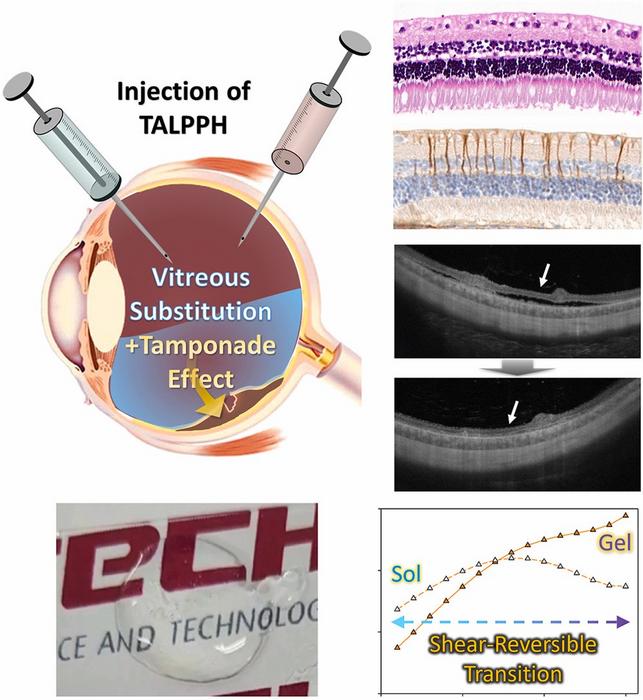
Credit: POSTECH
It’s taboo to consume seaweed soup before exams in Korea since it can lead to failing the exam. The belief is rooted in the idea that the slippery nature of seaweed may cause people to slip and falter during the test. The slick surface of seaweeds such as seaweed and kelp is attributed to alginate, a mucilaginous substance. Notably, an intriguing study exploring the use of alginate for the treatment of retinal detachment has been recently published.
A collaborative effort between Professor Hyung Joon Cha from the Department of Chemical Engineering and the School of Convergence Science and Technology and Dr. Geunho Choi from the Department of Chemical Engineering at Pohang University of Science and Technology (POSTECH), and Professor Woo Jin Jeong, Professor Woo Chan Park, and Professor Seoung Hyun An from the Dong-A University Hospital’s Department of Ophthalmology has resulted in the creation of an artificial vitreous body for treating retinal detachment. This solution is based on a natural carbohydrate derived from algae. The research findings were recently published in Biomaterials, an international journal of biomaterials published by Elsevier.
The vitreous body is a gel-like substance that occupies the space between the lens and retina, contributing to the eye’s structural integrity. Retinal detachment occurs when the retina separates from the inner wall of the eye and moves into the vitreous cavity, leading to detachment and potentially resulting in blindness in severe cases. While a common approach involves removing the vitreous body and substituting it with medical intraocular fillers like expandable gas or silicone oil, these fillers have been associated with various side effects.
To address these concerns, the research team employed a modified form of alginate, a natural carbohydrate sourced from algae. Alginate, also known as alginic acid, is widely utilized in various industries, including food and medicine, for its ability to create viscous products. In this research, the team crafted a medical composite hydrogel based on alginate, offering a potential alternative for vitreous replacement.
The hydrogel, possessing high biocompatibility and optical properties akin to authentic vitreous body, enables patients to preserve their vision post-surgery. Its distinctive viscoelasticity effectively regulates fluid dynamics within the eye, contributing to retinal stabilization and the elimination of air bubbles.
To validate the hydrogel’s stability and effectiveness, the team conducted experiments using animal models, specifically rabbit eyes, which closely resemble human eyes in structure, size, and physiological response. Implanting the hydrogel into rabbit eyes demonstrated its success in preventing the recurrence of retinal detachment, maintaining stability, and functioning well over an extended period without any adverse effects.
Professor Hyung Joon Cha of the POSTECH who led the study remarked, “There is a correlation between retinal detachment and severe myopia and the prevalence of retinal detachment is increasing, particularly in young people. The incidence of retinal detachment cases in Korea rose by 50% in 2022 compared to 2017.” He expressed the team’s commitment by saying, “Our team will enhance and progress the technology to make the hydrogel suitable for practical use in real-world eye care through ongoing research.”
Professor Woo Jin Jeong from the Dong-A University Hospital stated, “The worldwide market for intraocular fillers is expanding at a rate of 3% per year.” He added, “We anticipate that the hydrogel we’ve created will prove beneficial in upcoming vitreoretinal surgeries.”
The research was sponsored by the Korea Medical Device Development Fund and the Mid-Career Research Program of the National Research Foundation of Korea.
Journal
Biomaterials
DOI
10.1016/j.biomaterials.2023.122459
Article Title
Injectable alginate-based in situ self-healable transparent hydrogel as a vitreous substitute with a tamponading function
Article Publication Date
10-Jan-2024