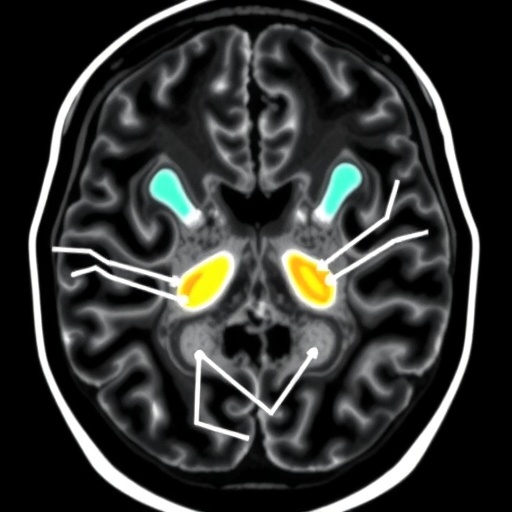
Dopamine has long been cast as the brain’s “motivation molecule,” a chemical messenger that helps shape reward, learning, movement and the effort people are willing to invest in obtaining food. Because eating is tightly linked to reward and reinforcement, dopamine has also become one of the most closely watched biological systems in obesity research. Yet a new investigation using advanced brain imaging suggests that one widely suspected part of this system may be functioning more normally in obesity than previously thought. In a large cohort of individuals with obesity, presynaptic dopamine function measured with [¹⁸F]FDOPA positron emission tomography, or PET, showed a normal dopamine uptake ratio compared with people of normal weight. The finding challenges the idea that obesity necessarily involves a fundamental loss of dopamine-producing capacity in the brain.
The study, led by D.L.M. Oterdoom, E. Hendrikse, A.H. Mulder and colleagues, addresses a question that has remained unresolved despite years of research: Is dopamine signaling altered in obesity because the brain produces or stores less dopamine, or because the receptors and downstream circuits that respond to dopamine behave differently? Earlier investigations have frequently reported changes in dopamine receptor availability in people with obesity, particularly involving the D2/D3 receptor family. Those findings have often been interpreted as evidence of a weakened reward system, potentially driving people to seek more food or more intensely rewarding foods to achieve the same motivational effect. But receptor availability is only one layer of the dopamine system. The new work focuses further upstream, examining the presynaptic machinery responsible for dopamine synthesis and handling.
To investigate that machinery, the researchers used [¹⁸F]FDOPA, a radiolabeled form of fluorodopa designed to provide a window into dopamine production in the living human brain. After it is administered, [¹⁸F]FDOPA crosses the blood–brain barrier and enters dopaminergic nerve terminals. There, it can be converted by aromatic L-amino acid decarboxylase into a labeled dopamine-like compound. PET scanners detect the radioactive signal over time, allowing scientists to estimate how efficiently the tracer is taken up and retained in regions supplied by dopamine neurons. Rather than simply showing where dopamine receptors are located, the technique probes an earlier stage of the pathway: the capacity of presynaptic terminals to capture the precursor and process it into a dopamine-related product. This makes [¹⁸F]FDOPA PET particularly valuable for distinguishing impaired dopamine synthesis from altered receptor responsiveness.
The central measurement in the study was the dopamine uptake ratio derived from the PET scans. In practical terms, this ratio compares tracer accumulation in dopamine-rich brain regions with a reference region that has relatively little specific dopaminergic activity. A higher or lower ratio can indicate differences in the integrity or activity of presynaptic dopamine terminals, although the measure is not a direct reading of moment-to-moment dopamine release. According to the researchers, the uptake ratio was normal in participants with obesity when compared with individuals of normal weight. That result suggests that obesity, at least in the cohort examined, was not associated with a broad reduction in the brain’s presynaptic capacity to take up and process [¹⁸F]FDOPA. The observation is important because it narrows the biological explanation: if dopamine-related behavior is altered, the cause may lie in receptor regulation, neural circuitry, signaling dynamics or environmental interactions rather than in a generalized failure of dopamine synthesis.
The result also helps explain why dopamine research in obesity has produced apparently conflicting conclusions. Dopamine is not a single switch that turns appetite on or off. Its effects depend on where it acts, when it is released, which receptor subtype receives the signal and how the brain has learned to associate cues with food. Presynaptic function refers to the sending side of the connection, while receptor availability describes part of the receiving side. A brain can maintain normal dopamine synthesis capacity while still showing changes in receptor density, receptor sensitivity or communication between dopamine circuits and regions involved in decision-making, memory and emotional regulation. In addition, dopamine responses may be altered in timing or magnitude without changing the amount of tracer taken up during a PET examination. Normal [¹⁸F]FDOPA uptake therefore does not mean that every aspect of dopamine signaling is normal; it means that one specific biological process appears preserved.
The study’s implications extend beyond the narrow question of whether dopamine production is reduced in obesity. Public discussions often portray obesity through an oversimplified “food addiction” model, suggesting that excessive eating must result from a damaged reward pathway that has become unable to respond normally. The new evidence argues for greater precision. Obesity is a biologically complex condition influenced by energy regulation, genetics, sleep, stress, medication, social environment, food availability and learned behavior. Dopamine participates in several of these processes, but its role cannot be inferred from receptor findings alone. A normal presynaptic uptake ratio indicates that the brain’s dopamine-producing terminals may remain capable of handling a precursor normally, even while other systems involved in appetite, satiety and reward undergo adaptive changes. Such distinctions matter for treatment development, because therapies aimed at dopamine synthesis may not address the mechanisms that actually contribute to an individual’s eating behavior.
At the same time, the findings should not be interpreted as evidence that dopamine is irrelevant to obesity. [¹⁸F]FDOPA PET provides an indirect and relatively specific measure, but it has technical limitations. Tracer uptake can be influenced by blood delivery, enzymatic conversion, storage and clearance, as well as by the mathematical model used to calculate the uptake ratio. The scan also captures dopamine-related capacity over a period of time rather than measuring every rapid fluctuation caused by food cues, stress or reward prediction. Brain regions may differ in their dopaminergic biology, and a group-level normal result can coexist with meaningful differences among individuals. The comparison with normal-weight participants is informative, but it cannot by itself establish whether dopamine alterations cause obesity, emerge as a consequence of long-term metabolic changes or vary according to age, sex, diet, medication use and disease severity. These questions will require studies combining PET with behavioral testing, receptor imaging, metabolic measurements and longitudinal follow-up.
The researchers’ conclusion is therefore both straightforward and consequential: in this large comparison of people with obesity and people of normal weight, presynaptic dopamine function as assessed by [¹⁸F]FDOPA PET was not detectably impaired. The result shifts attention away from the assumption that obesity is characterized by a universal deficit in dopamine synthesis and toward a more detailed model in which multiple components of the reward and appetite networks can change independently. For the public, the message is clear: the biology of obesity cannot be reduced to willpower, nor can it be fully explained by a single “broken” reward chemical. For scientists, the study provides a valuable constraint on future theories, showing that altered dopamine receptor availability and normal presynaptic tracer uptake can exist within the same disorder. The next major challenge will be to determine how these preserved dopamine terminals interact with receptor signaling, hormones, neural circuits and the modern food environment to influence eating behavior.
Subject of Research: Presynaptic dopamine function in obesity
Article Title: Normal dopamine uptake ratio on [¹⁸F]FDOPA PET-imaging in obesity
Article References: Oterdoom, D.L.M., Hendrikse, E., Mulder, A.H. et al. “Normal dopamine uptake ratio on [¹⁸F]FDOPA PET-imaging in obesity.” International Journal of Obesity (2026). https://doi.org/10.1038/s41366-026-02198-w
Image Credits: AI Generated
DOI: 10.1038/s41366-026-02198-w
Keywords: obesity, dopamine, presynaptic dopamine function, [¹⁸F]FDOPA PET, positron emission tomography, dopamine uptake ratio, brain imaging, eating behavior, reward system, neuroscience
Tags: [18F]FDOPA PET imaging in obesitybrain reward systems in obesitydopamine receptor availability in obesitydopamine signaling and food rewarddopamine uptake in obese individualsimpact of dopamine on weight regulationneural mechanisms underlying obesityneurobiological factors of obesityneuroimaging studies of dopamine in obesityObesity and dopamine functionPET imaging techniques for brain dopaminerole of dopamine in motivation and eating behavior