European forest-dwelling bats require complex woodland structures at both the micro-habitat and the landscape level for successful breeding in summer. Particularly, the results from Kharkiv region (Eastern Ukraine) demonstrate that large stands of mature forests older than 90 years improved the breeding activity of bats, their abundance and overall species richness. Abundance and species richness increased from upland plots surrounded by agricultural lands to riverine or waterside plots with high forest cover. These are the results of a newly published paper in the scientific journal “Forests” by an international team of authors from the Ukrainian Bat Rehabilitation Center (UBRC) and the Leibniz Institute for Zoo and Wildlife Research (Leibniz-IZW).
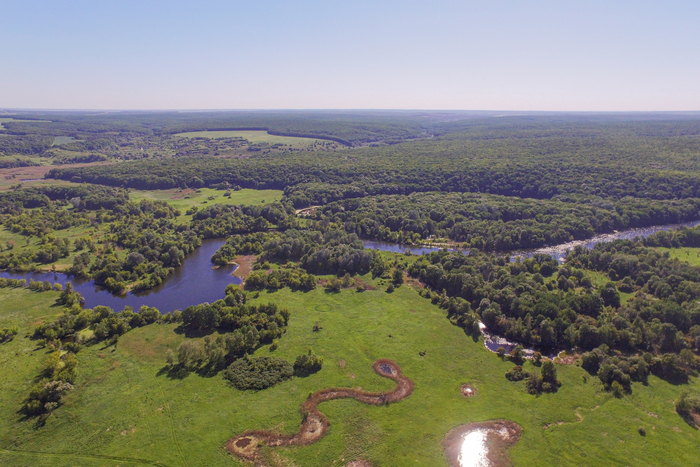
Credit: photo by Yehor Yatsiuk
European forest-dwelling bats require complex woodland structures at both the micro-habitat and the landscape level for successful breeding in summer. Particularly, the results from Kharkiv region (Eastern Ukraine) demonstrate that large stands of mature forests older than 90 years improved the breeding activity of bats, their abundance and overall species richness. Abundance and species richness increased from upland plots surrounded by agricultural lands to riverine or waterside plots with high forest cover. These are the results of a newly published paper in the scientific journal “Forests” by an international team of authors from the Ukrainian Bat Rehabilitation Center (UBRC) and the Leibniz Institute for Zoo and Wildlife Research (Leibniz-IZW).
Mature deciduous forests are the most targeted forest type for logging because of the high potential revenues from selling timber on international markets. Biodiversity associated with these forest stands is therefore threatened worldwide. One group of species that is a key conservation target are bats. In their investigation the scientific team around first author Dr Anton Vlaschenko from UBRC and Dr Viktoriia Radchuk from Leibniz-IZW asked how bat diversity is affected by land cover types and the age of forest stands in the Kharkiv region in northeastern Ukraine, in an area on the border between forest-steppe and the steppe zone. The fragmented broadleaved forests typical for this region are common for temperate regions, but the relationships between bat diversity, land cover and forest structure remain largely understudied. Yet, understanding such relationships is of key importance for designing efficient conservation measures.
The results showed that logging intensity in the study region differed between districts and was not related to the amount of mature forests. This allowed the scientists to study how bat assemblages were influenced by the share of clear-cuts and mature forests in the landscape. “The most conspicuous result was a clear increase of bat diversity close to riverine habitats, further enhanced by the presence of mature forests with a mean age more than 90 years”, says co-author Dr Yehor Yatsiuk from the University of Tartu (Estonia). “Although old forests represent 22% of all forests in the Kharkiv region, the combination of mature oak forests and riverine habitats covers much smaller areas, considerably limiting areas suitable for bats.”
First author Anton Vlaschenko, Co-Head of UBRC, says: “The field data used in this study were collected over a long period, in more than ten years of summer field expeditions. It was a continuous effort and hard job. We camped in tents and spent hundreds of sleepless nights near mist-nets. Later on, we also had some challenges when analysing these data. We were close to wrapping up the manuscript at the end of 2021. The collaboration with Leibniz-IZW scientists and, after February 24, 2022, the three-months scholarship for me and our team members offered by Leibniz-IZW meant that we could finish this paper.”
“The first time I participated to the field research studying bats in 2009, as an undergraduate student. The data collected back then contributed to the current paper. Since then, bats have become my big passion and focus group for my current research. By investigating the ecological requirements of such enigmatic animals, we better understand ecological leverages of the natural world”, adds co-author Dr Kseniia Kravchenko from UBRC and Leibniz-IZW. Dr Yehor Yatsiuk continues: “My research is focused on associations between historical distribution of forests and management of animal species in eastern Ukraine. Over recent decades we observed an increase in clear-cutting intensity in this region. Our aim is to ensure protection of forest biodiversity here. Ten years ago, we initiated a series of projects aimed to survey the oldest and the largest forests here with the main focus on several groups of vulnerable species from land snails to birds of prey and bats.”
“Our study shows that old forests and riverine habitats are beneficial for breeding activity of bats, for abundance of single bat species and for the overall community composition. The fact that we see the same response to landscape structure across levels of ecological organisation underlines the importance of preserving mature oak stands and riverine habitats for conservation of bat diversity in the region. I enjoyed working with Kharkiv bat researchers a lot, their enthusiasm and group spirit inspired me”, adds senior author Dr Viktoriia Radchuk, scientist at the Leibniz-IZW Department of Ecological Dynamics.
Journal
Forests
DOI
10.3390/f13101732
Method of Research
Case study
Subject of Research
Animals
Article Title
Bat Assemblages Are Shaped by Land Cover Types and Forest Age: A Case Study from Eastern Ukraine
Article Publication Date
20-Oct-2022