• HOME
  • NEWS
  • EXPLORE
    • CAREER
      • Companies
      • Jobs
    • EVENTS
    • iGEM
      • News
      • Team
    • PHOTOS
    • VIDEO
    • WIKI
  • BLOG
  • COMMUNITY
    • FACEBOOK
    • INSTAGRAM
    • TWITTER
Tuesday, July 7, 2026
BIOENGINEER.ORG
No Result
View All Result
  • Login
  • HOME
  • NEWS
  • EXPLORE
    • CAREER
      • Companies
      • Jobs
        • Lecturer
        • PhD Studentship
        • Postdoc
        • Research Assistant
    • EVENTS
    • iGEM
      • News
      • Team
    • PHOTOS
    • VIDEO
    • WIKI
  • BLOG
  • COMMUNITY
    • FACEBOOK
    • INSTAGRAM
    • TWITTER
  • HOME
  • NEWS
  • EXPLORE
    • CAREER
      • Companies
      • Jobs
        • Lecturer
        • PhD Studentship
        • Postdoc
        • Research Assistant
    • EVENTS
    • iGEM
      • News
      • Team
    • PHOTOS
    • VIDEO
    • WIKI
  • BLOG
  • COMMUNITY
    • FACEBOOK
    • INSTAGRAM
    • TWITTER
No Result
View All Result
Bioengineer.org
No Result
View All Result
Home NEWS Science News Biology

Quick-closing valve allows fish to rapidly regulate the water in their cells

Bioengineer by Bioengineer
November 21, 2022
in Biology
Reading Time: 3 mins read
0
Climbing perch
Share on FacebookShare on TwitterShare on LinkedinShare on RedditShare on Telegram

Regulating the fluid balance in their cells is vital in all living things. When insufficient water is being transported via the cell membrane, cells can use their aquaporins – also known as water channels – that open and close to remedy this. Researchers at the University of Gothenburg recently identified a water channel in a fish with what appears to be a unique quick-closing valve. Ultimately, this discovery could be significant in the development of drugs to treat cancer and Alzheimer’s disease.
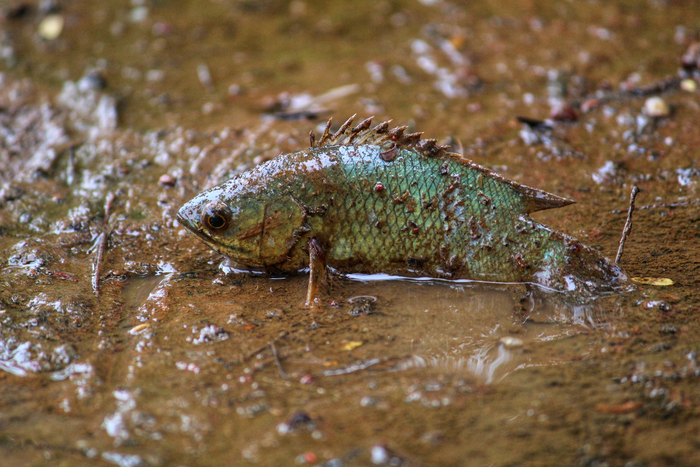
Climbing perch

Credit: Photo: Shutterstock

Regulating the fluid balance in their cells is vital in all living things. When insufficient water is being transported via the cell membrane, cells can use their aquaporins – also known as water channels – that open and close to remedy this. Researchers at the University of Gothenburg recently identified a water channel in a fish with what appears to be a unique quick-closing valve. Ultimately, this discovery could be significant in the development of drugs to treat cancer and Alzheimer’s disease.

Fish live in aqueous environments of varying salinity and some species can live for up to a week on land. This imposes some very particular demands on their aquaporins, so that they can continuously regulate the amount of water in their cells in very different environments. By studying the aquaporins in the cells of a species of climbing fish – climbing perch (Anabas testudineus) – which sometime climb out of the water and spend time on land, researchers have identified a water channel that appears to have a unique quick-closing valve. Their findings were reported in a scientific journal article published in Life Science Alliance.

“In our most recent study, we present the first high-resolution structural characterisation of a water channel found on the skin and gills of fish. We can see that this channel, which is in fact a protein, has a unique fold on the exterior surface of the cell, indicative of a previously unknown type of quick-closing valve in a water-specific aquaporin. The valve enables the water channel to open or close quickly, depending on the changing environment of the fish,” explains Kristina Hedfalk, biochemist at the University of Gothenburg.

Vital to reduce pressure

Understanding the underlying regulatory function of aquaporins could ultimately be significant for researching new drugs to treat, for example, cerebral oedema, which could save lives following an accident or onset of disease. When cerebral oedema occurs, it is vital to be able to reduce the pressure in the brain before damage occurs. By cultivating the protein that forms the valve in the fish’s water channel in laboratory environments, researchers have identified the features that can regulate the cellular fluid balance when rapid changes occur. Previous research has indicated that the function of brain cell aquaporins is reduced with the onset of Alzheimer’s disease, which is why this study could also be a valuable step towards developing drugs in this area.

“This is important basic research, where we can see the regulating protein at molecular level. In addition to its potential relevance to drug research, it is also important for us to understand the water channels in fish when managing them in aquaculture settings, so that the fish stay as healthy and comfortable as possible,” Kristina Hedfalk explains.

Link to the journal article: High resolution structure of a fish aquaporin reveals a novel extracellular fold


Journal

Life Science Alliance

DOI

10.26508/lsa.202201491

Article Title

High-resolution structure of a fish aquaporin reveals a novel extracellular fold

Article Publication Date

13-Oct-2022

Share12Tweet8Share2ShareShareShare2

Related Posts

Here are a few rewritten headlines for a science magazine post, each with a slightly different tone: Intriguing & poetic: How do organs sculpt themselves? Sea stars hold the secret Direct & research-focused: Sea stars reveal the hidden rules of organ formation Metaphorical & inviting: Tiny architects beneath the waves: What sea stars teach us about building organs Short & punchy: Star-shaped clues to how our organs take shape Question-led: Could a sea star show us how organs form? Elegant & feature-style: The body’s blueprint, glimpsed in a sea star’s arm

July 6, 2026
Bacteria evolve faster with unconventional gene copies — Biology

Bacteria evolve faster with unconventional gene copies

July 6, 2026

Neighbours rewire soil feedback via root microbiome shifts

July 6, 2026

Evolution-Inspired Biosensors Revolutionize Lipid Tracking in Real Time

July 2, 2026

POPULAR NEWS

  • Detection of EDCs in Breast Milk and Infant Urine Up to Six Months Highlights Early Exposure Risks

    77 shares
    Share 31 Tweet 19
  • New Drug Candidate Developed at McMaster Shows Potential for Treating Brain Cancer

    58 shares
    Share 23 Tweet 15
  • Saying Goodbye to PGY-6: Pediatric Fellowship Realities

    103 shares
    Share 41 Tweet 26
  • KTU Researchers Explore Ultrasound’s Role in Enhancing Blood Flow Beyond Diagnostics

    53 shares
    Share 21 Tweet 13

About

We bring you the latest biotechnology news from best research centers and universities around the world. Check our website.

Follow us

Recent News

Flame retardant BDE-209 targets molecularly linked to ulcerative colitis

Ultra-high frequency particle impacts mimic rockbursts to shatter hard rock

Kidney transplant outcomes in older adults studied by German researchers

Subscribe to Blog via Email

Enter your email address to subscribe to this blog and receive notifications of new posts by email.

Join 83 other subscribers
  • Contact Us

Bioengineer.org © Copyright 2023 All Rights Reserved.

Welcome Back!

Login to your account below

Forgotten Password?

Retrieve your password

Please enter your username or email address to reset your password.

Log In
No Result
View All Result
  • Homepages
    • Home Page 1
    • Home Page 2
  • News
  • National
  • Business
  • Health
  • Lifestyle
  • Science

Bioengineer.org © Copyright 2023 All Rights Reserved.