Regulating the fluid balance in their cells is vital in all living things. When insufficient water is being transported via the cell membrane, cells can use their aquaporins – also known as water channels – that open and close to remedy this. Researchers at the University of Gothenburg recently identified a water channel in a fish with what appears to be a unique quick-closing valve. Ultimately, this discovery could be significant in the development of drugs to treat cancer and Alzheimer’s disease.
Credit: Photo: Shutterstock
Regulating the fluid balance in their cells is vital in all living things. When insufficient water is being transported via the cell membrane, cells can use their aquaporins – also known as water channels – that open and close to remedy this. Researchers at the University of Gothenburg recently identified a water channel in a fish with what appears to be a unique quick-closing valve. Ultimately, this discovery could be significant in the development of drugs to treat cancer and Alzheimer’s disease.
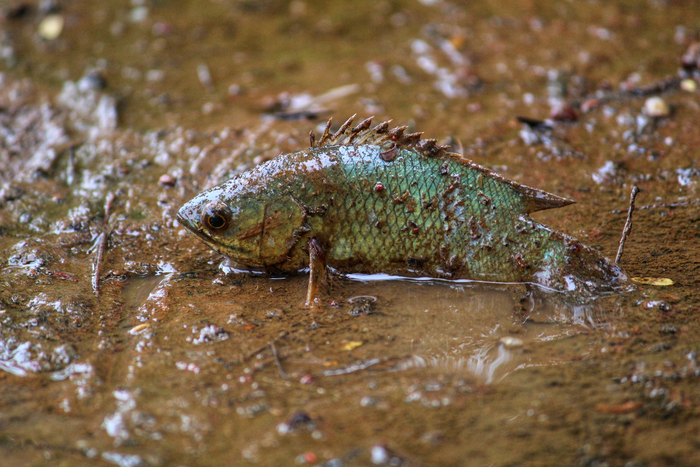
Fish live in aqueous environments of varying salinity and some species can live for up to a week on land. This imposes some very particular demands on their aquaporins, so that they can continuously regulate the amount of water in their cells in very different environments. By studying the aquaporins in the cells of a species of climbing fish – climbing perch (Anabas testudineus) – which sometime climb out of the water and spend time on land, researchers have identified a water channel that appears to have a unique quick-closing valve. Their findings were reported in a scientific journal article published in Life Science Alliance.
“In our most recent study, we present the first high-resolution structural characterisation of a water channel found on the skin and gills of fish. We can see that this channel, which is in fact a protein, has a unique fold on the exterior surface of the cell, indicative of a previously unknown type of quick-closing valve in a water-specific aquaporin. The valve enables the water channel to open or close quickly, depending on the changing environment of the fish,” explains Kristina Hedfalk, biochemist at the University of Gothenburg.
Vital to reduce pressure
Understanding the underlying regulatory function of aquaporins could ultimately be significant for researching new drugs to treat, for example, cerebral oedema, which could save lives following an accident or onset of disease. When cerebral oedema occurs, it is vital to be able to reduce the pressure in the brain before damage occurs. By cultivating the protein that forms the valve in the fish’s water channel in laboratory environments, researchers have identified the features that can regulate the cellular fluid balance when rapid changes occur. Previous research has indicated that the function of brain cell aquaporins is reduced with the onset of Alzheimer’s disease, which is why this study could also be a valuable step towards developing drugs in this area.
“This is important basic research, where we can see the regulating protein at molecular level. In addition to its potential relevance to drug research, it is also important for us to understand the water channels in fish when managing them in aquaculture settings, so that the fish stay as healthy and comfortable as possible,” Kristina Hedfalk explains.
Link to the journal article: High resolution structure of a fish aquaporin reveals a novel extracellular fold
Journal
Life Science Alliance
DOI
10.26508/lsa.202201491
Article Title
High-resolution structure of a fish aquaporin reveals a novel extracellular fold
Article Publication Date
13-Oct-2022