• HOME
  • NEWS
  • EXPLORE
    • CAREER
      • Companies
      • Jobs
    • EVENTS
    • iGEM
      • News
      • Team
    • PHOTOS
    • VIDEO
    • WIKI
  • BLOG
  • COMMUNITY
    • FACEBOOK
    • INSTAGRAM
    • TWITTER
Sunday, May 10, 2026
BIOENGINEER.ORG
No Result
View All Result
  • Login
  • HOME
  • NEWS
  • EXPLORE
    • CAREER
      • Companies
      • Jobs
        • Lecturer
        • PhD Studentship
        • Postdoc
        • Research Assistant
    • EVENTS
    • iGEM
      • News
      • Team
    • PHOTOS
    • VIDEO
    • WIKI
  • BLOG
  • COMMUNITY
    • FACEBOOK
    • INSTAGRAM
    • TWITTER
  • HOME
  • NEWS
  • EXPLORE
    • CAREER
      • Companies
      • Jobs
        • Lecturer
        • PhD Studentship
        • Postdoc
        • Research Assistant
    • EVENTS
    • iGEM
      • News
      • Team
    • PHOTOS
    • VIDEO
    • WIKI
  • BLOG
  • COMMUNITY
    • FACEBOOK
    • INSTAGRAM
    • TWITTER
No Result
View All Result
Bioengineer.org
No Result
View All Result
Home NEWS Science News Chemistry

UBCO researchers light the way to cleaner water

Bioengineer by Bioengineer
July 15, 2021
in Chemistry
Reading Time: 2 mins read
0
IMAGE
Share on FacebookShare on TwitterShare on LinkedinShare on RedditShare on Telegram

Fluorescence lighting helps detect impurities in water
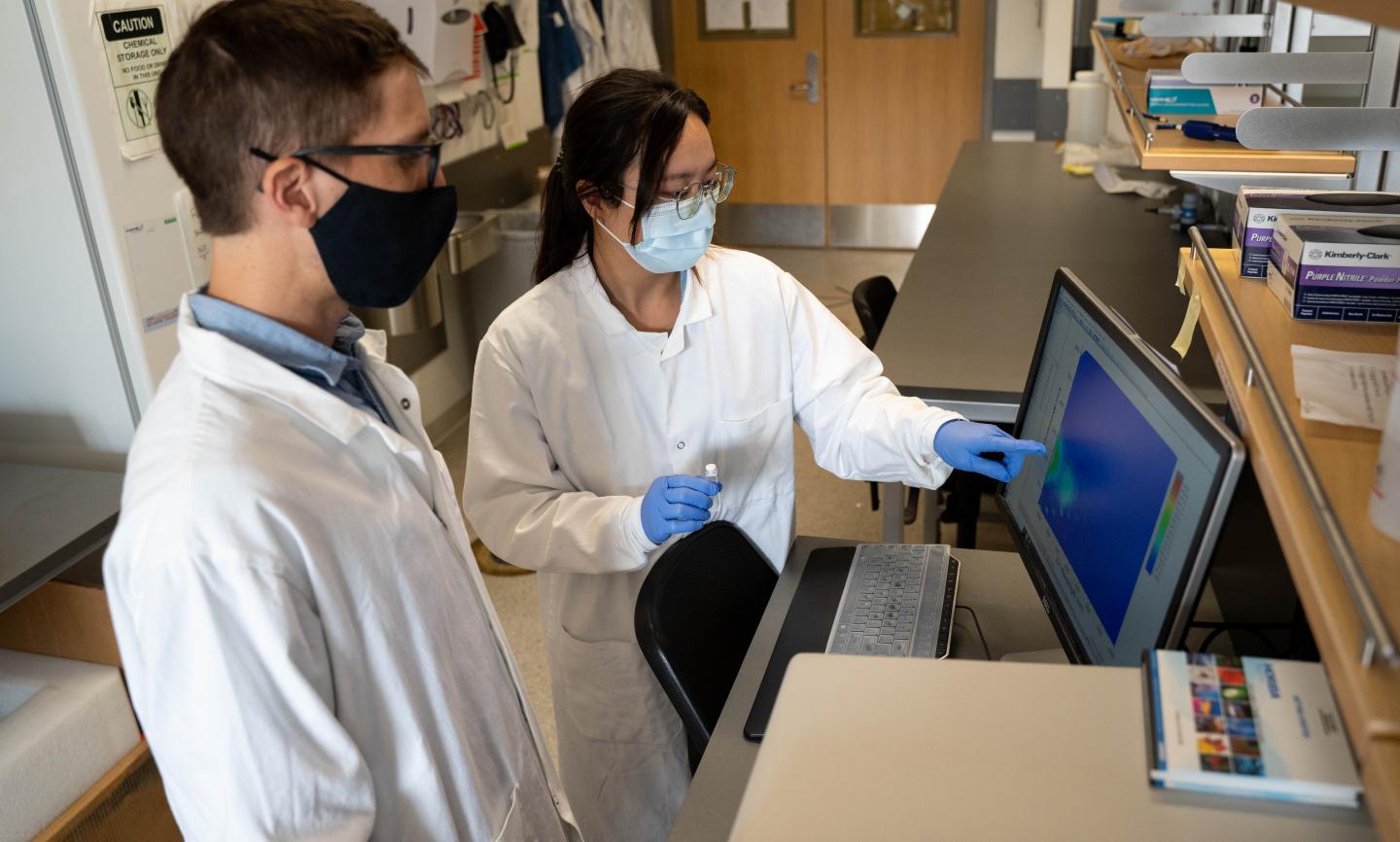
IMAGE

Credit: UBC Okanagan

Shining a beam of light into potentially contaminated water samples may hold the key to real-time detection of hydrocarbons and pesticides in water.

UBC Okanagan researchers are testing the use of fluorescence to monitor water quality. The results, they say, show great promise.

When a beam of light is shone into the water, it excites the electrons in molecules of certain compounds and causes them to emit light. The characteristics of the emitted light are like a fingerprint and can be used to identify certain contaminants, explains Nicolas Peleato, an assistant professor at UBCO’s School of Engineering.

“The challenge with using this fluorescence approach is that they are typically source-specific; meaning we have to calibrate for a particular water source and anticipate what specific contaminants we want to look for,” says Peleato. “In our latest work, we have developed a data processing technique that expands the effectiveness from one water source to others.”

This means their new technique removes a lot of the guesswork at the beginning of the process. As Peleato points out, every water source has a slightly different composition of organic compounds, which can hide the contaminant signals, so calibrating for each source is crucial for detection accuracy.

Using machine learning algorithms, Peleato and his graduate student Ziyu Li have devised an approach that addresses the challenge of source-specific models through mapping their similarities.

According to Li, it isn’t quite a one-size-fits-all method but it is close.

“By establishing a process that identifies similar patterns between water sources, the fluorescence detection becomes a viable option for real-time, accurate detection of hydrocarbons and pesticides,” explains Li.

During the testing process, the researchers look for unique shapes of fluorescence signals. Each unique shape indicates the presence of impurities and helps researchers determine what the impurity is and distinguish it from other compounds.

Water contaminated with hydrocarbons is known to be carcinogenic and can be dangerous, or toxic, to flora and fauna.

The researchers are now turning their attention to using this new approach to detect and monitor chemicals, such as the major toxic contaminants in oil sand tailings ponds that may impact surface water and groundwater.

“Building a comprehensive model that seamlessly transitions from one water source to another will speed up monitoring, and has the potential to be a game changer,” says Peleato.

###

This work was published in the journal Chemosphere, and funded in part by the Natural Sciences and Engineering Research Council of Canada.

Media Contact
Nathan Skolski
[email protected]

Original Source

https://news.ok.ubc.ca/2021/07/15/ubco-researchers-light-the-way-to-cleaner-water/

Related Journal Article

http://dx.doi.org/10.1016/j.chemosphere.2021.130064

Tags: BacteriologyBiomedical/Environmental/Chemical EngineeringBiotechnologyElectrical Engineering/ElectronicsSuperconductors/SemiconductorsTechnology/Engineering/Computer Science
Share13Tweet8Share2ShareShareShare2

Related Posts

Miniature Sensor Uses Light to Detect Touch — Chemistry

Miniature Sensor Uses Light to Detect Touch

May 8, 2026
Iron Minerals Determine Whether Dissolved Organic Matter Fuels Microbes or Becomes Long-Term Carbon Storage — Chemistry

Iron Minerals Determine Whether Dissolved Organic Matter Fuels Microbes or Becomes Long-Term Carbon Storage

May 8, 2026

Kate Evans Appointed Associate Lab Director for Biological and Environmental Systems Science at ORNL

May 8, 2026

Advancing Multiscale Modeling and Overcoming Operational Challenges in Autothermal COâ‚‚-to-Methanol Reactors

May 8, 2026
Please login to join discussion

POPULAR NEWS

  • Research Indicates Potential Connection Between Prenatal Medication Exposure and Elevated Autism Risk

    840 shares
    Share 336 Tweet 210
  • New Study Reveals Plants Can Detect the Sound of Rain

    727 shares
    Share 290 Tweet 181
  • Scientists Investigate Possible Connection Between COVID-19 and Increased Lung Cancer Risk

    68 shares
    Share 27 Tweet 17
  • Salmonella Haem Blocks Macrophages, Boosts Infection

    61 shares
    Share 24 Tweet 15

About

We bring you the latest biotechnology news from best research centers and universities around the world. Check our website.

Follow us

Recent News

Urdu Fall Risk Questionnaire Adapted for Elderly

Key Pharmacological Markers for HIV Prevention in MSM

Taking 8,500 Steps Daily May Aid Long-Term Weight Management, Study Finds

Subscribe to Blog via Email

Success! An email was just sent to confirm your subscription. Please find the email now and click 'Confirm' to start subscribing.

Join 82 other subscribers
  • Contact Us

Bioengineer.org © Copyright 2023 All Rights Reserved.

Welcome Back!

Login to your account below

Forgotten Password?

Retrieve your password

Please enter your username or email address to reset your password.

Log In
No Result
View All Result
  • Homepages
    • Home Page 1
    • Home Page 2
  • News
  • National
  • Business
  • Health
  • Lifestyle
  • Science

Bioengineer.org © Copyright 2023 All Rights Reserved.