• HOME
  • NEWS
  • EXPLORE
    • CAREER
      • Companies
      • Jobs
    • EVENTS
    • iGEM
      • News
      • Team
    • PHOTOS
    • VIDEO
    • WIKI
  • BLOG
  • COMMUNITY
    • FACEBOOK
    • INSTAGRAM
    • TWITTER
Thursday, March 26, 2026
BIOENGINEER.ORG
No Result
View All Result
  • Login
  • HOME
  • NEWS
  • EXPLORE
    • CAREER
      • Companies
      • Jobs
        • Lecturer
        • PhD Studentship
        • Postdoc
        • Research Assistant
    • EVENTS
    • iGEM
      • News
      • Team
    • PHOTOS
    • VIDEO
    • WIKI
  • BLOG
  • COMMUNITY
    • FACEBOOK
    • INSTAGRAM
    • TWITTER
  • HOME
  • NEWS
  • EXPLORE
    • CAREER
      • Companies
      • Jobs
        • Lecturer
        • PhD Studentship
        • Postdoc
        • Research Assistant
    • EVENTS
    • iGEM
      • News
      • Team
    • PHOTOS
    • VIDEO
    • WIKI
  • BLOG
  • COMMUNITY
    • FACEBOOK
    • INSTAGRAM
    • TWITTER
No Result
View All Result
Bioengineer.org
No Result
View All Result
Home NEWS Science News

NUST MISIS scientists create unique alloy for air, rail transports

Bioengineer by Bioengineer
September 6, 2025
in Science News
Reading Time: 2 mins read
0
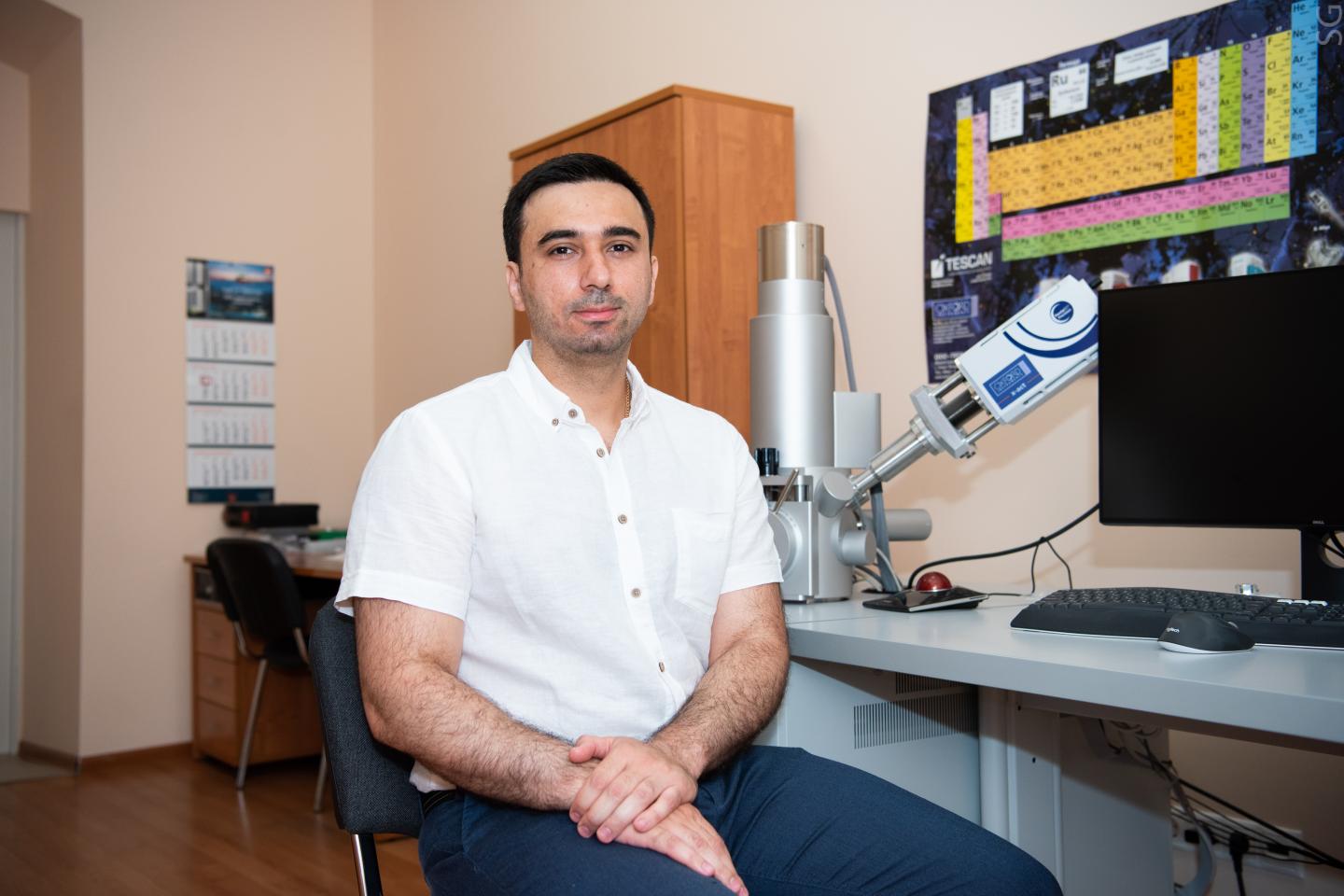
IMAGE
Share on FacebookShare on TwitterShare on LinkedinShare on RedditShare on Telegram

Scientists from the National University of Science and Technology “MISIS” (NUST MISIS) in cooperation with their colleagues from the Siberian Federal University and the Research and Production Centre of Magnetic Hydrodynamics (Krasnoyarsk) have developed a technology for producing a unique heat-resistant aluminium alloy with improved durability.

According to the researchers, this new alloy could replace more expensive and heavier copper conductors in aircraft and high-speed rail transport. The study results were published in an interdisciplinary, peer-reviewed journal, the Materials Letters. (https://www.sciencedirect.com/science/article/abs/pii/S0167577X2100896X)

Researchers have created a method for producing a unique heat-resistant, high-strength wire. The wire is made from an aluminium alloy, initially cast as a long billet, about 10 mm in diameter, in an electromagnetic crystalliser. The authors have succeeded in obtaining a thermally stable structure (up to and including 4000°C), which is considerably superior to known aluminium alloys with thermal stability, retaining their properties up to 250-3000°C.

“Before, alloys with such a structure were attempted to be produced using complicated and expensive technology involving ultrafast melt crystallisation, pellet production and subsequent methods of powder metallurgy”, Nikolay Belov, Chief Scientist and Professor of Materials Science and Light Alloys at National University of Science and Technology “MISiS”, explained.

The researchers have conducted direct deformation of a long billet – rolling and drawing – without using the traditional operations of homogenization and hardening for aluminium alloys. The key feature of their proposed technology lies in the casting and annealing regimes which produce a structure of thermally stable nanoparticles containing copper (Cu), manganese (Mn) and zirconium (Zr).

“We have been able to produce a high-strength heat-resistant wire from this alloy. We are now determining its physical and mechanical properties, and the first results are already very impressive. We are planning to patent the method of producing this type of wire”, Torgom Akopyan, senior researcher at NUST MISIS Department of Metal Forming, noted.

Heat-resistant, high-strength conductivity conductors could find use in aircraft and high-speed rail transport instead of the significantly more expensive and heavier copper ones. According to the authors, the unique and cheap technology could interest producers of wrought aluminium alloy semi-finished products.

###

The main results of the study were supported by the Russian Science Foundation (RSF) Grant No. 20-19-00249.

Media Contact
Lyudmila Dozhdikova
[email protected]

Original Source

https://en.misis.ru/university/news/science/2021-06/7403/

Related Journal Article

http://dx.doi.org/10.1016/j.matlet.2021.130199

Tags: Chemistry/Physics/Materials SciencesGrants/FundingIndustrial Engineering/ChemistryMaterialsResearch/DevelopmentTransportation/TravelUrbanizationVehicles
Share13Tweet8Share2ShareShareShare2

Related Posts

Microtubules Found to Actively Ensure Accurate Chromosome Distribution During Cell Division

March 25, 2026

Aversive Learning Hijacks Brain Sugar Sensor

March 25, 2026

Isolated H2-Reduced Clusters Boost CO2-to-Methanol Catalysis

March 25, 2026

In-Sensor Cryptography Links Physical Process to Digital Identity

March 25, 2026
Please login to join discussion

POPULAR NEWS

  • blank

    Revolutionary AI Model Enhances Precision in Detecting Food Contamination

    96 shares
    Share 38 Tweet 24
  • Imagine a Social Media Feed That Challenges Your Views Instead of Reinforcing Them

    1003 shares
    Share 397 Tweet 248
  • Uncovering Functions of Cavernous Malformation Proteins in Organoids

    54 shares
    Share 22 Tweet 14
  • Promising Outcomes from First Clinical Trials of Gene Regulation in Epilepsy

    51 shares
    Share 20 Tweet 13

About

We bring you the latest biotechnology news from best research centers and universities around the world. Check our website.

Follow us

Recent News

In-Sensor Cryptography Links Physical Process to Digital Identity

Can Psychosocial Factors Influence Cancer Risk?

Depression Factors in Elderly: Pre vs. Post-COVID Analysis

Subscribe to Blog via Email

Success! An email was just sent to confirm your subscription. Please find the email now and click 'Confirm' to start subscribing.

Join 78 other subscribers
  • Contact Us

Bioengineer.org © Copyright 2023 All Rights Reserved.

Welcome Back!

Login to your account below

Forgotten Password?

Retrieve your password

Please enter your username or email address to reset your password.

Log In
No Result
View All Result
  • Homepages
    • Home Page 1
    • Home Page 2
  • News
  • National
  • Business
  • Health
  • Lifestyle
  • Science

Bioengineer.org © Copyright 2023 All Rights Reserved.