• HOME
  • NEWS
  • EXPLORE
    • CAREER
      • Companies
      • Jobs
    • EVENTS
    • iGEM
      • News
      • Team
    • PHOTOS
    • VIDEO
    • WIKI
  • BLOG
  • COMMUNITY
    • FACEBOOK
    • INSTAGRAM
    • TWITTER
Sunday, May 10, 2026
BIOENGINEER.ORG
No Result
View All Result
  • Login
  • HOME
  • NEWS
  • EXPLORE
    • CAREER
      • Companies
      • Jobs
        • Lecturer
        • PhD Studentship
        • Postdoc
        • Research Assistant
    • EVENTS
    • iGEM
      • News
      • Team
    • PHOTOS
    • VIDEO
    • WIKI
  • BLOG
  • COMMUNITY
    • FACEBOOK
    • INSTAGRAM
    • TWITTER
  • HOME
  • NEWS
  • EXPLORE
    • CAREER
      • Companies
      • Jobs
        • Lecturer
        • PhD Studentship
        • Postdoc
        • Research Assistant
    • EVENTS
    • iGEM
      • News
      • Team
    • PHOTOS
    • VIDEO
    • WIKI
  • BLOG
  • COMMUNITY
    • FACEBOOK
    • INSTAGRAM
    • TWITTER
No Result
View All Result
Bioengineer.org
No Result
View All Result
Home NEWS Science News Chemistry

Latest observations by MUSER help clarify solar eruptions

Bioengineer by Bioengineer
April 30, 2021
in Chemistry
Reading Time: 2 mins read
0
IMAGE
Share on FacebookShare on TwitterShare on LinkedinShare on RedditShare on Telegram

IMAGE

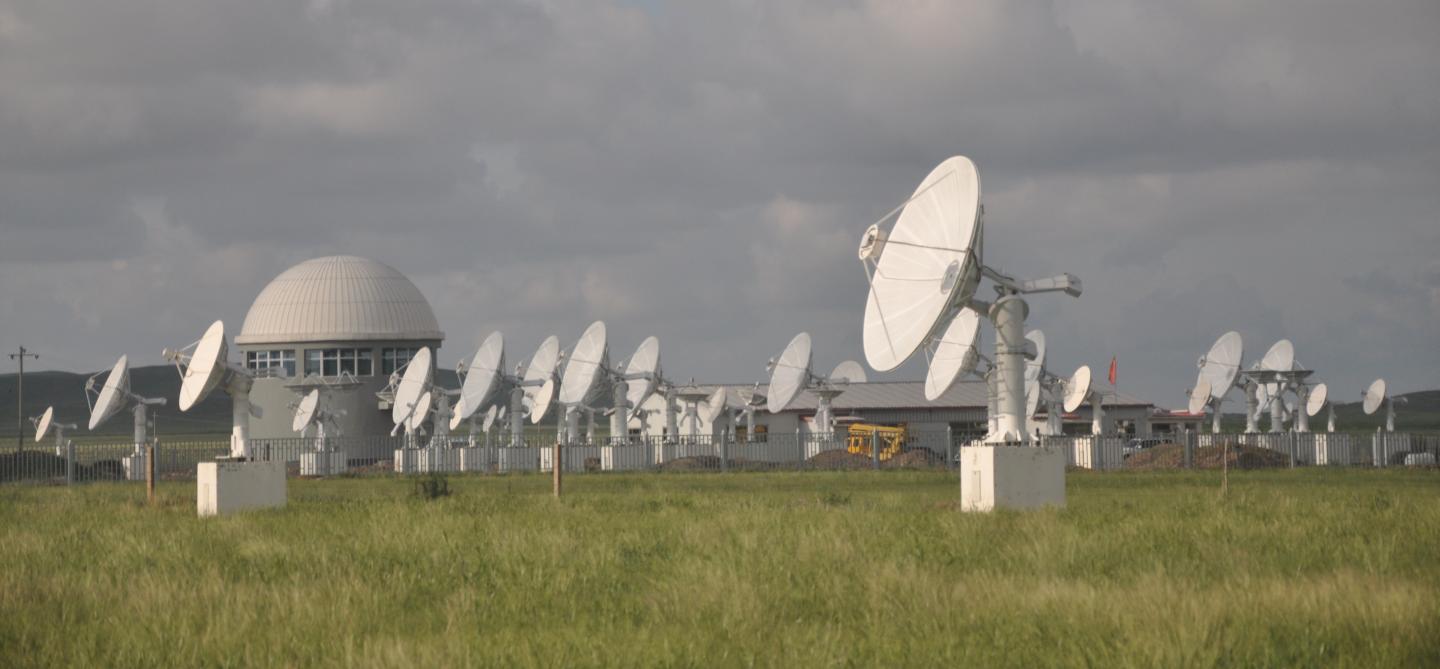
Credit: NAOC

Prof. YAN Yihua and his research team from the National Astronomical Observatories of the Chinese Academy of Sciences (NAOC) recently released detailed results of observations by the new generation solar radio telescope–Mingantu Spectral Radio Heliograph (MUSER)–from 2014 to 2019.

The study was published in Frontiers in Astronomy and Space Sciences on March 29. It may help us better understand the basic nature of solar eruptions.

Solar radio bursts are associated with different types of powerful eruptions like solar flares, coronal mass ejections, and various thermal and nonthermal processes. They are prompt indicators of disastrous space weather events.

Solar radio observations, especially at centimeter and decimeter wavelengths, play an important role in revealing the key physics behind primary energy release, particle acceleration and transportation. They also help identify crucial precursors of solar storms.

As the most powerful solar radio telescope in the world today, MUSER consists of 100 antennas spread over three spiral-shaped arms with a maximum baseline length of 3 km on the grassland in Inner Mongolia.

Its configuration is optimized to meet the needs of observing the full solar disk over an ultrawide frequency range of 0.4-15 gigahertz. Its images offer a temporal resolution of 25-200 milliseconds, spatial resolution of 1.3-51.6 arcseconds, spectral resolution of 25 megahertz and a high dynamic range of 25 decibels.

MUSER provides a unique, powerful tool for measuring solar magnetic fields and tracing the dynamic evolution of energetic electrons in a wide frequency range, which will help scientists better understand the origin of various solar activities and the basic drivers of space weather.

From MUSER, scientists can capture the most sensitive radio signals of even very small solar eruptive events. The observations also yield images of solar magnetic fields from the solar chromosphere up to the higher corona.

“MUSER, with its extension to metric and decametric wavelengths, will further play the role of new generation radio heliograph. It will become the leading solar-dedicated radio facility in the world for solar physics and space weather studies,” said Prof. YAN, chief scientist of Solar Physics at NAOC and the first author of the study.

###

Media Contact
XU Ang
[email protected]

Related Journal Article

http://dx.doi.org/10.3389/fspas.2021.584043

Tags: AstronomyAstrophysicsSpace/Planetary ScienceStars/The Sun
Share12Tweet8Share2ShareShareShare2

Related Posts

Miniature Sensor Uses Light to Detect Touch — Chemistry

Miniature Sensor Uses Light to Detect Touch

May 8, 2026
Iron Minerals Determine Whether Dissolved Organic Matter Fuels Microbes or Becomes Long-Term Carbon Storage — Chemistry

Iron Minerals Determine Whether Dissolved Organic Matter Fuels Microbes or Becomes Long-Term Carbon Storage

May 8, 2026

Kate Evans Appointed Associate Lab Director for Biological and Environmental Systems Science at ORNL

May 8, 2026

Advancing Multiscale Modeling and Overcoming Operational Challenges in Autothermal COâ‚‚-to-Methanol Reactors

May 8, 2026
Please login to join discussion

POPULAR NEWS

  • Research Indicates Potential Connection Between Prenatal Medication Exposure and Elevated Autism Risk

    840 shares
    Share 336 Tweet 210
  • New Study Reveals Plants Can Detect the Sound of Rain

    727 shares
    Share 290 Tweet 181
  • Scientists Investigate Possible Connection Between COVID-19 and Increased Lung Cancer Risk

    68 shares
    Share 27 Tweet 17
  • Salmonella Haem Blocks Macrophages, Boosts Infection

    61 shares
    Share 24 Tweet 15

About

We bring you the latest biotechnology news from best research centers and universities around the world. Check our website.

Follow us

Recent News

Evaluating Digoxin Use in Patients with Symptomatic Rheumatic Heart Disease

Evaluating the Effectiveness and Safety of Digitalis Glycosides in Treating Heart Failure

Urdu Fall Risk Questionnaire Adapted for Elderly

Subscribe to Blog via Email

Success! An email was just sent to confirm your subscription. Please find the email now and click 'Confirm' to start subscribing.

Join 82 other subscribers
  • Contact Us

Bioengineer.org © Copyright 2023 All Rights Reserved.

Welcome Back!

Login to your account below

Forgotten Password?

Retrieve your password

Please enter your username or email address to reset your password.

Log In
No Result
View All Result
  • Homepages
    • Home Page 1
    • Home Page 2
  • News
  • National
  • Business
  • Health
  • Lifestyle
  • Science

Bioengineer.org © Copyright 2023 All Rights Reserved.