• HOME
  • NEWS
  • EXPLORE
    • CAREER
      • Companies
      • Jobs
    • EVENTS
    • iGEM
      • News
      • Team
    • PHOTOS
    • VIDEO
    • WIKI
  • BLOG
  • COMMUNITY
    • FACEBOOK
    • INSTAGRAM
    • TWITTER
Monday, January 12, 2026
BIOENGINEER.ORG
No Result
View All Result
  • Login
  • HOME
  • NEWS
  • EXPLORE
    • CAREER
      • Companies
      • Jobs
        • Lecturer
        • PhD Studentship
        • Postdoc
        • Research Assistant
    • EVENTS
    • iGEM
      • News
      • Team
    • PHOTOS
    • VIDEO
    • WIKI
  • BLOG
  • COMMUNITY
    • FACEBOOK
    • INSTAGRAM
    • TWITTER
  • HOME
  • NEWS
  • EXPLORE
    • CAREER
      • Companies
      • Jobs
        • Lecturer
        • PhD Studentship
        • Postdoc
        • Research Assistant
    • EVENTS
    • iGEM
      • News
      • Team
    • PHOTOS
    • VIDEO
    • WIKI
  • BLOG
  • COMMUNITY
    • FACEBOOK
    • INSTAGRAM
    • TWITTER
No Result
View All Result
Bioengineer.org
No Result
View All Result
Home NEWS Science News Biology

Fostered flamingos just as friendly

Bioengineer by Bioengineer
April 8, 2021
in Biology
Reading Time: 2 mins read
0
IMAGE
Share on FacebookShare on TwitterShare on LinkedinShare on RedditShare on Telegram

IMAGE

Credit: Paul Rose

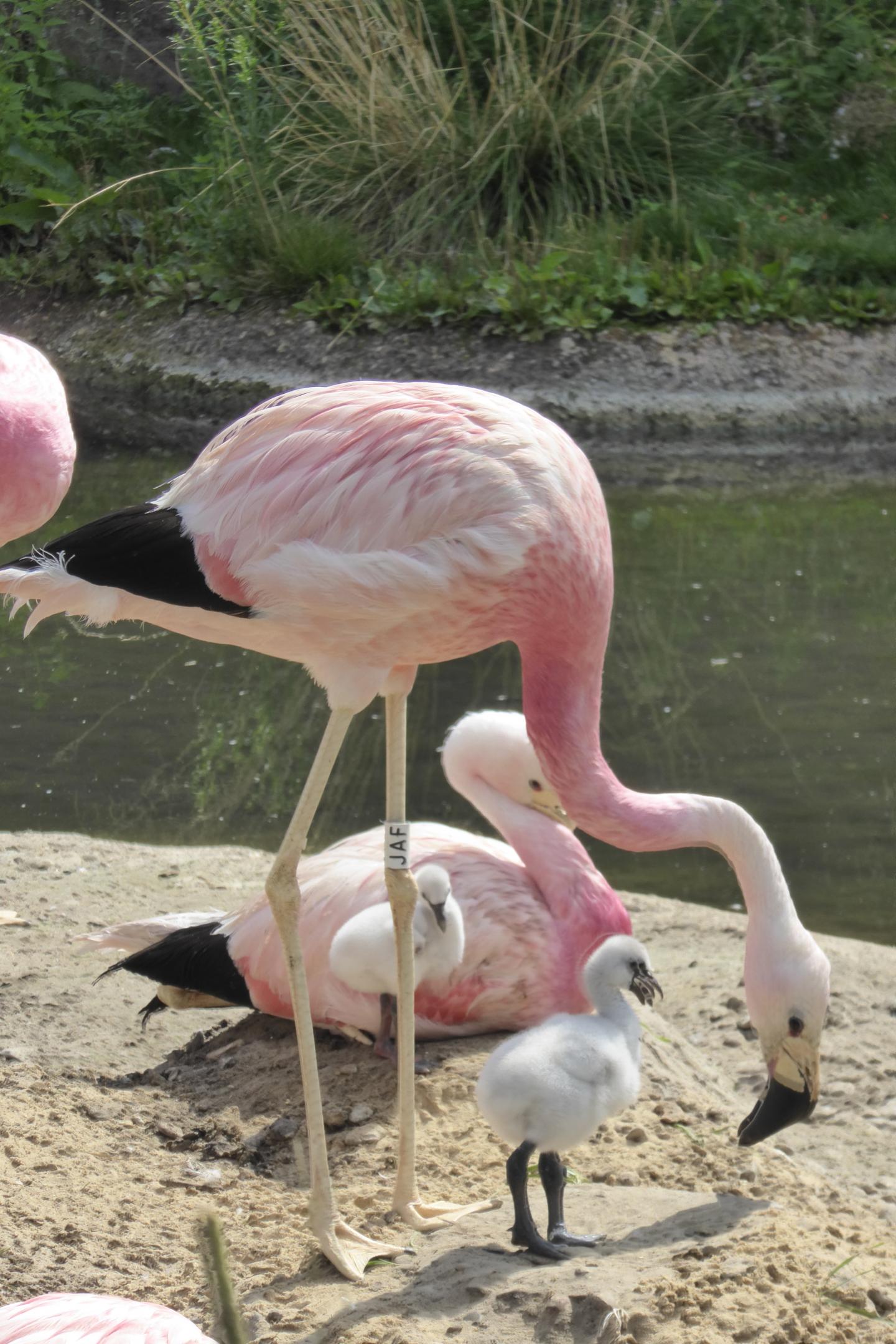
Flamingo chicks raised by foster parents from another flamingo species develop normally, scientists say.

Six Chilean flamingo chicks were reared by Andean flamingos – a species of similar size and behaviour – at WWT Slimbridge Wetland Centre in the summer of 2018.

University of Exeter scientists studied the chicks’ behaviour after they re-joined the Chilean flamingo flock early in 2019.

The results showed fostering had no negative effects, with fostered flamingos still forming stable social ties – making “friends” and behaving like parent-reared birds.

“Slimbridge’s Andean flamingos hadn’t nested for about 20 years,” said Dr Paul Rose, of the University of Exeter.

“But in the hot summer of 2018 – probably due to the high temperatures – they made nests and laid eggs.

“Unfortunately, the eggs turned out to be infertile, possibly due to the age of the birds – some of them are approaching their 60s.

“To give them enrichment (allowing them to behave naturally), keepers placed six eggs from the Chilean flamingo flock to be raised by the Andean flamingos.

“This gave us a rare opportunity to study the effects of fostering – although it should be noted that these species are remarkably similar, and this would not have been attempted otherwise.”

Peter Kidd, then a student on Exeter’s MSc Animal Behaviour course, observed and recorded the chicks’ behaviour from April to July 2019 (after their return to their own flock).

These observations were used to study integration and social networks.

“The six fostered chicks and seven parent-reared chicks quickly bonded back together,” Kidd said.

“We found very slight behavioural differences – small enough to be explained by individual variation – and all chicks became embedded in the wider social network of the group.

“They all had favoured ‘friends’ to spend time with, which is normal flamingo behaviour.”

Species including the Andean flamingo rare in captivity (only two flocks worldwide) and are classified as “vulnerable” in the wild.

Flamingos can be challenging to breed regularly in captivity, so the findings about successful fostering may help zoo conservation programmes.

“Foster rearing appears to be a safe method for conservation breeding of these species if done correctly,” Dr Rose said.

“It is important to note that this fostering event went so smoothly because of the expert flamingo knowledge within the animal care teams at WWT.”

The paper, published in the Journal of Zoo and Botanical Gardens, is entitled: “Influences of rearing environment on behaviour and welfare of captive Chilean flamingos: a case study on foster-reared and parent-reared birds.”

###

Media Contact
Alex Morrison
[email protected]

Related Journal Article

http://dx.doi.org/10.3390/jzbg2020013

Tags: BiodiversityBiologyDevelopmental/Reproductive BiologyEcology/EnvironmentPopulation BiologyZoology/Veterinary Science
Share12Tweet8Share2ShareShareShare2

Related Posts

blank

PET Microplastics Harm Pig Pancreas Through Lipotoxicity

January 11, 2026
Stem Cell-Derived Vesicles Combat UVB-Induced Skin Aging

Stem Cell-Derived Vesicles Combat UVB-Induced Skin Aging

January 11, 2026

Retroelement Expansions Drive Stingless Bee Genome Evolution

January 11, 2026

Trypanosoma cruzi’s Genome Unveils 32 Chromosomes, 3 Compartments

January 11, 2026
Please login to join discussion

POPULAR NEWS

  • Enhancing Spiritual Care Education in Nursing Programs

    154 shares
    Share 62 Tweet 39
  • PTSD, Depression, Anxiety in Childhood Cancer Survivors, Parents

    146 shares
    Share 58 Tweet 37
  • Robotic Ureteral Reconstruction: A Novel Approach

    66 shares
    Share 26 Tweet 17
  • Impact of Vegan Diet and Resistance Exercise on Muscle Volume

    47 shares
    Share 19 Tweet 12

About

We bring you the latest biotechnology news from best research centers and universities around the world. Check our website.

Follow us

Recent News

Senior Nursing Students Encounter End-of-Life Experiences

Kawasaki Disease Linked to Hepatitis and Torque Teno Virus

Developing Efficient Protocols for Respiratory Virus Biobank

Subscribe to Blog via Email

Success! An email was just sent to confirm your subscription. Please find the email now and click 'Confirm' to start subscribing.

Join 71 other subscribers
  • Contact Us

Bioengineer.org © Copyright 2023 All Rights Reserved.

Welcome Back!

Login to your account below

Forgotten Password?

Retrieve your password

Please enter your username or email address to reset your password.

Log In
No Result
View All Result
  • Homepages
    • Home Page 1
    • Home Page 2
  • News
  • National
  • Business
  • Health
  • Lifestyle
  • Science

Bioengineer.org © Copyright 2023 All Rights Reserved.