NIAID research suggests protective effects of vaccination remain intact
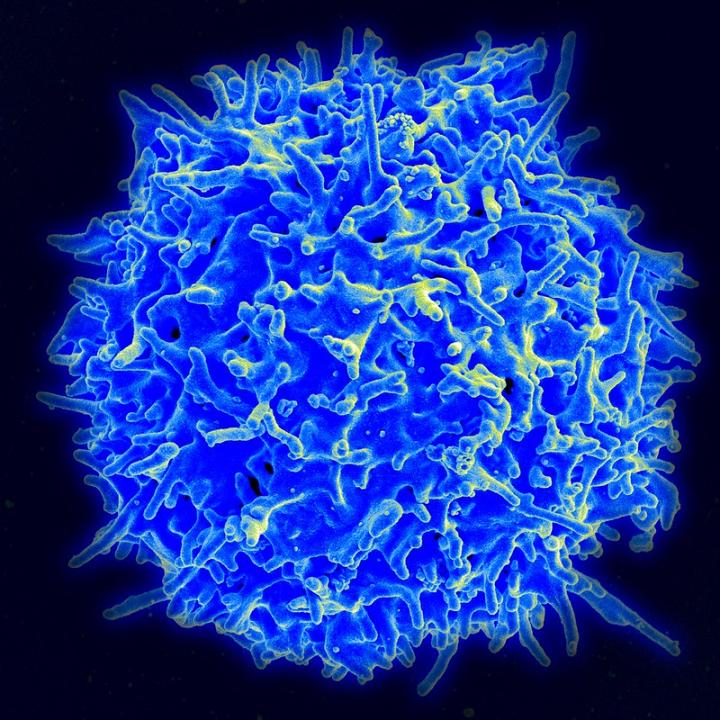
Credit: NIAID
WHAT:
When variants of SARS-CoV-2 (the virus that causes COVID-19) emerged in late 2020, concern arose that they might elude protective immune responses generated by prior infection or vaccination, potentially making re-infection more likely or vaccination less effective. To investigate this possibility, researchers from the National Institute of Allergy and Infectious Diseases (NIAID), part of the National Institutes of Health, and colleagues analyzed blood cell samples from 30 people who had contracted and recovered from COVID-19 prior to the emergence of virus variants. They found that one key player in the immune response to SARS-CoV-2–the CD8+ T cell–remained active against the virus.
The research team was led by NIAID’s Andrew Redd, Ph.D., and included scientists from Johns Hopkins University School of Medicine, Johns Hopkins Bloomberg School of Public Health and the immunomics-focused company, ImmunoScape.
The investigators asked whether CD8+ T cells in the blood of recovered COVID-19 patients, infected with the initial virus, could still recognize three SARS-CoV-2 variants: B.1.1.7, which was first detected in the United Kingdom; B.1.351, originally found in the Republic of South Africa; and B.1.1.248, first seen in Brazil. Each variant has mutations throughout the virus, and, in particular, in the region of the virus’ spike protein that it uses to attach to and enter cells. Mutations in this spike protein region could make it less recognizable to T cells and neutralizing antibodies, which are made by the immune system’s B cells following infection or vaccination.
Although details about the exact levels and composition of antibody and T-cell responses needed to achieve immunity to SARS-CoV-2 are still unknown, scientists assume that strong and broad responses from both antibodies and T cells are required to mount an effective immune response. CD8+ T cells limit infection by recognizing parts of the virus protein presented on the surface of infected cells and killing those cells.
In their study of recovered COVID-19 patients, the researchers determined that SARS-CoV-2-specific CD8+ T-cell responses remained largely intact and could recognize virtually all mutations in the variants studied. While larger studies are needed, the researchers note that their findings suggest that the T cell response in convalescent individuals, and most likely in vaccinees, are largely not affected by the mutations found in these three variants, and should offer protection against emerging variants.
Optimal immunity to SARS-Cov-2 likely requires strong multivalent T-cell responses in addition to neutralizing antibodies and other responses to protect against current SARS-CoV-2 strains and emerging variants, the authors indicate. They stress the importance of monitoring the breadth, magnitude and durability of the anti-SARS-CoV-2 T-cell responses in recovered and vaccinated individuals as part of any assessment to determine if booster vaccinations are needed.
###
ARTICLE:
AD Redd et al. CD8+ T cell responses in COVID-19 convalescent individuals target conserved epitopes from multiple prominent SARS-CoV-2 circulating variants. Open Forum Infectious Diseases DOI: 10.1093/ofid/ofab143 (2021).
WHO:
Anthony S. Fauci, M.D., NIAID Director and Chief, Laboratory of Immunoregulation, is available to comment on this research. Dr. Andrew Redd, staff scientist in the Laboratory of Immunoregulation, is also available.
This work was supported in part by NIAID grants R01AI120938, R01AI120938S1 and R01AI128779 and by National Heart Lung and Blood Institute grant 1K23HL151826-01.
CONTACT:
To schedule interviews, please contact Anne A. Oplinger,
(301) 402-1663,
[email protected].
NIAID conducts and supports research–at NIH, throughout the United States, and worldwide–to study the causes of infectious and immune-mediated diseases, and to develop better means of preventing, diagnosing and treating these illnesses. News releases, fact sheets and other NIAID-related materials are available on the NIAID website.
About the National Institutes of Health (NIH):
NIH, the nation’s medical research agency, includes 27 Institutes and Centers and is a component of the U.S. Department of Health and Human Services. NIH is the primary federal agency conducting and supporting basic, clinical, and translational medical research, and is investigating the causes, treatments, and cures for both common and rare diseases. For more information about NIH and its programs, visit http://www.
Media Contact
Anne A. Oplinger
[email protected]
Related Journal Article
http://dx.