• HOME
  • NEWS
  • EXPLORE
    • CAREER
      • Companies
      • Jobs
    • EVENTS
    • iGEM
      • News
      • Team
    • PHOTOS
    • VIDEO
    • WIKI
  • BLOG
  • COMMUNITY
    • FACEBOOK
    • INSTAGRAM
    • TWITTER
Saturday, February 7, 2026
BIOENGINEER.ORG
No Result
View All Result
  • Login
  • HOME
  • NEWS
  • EXPLORE
    • CAREER
      • Companies
      • Jobs
        • Lecturer
        • PhD Studentship
        • Postdoc
        • Research Assistant
    • EVENTS
    • iGEM
      • News
      • Team
    • PHOTOS
    • VIDEO
    • WIKI
  • BLOG
  • COMMUNITY
    • FACEBOOK
    • INSTAGRAM
    • TWITTER
  • HOME
  • NEWS
  • EXPLORE
    • CAREER
      • Companies
      • Jobs
        • Lecturer
        • PhD Studentship
        • Postdoc
        • Research Assistant
    • EVENTS
    • iGEM
      • News
      • Team
    • PHOTOS
    • VIDEO
    • WIKI
  • BLOG
  • COMMUNITY
    • FACEBOOK
    • INSTAGRAM
    • TWITTER
No Result
View All Result
Bioengineer.org
No Result
View All Result
Home NEWS Science News Chemistry

‘Opposite action’ could improve industrial gas separation

Bioengineer by Bioengineer
March 19, 2021
in Chemistry
Reading Time: 2 mins read
0
IMAGE
Share on FacebookShare on TwitterShare on LinkedinShare on RedditShare on Telegram

A design concept changes how materials separate gaseous mixtures
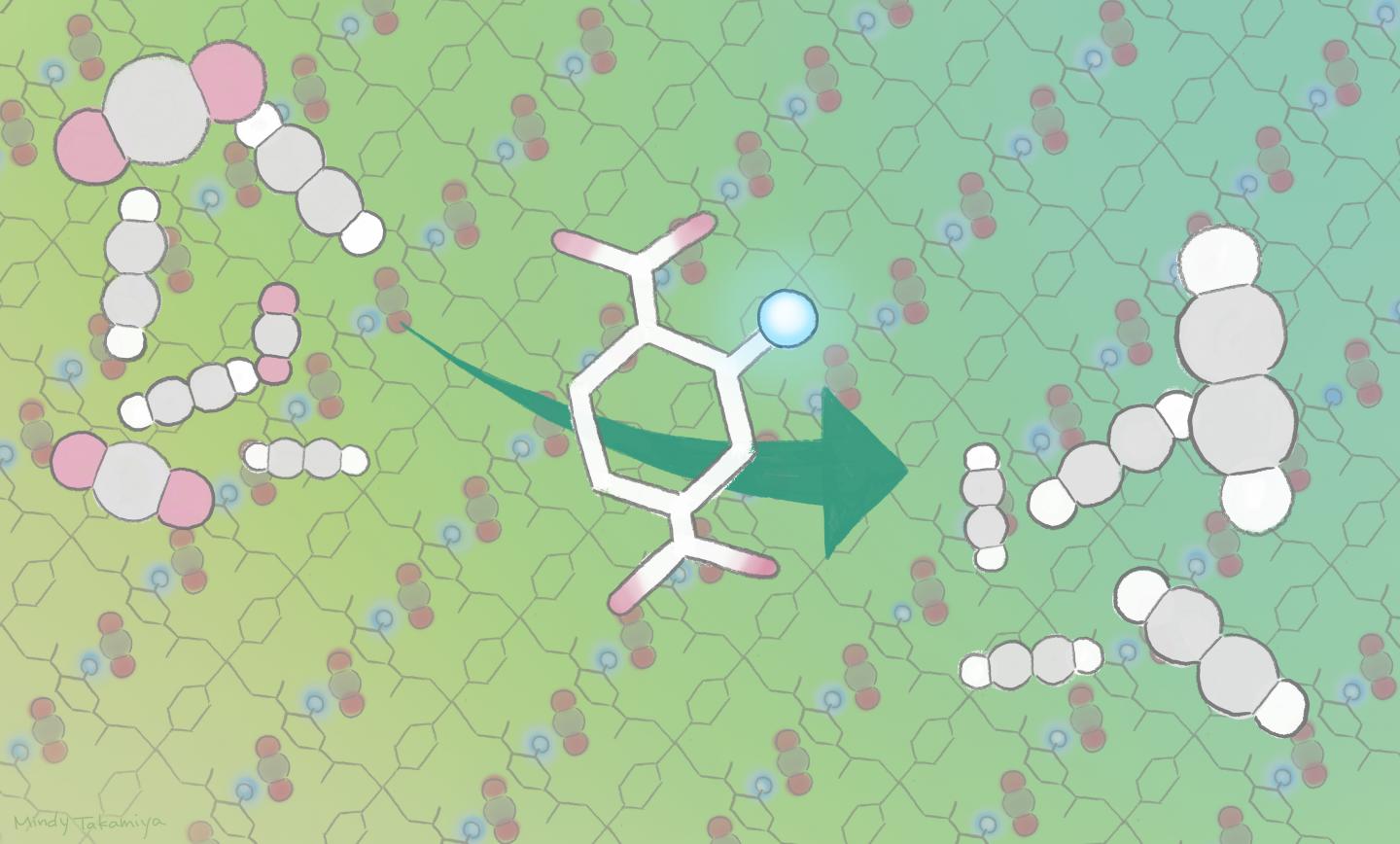
IMAGE

Credit: Mindy Takamiya/Kyoto University

A more energy-efficient method improves how an industrial gas is purified by reversing the traditional process. The concept was developed and successfully tested by scientists at Kyoto University’s Institute for Integrated Cell-Material Sciences (iCeMS) in Japan and colleagues. The findings were reported in the journal Angewandte Chemie International Edition.

Acetylene is a gas used in many industries, including as a fuel in welding and a chemical building block for materials like plastics, paints, glass and resins. To produce acetylene, it first needs to be purified from carbon dioxide. Traditionally, this is done by passing the acetylene/carbon dioxide gaseous mixture through a material. Carbon dioxide weakly interacts with the material and so passes through, while acetylene reacts strongly and becomes attached to it. The problem is that the subsequent removal of acetylene from the material takes several energy-consuming steps.

Scientists have been looking for ways to reverse this process, so that acetylene becomes the gas that passes through the material and carbon dioxide is held back. But so far, this has been very challenging.

“A problem is that both gases have similar molecular size, shape and boiling points,” explains iCeMS chemist Susumu Kitagawa, who led the study. “Adsorbents that favour carbon dioxide over acetylene do exist but are rare, especially those that work at room temperature.”

Kitagawa, iCeMS materials chemist Ken-ichi Otake and their colleagues improved carbon dioxide adsorption of a crystalline material called porous coordination polymers by modifying its pores. The team anchored amino groups into the pore channels of two porous coordination polymers. This provided additional sites for carbon dioxide to interact with and attach to the material. The additional interaction site also changed the way acetylene bound to the material, leaving less space for acetylene molecule attachment. This meant that more carbon dioxide and less acetylene was adsorbed compared to the same material that did not have the amino group anchors.

These newly designed materials adsorbed more carbon dioxide and less acetylene compared to other currently available carbon dioxide adsorbents. They also functioned well around room temperature, and performed stably through several cycles.

“This ‘opposite action’ strategy could be applicable to other gas systems, offering a promising design principle for porous materials with high performance for challenging recognition and separation systems,” says Kitagawa.

###

DOI: 10.1002/anie.202016673

About Kyoto University’s Institute for Integrated Cell-Material Sciences (iCeMS):

At iCeMS, our mission is to explore the secrets of life by creating compounds to control cells, and further down the road to create life-inspired materials.

https://www.icems.kyoto-u.ac.jp/

For more information, contact:

I. Mindy Takamiya/Mari Toyama

[email protected]

Media Contact
Mindy Takamiya
[email protected]

Related Journal Article

http://dx.doi.org/10.1002/anie.202016673

Tags: Chemistry/Physics/Materials SciencesIndustrial Engineering/ChemistryMaterials
Share12Tweet8Share2ShareShareShare2

Related Posts

blank

Breakthrough in Environmental Cleanup: Scientists Develop Solar-Activated Biochar for Faster Remediation

February 7, 2026
blank

Cutting Costs: Making Hydrogen Fuel Cells More Affordable

February 6, 2026

Scientists Develop Hand-Held “Levitating” Time Crystals

February 6, 2026

Observing a Key Green-Energy Catalyst Dissolve Atom by Atom

February 6, 2026
Please login to join discussion

POPULAR NEWS

  • Robotic Ureteral Reconstruction: A Novel Approach

    Robotic Ureteral Reconstruction: A Novel Approach

    82 shares
    Share 33 Tweet 21
  • Digital Privacy: Health Data Control in Incarceration

    63 shares
    Share 25 Tweet 16
  • Study Reveals Lipid Accumulation in ME/CFS Cells

    57 shares
    Share 23 Tweet 14
  • Breakthrough in RNA Research Accelerates Medical Innovations Timeline

    53 shares
    Share 21 Tweet 13

About

We bring you the latest biotechnology news from best research centers and universities around the world. Check our website.

Follow us

Recent News

Exploring Decision-Making in Dementia Caregivers’ Mobility

Succinate Receptor 1 Limits Blood Cell Formation, Leukemia

Palmitoylation of Tfr1 Drives Platelet Ferroptosis and Exacerbates Liver Damage in Heat Stroke

Subscribe to Blog via Email

Enter your email address to subscribe to this blog and receive notifications of new posts by email.

Join 73 other subscribers
  • Contact Us

Bioengineer.org © Copyright 2023 All Rights Reserved.

Welcome Back!

Login to your account below

Forgotten Password?

Retrieve your password

Please enter your username or email address to reset your password.

Log In
No Result
View All Result
  • Homepages
    • Home Page 1
    • Home Page 2
  • News
  • National
  • Business
  • Health
  • Lifestyle
  • Science

Bioengineer.org © Copyright 2023 All Rights Reserved.