Credit: Purdue University/Chris Adam
WEST LAFAYETTE, Ind. – IdentifySensors Biologics, a Purdue University-affiliated technology firm developing a rapid diagnostic platform for detecting pathogens, including SARS-CoV-2, has entered into a new partnership with Purdue Research Foundation and will open an office in Purdue’s Discovery Park District.
As the COVID pandemic was about to break around the globe, IdentifySensors, the parent company of IdentifySensors Biologics, had approached Purdue to help them develop a nanosensor designed to detect spoilage and specific pathogens in the food supply chain.
When the pandemic became apparent, the company pivoted to start working with Purdue researcher Lia Stanciu, from materials engineering, to develop a rapid diagnostic platform for detecting SARS-CoV-2 the virus that causes COVID-19.
IdentifySensors Biologics has partnered with PRF and has opened an office in the Convergence Center for Innovation and Collaboration in Purdue’s Discovery Park District. PRF is investing $50,000 in IdentifySensors.
“The partnership with PRF is a very significant step because it expands the possibilities for success and catalyzes the team’s efforts to convert Purdue technology into real commercial products,” said Thomas Sors, assistant director of the Purdue Institute of Inflammation, Immunology and Infectious Disease. “By having their own office at the Convergence Center, IdentifySensors Biologics can take full advantage of working with the University because it is submerged inside the entrepreneurial heart of the Discovery Park District and at the doorsteps of the Birck Nanotechnology Center labs at Purdue.”
Wade Lange, vice president and chief entrepreneurial officer of PRF, said, “This partnership aligns with our mission at PRF of helping the university improve the world through its technologies and graduates, which has taken on even more significance during this global pandemic.”
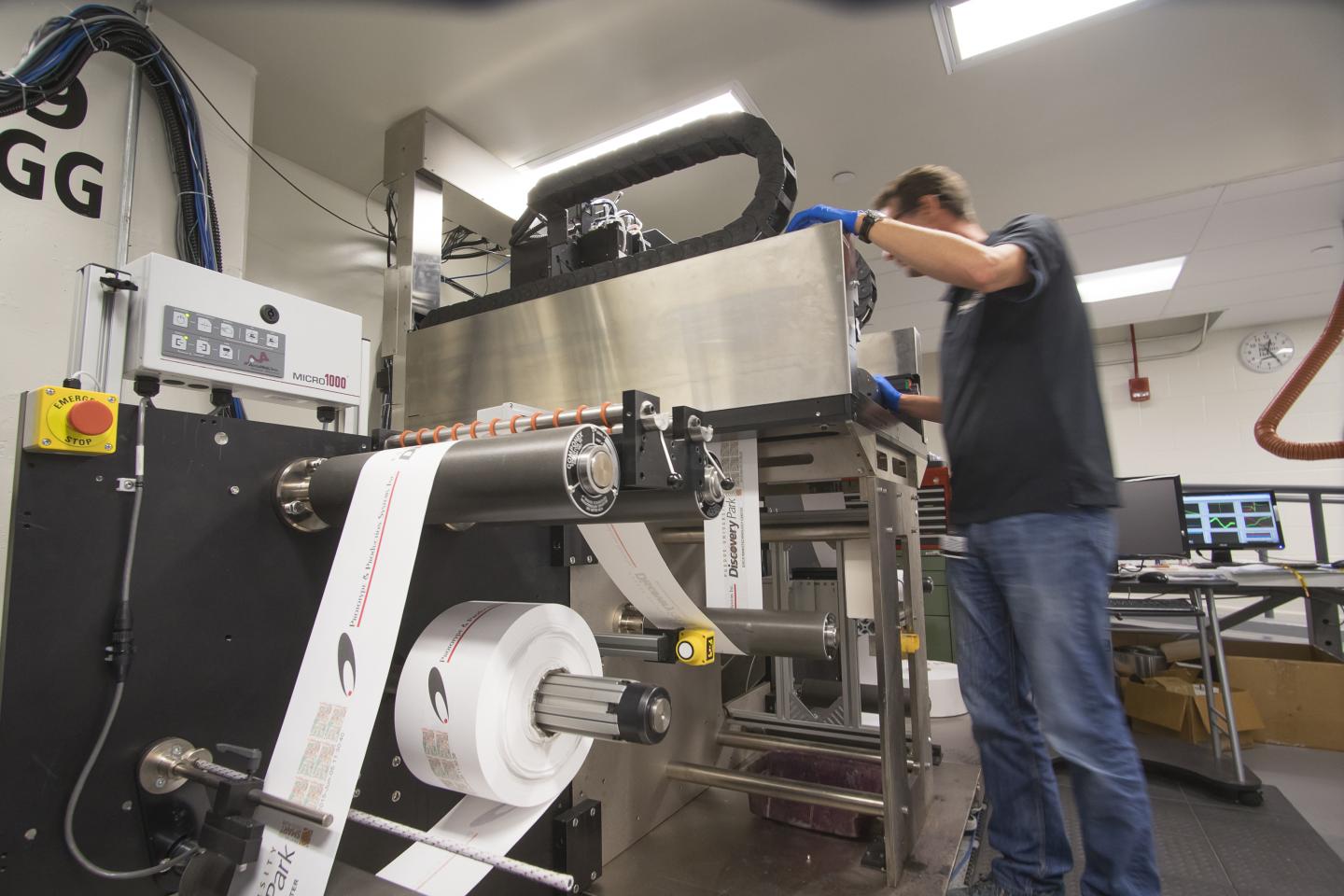
IdentifySensors Biologics has joined Purdue’s SMART Film Consortium, which seeks to develop the first foundry dedicated to low-cost non-silicon printed sensors.
“By joining the SMART Film Consortium, IdentifySensors Biologics has positioned itself in a significantly strategic vantage point where it is able to tap into a wide array of printing and scalable manufacturing resources in the Birck Nanotechnology Center to greatly accelerate the development of their COVID-19 sensor,” Sors said.
Ali Shakouri, director of the Birck Center, the consortium and a professor in Purdue’s College of Engineering, said, “This is a win-win situation for our faculty and the company, and another step forward in Purdue’s push to create an ecosystem for world-changing technologies.”
###
About Purdue Research Foundation
Purdue Research Foundation supports Purdue University’s land-grant mission by helping the university improve the world through its technologies and graduates. Established in 1930, PRF is a private, nonprofit foundation. The foundation helps patent and commercialize Purdue technologies; builds places to encourage innovation, invention, investment, commercialization and entrepreneurship; and makes equity available to students to finance their Purdue education. For more information on licensing a Purdue innovation, contact the Office of Technology Commercialization at [email protected]. For more information about involvement and investment opportunities in startups based on a Purdue innovation, contact the Purdue Foundry at [email protected].
About IdentifySensors Biologics
IdentifySensors Biologics is a Cleveland-based nanosensor company focused on developing real-time pathogen detection capabilities that can be integrated with the Internet of Things (IoT). The technology has expanded into multiple industries and applications, including the ability to detect bacteria and viruses. The company was founded by Gregory Hummer and Matthew Hummer.
Writer: Chris Adam, [email protected]
Sources: Thomas Sors, [email protected]
Ali Shakouri, [email protected]
Media Contact
Chris Adam
[email protected]