Macrophages that boost tumor growth
Credit: UNIVERSITY OF BARCELONA
Tumor cells are able to avoid the attack of the immune system through several mechanisms. For instance, these can secrete factors that turn macrophages -cells in the immune system- into dual action agents that contribute to the tumor progress and will protect it from immune body defences: these become, thus, the tumor-associated macrophages (TAMs).
An article published in the journal Cancer Research describes a new molecular mechanism that counteracts the immunosupressive action of these macrophaes to boost tumor growth, and brings knowledge of potential interest for the design of future therapeutical options against cancer. The preclinical study is led by the tenure-track 2 lecturer Annabel Valledor, from the Faculty of Biology and the Institute of Biomedicine of the University of Barcelona (IBUB).
Among the participants are also the researchers of the Faculty of Pharmacy and Food Sciences of the UB, the Josep Carreras Leukaemia Research Institute, the Sant Pau Institute of Biomedical Research, the University of Las Palmas de Gran Canaria, University College London, and the Free University of Brussels, among others.
Macrophages that boost tumor growth
Macrophages are cells in the immune system that unfold several functions (they kill invasive pathogens, remove cells or damaged tissue, etc.). However, in the tumoral microenvironment, tumor-associated macrophages can become an enemy to patients with cancer. Therefore, a field of study of great outreach in biomedicine is the one finding strategies to activate TAMs and help the immune system fight tumors, as well as improve the effects of anticancer therapies.
The article published in Cancer Research describes how the action of a compound known as TO901317 limits the ability of TAMs to protect the tumor in laboratory animals. According to the results, the TO901317 compound can inhibit the synthesis of molecules that serve to attract regulatory T lymphocytes (Treg) to the tumor.
“In a healthy person, the most important function of Treg is to maintain the balance of the immune system and avoid unwanted responses towards the own body. However, in a tumor, Treg stop the antitumoral activity of other types of lymphocytes. Actually, several studies show that a high number of Treg in the tumoral microenvironment suggests a worse prognosis”, notes lecturer Annabel Valledor, from the Department of Cell Biology, Physiology and Immunology and IBUB.
Antitumoral effects of LXR activation
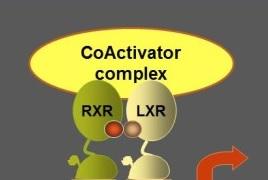
In particular, the TO901317 compound acts on the liver X receptor (LXR), a transcription factor of the family of nuclear receptors that regulates the gene expression with a key role in the activity of macrophages and the metabolism.
As stated in the article, the activation of LXR by the antagonist TO901317 inhibits the expression of the transcription factor IRF4 in macrophages. Specifically, the IRF4 factor is necessary so that chemokines Ccl17 and Ccl22 are expressed as a response to signals such as interleukin IL-4 or the GM-CSF factor. As a result, the action of the TO901317 compound inhibits the production of chemokines Ccl17 and Ccl22, which are important for the recruitment of regulatory T lymphocytes to the tumoral microenvironment.
“Once the LXR is activated, tumor-associated macrophages undergo important changes in their gene expression profile, and as a result, their ability to produce molecules with an immunopressive function in the tumoral microenvironment decreases”, notes researcher Joan Font Díaz, from the Faculty of Biology and IBUB.
This action is correlated to a decrease in the number of Treg in the tumor and a slower tumor growth, as stated by the authors of the study.
###
Media Contact
Rosa Martínez
[email protected]
Original Source
https:/
Related Journal Article
http://dx.