Scientists offered a new method for treating leukemia using nanomaterials
Credit: IKBFU
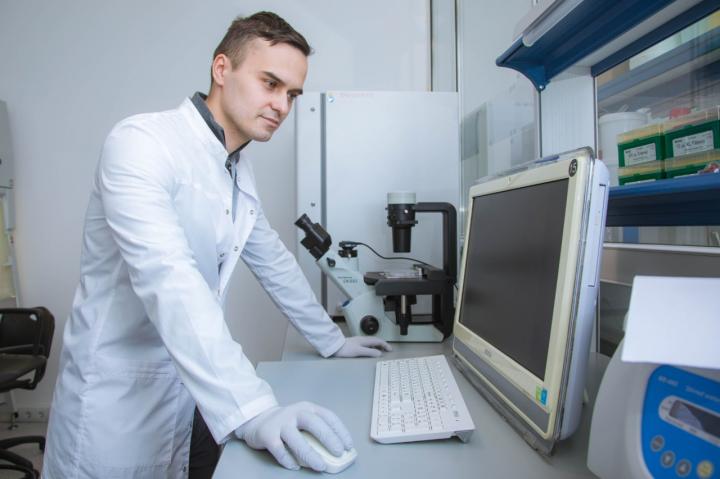
Scientists from Scientific and Educational Center «Smart Materials and Biomedical Applications» under the leadership of Kateryna Levada together with colleagues from Center for Immunology and Cellular Biotechnology of the Immanuel Kant Baltic Federal University conducted a joint interdisciplinary study on the development of a new method for treating leukemia using nanomaterials. The scientists analyzed how magnetic nanoparticles can be manipulated in in vitro conditions to achieve a selective antitumor effect. The method is based on the combined action of nanoparticles and permanent magnetic fields on human tumor cells.
Leukemia (lymphoblastic leukemia) is the most common type of blood cancer in children and adolescents. This cancer affects the bone marrow and leads to the degradation of the human immune system. It accounts for 75-80% of acute leukemias, which also affect adults. Current methods of treating leukemia are based on chemotherapy. But chemotherapy is expensive and toxic not only for cancer cells, but also for the entire body. To overcome these limitations, new approaches using nanomaterials are needed. In their work, the researchers used magnetic nanoparticles and constant magnetic fields.
For the study, the scientists used magnetic iron oxide nanoparticles, as they are a promising basis for the development of biomedical applications. Such materials are biocompatible and can be modified in the future, for example, with fluorescent labels (for microscopic methods), as well as covered with various shells. The development of targeted antitumor drugs requires studying the effect of the material used not only on cancers, but also on healthy cells of the body. The first cell line – mononuclear cells of human blood, served as a model of healthy cells. The second is human lymphoblastic leukemia cells, a cell line under the special name “Jurkat”. Thus, the scientists simultaneously studied the effects of magnetic fields and nanoparticles on healthy and cancerous human cells. Permanent magnets, which were fixed in a stationary position in culture plates, were used as sources of the magnetic field. They supported the magnets to prevent any displacement during experiments. After placing all the necessary components, the plates with the cells were placed on top of the plates – this ensured a uniform distribution of magnetic fields on the surface of the plates containing the wells with the cells.
The results of the study showed that the combined effect of nanoparticles and magnetic fields after 24 h treatment affected the Jurkat cells – their viability was decreased. Iron oxides have been found to penetrate cancer cells and cause the release of reactive oxygen species, disrupting cellular processes. Scientists were particularly interested in the fact that healthy cells (human blood mononuclear cells) were not in any way suppressed by this “therapy”.
“Thus, the use of nanoparticles based on iron oxides with optimized characteristics (shape, size, chemical composition) will allow in the future to achieve a therapeutic effect by generating reactive oxygen species in cancer cells. The difference in the susceptibility of healthy body cells and tumor cells to the effects of nanoparticles will provide a selective therapeutic effect and, therefore, minimize side effects,” says Larisa Litvinova, MD, Director of Center for Immunology and Cellular Biotechnology IKBFU.
“The interdisciplinary approach in this study, namely, the joint work of scientists from various scientific fields, allowed us to demonstrate the interaction of these nanomaterials with cell cultures and, thus, to reveal the potential application significance of our developments. We also express our deep gratitude to our collaborators – Center for Immunology and Cellular Biotechnology IKBFU, under the leadership of Larisa Litvinova, for a joint interesting and productive scientific project,” commented Kateryna Levada, PhD, Head of the Laboratory of Biomedical Applications of the Scientific and Educational Center “Smart Materials and Biomedical Applications”.
###
Media Contact
Alexandra V. Titova
[email protected]
Related Journal Article
http://dx.