• HOME
  • NEWS
  • EXPLORE
    • CAREER
      • Companies
      • Jobs
    • EVENTS
    • iGEM
      • News
      • Team
    • PHOTOS
    • VIDEO
    • WIKI
  • BLOG
  • COMMUNITY
    • FACEBOOK
    • INSTAGRAM
    • TWITTER
Friday, May 15, 2026
BIOENGINEER.ORG
No Result
View All Result
  • Login
  • HOME
  • NEWS
  • EXPLORE
    • CAREER
      • Companies
      • Jobs
        • Lecturer
        • PhD Studentship
        • Postdoc
        • Research Assistant
    • EVENTS
    • iGEM
      • News
      • Team
    • PHOTOS
    • VIDEO
    • WIKI
  • BLOG
  • COMMUNITY
    • FACEBOOK
    • INSTAGRAM
    • TWITTER
  • HOME
  • NEWS
  • EXPLORE
    • CAREER
      • Companies
      • Jobs
        • Lecturer
        • PhD Studentship
        • Postdoc
        • Research Assistant
    • EVENTS
    • iGEM
      • News
      • Team
    • PHOTOS
    • VIDEO
    • WIKI
  • BLOG
  • COMMUNITY
    • FACEBOOK
    • INSTAGRAM
    • TWITTER
No Result
View All Result
Bioengineer.org
No Result
View All Result
Home NEWS Science News

Common pipistrelle bats attracted to wind turbines

Bioengineer by Bioengineer
February 11, 2021
in Science News
Reading Time: 3 mins read
0
IMAGE
Share on FacebookShare on TwitterShare on LinkedinShare on RedditShare on Telegram

IMAGE

Credit: Fiona Mathews

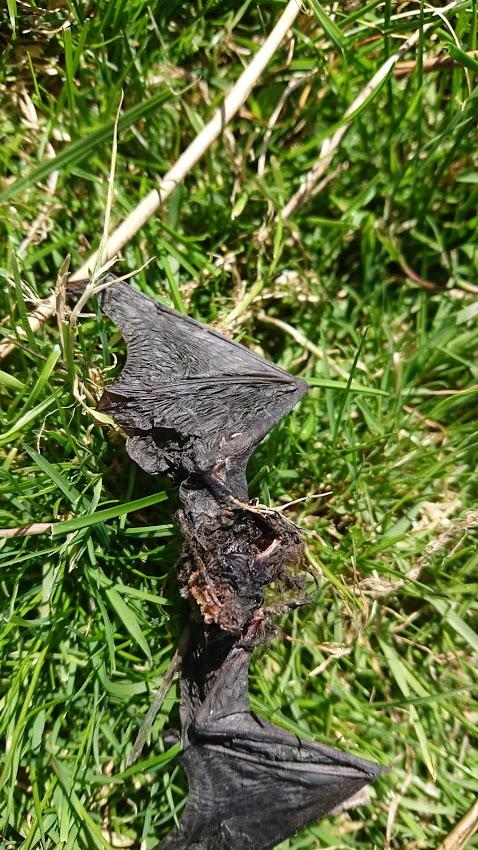
One of the most abundant bats in Europe may be attracted to wind turbines, a new study shows.

The activity of common pipistrelle bats was monitored at 23 British wind farms and similar “control” locations close by without turbines.

Activity was around a third higher at turbines than at control locations, and two thirds of occasions with high activity were recorded at turbines rather than the controls.

The reasons for this are not clear. Possibilities include attraction to the turbines themselves, or the presence of more of the bats’ insect prey around turbines.

“Either way it means the risk of fatality at wind turbines is increased, and probably explains the high fatalities of common pipistrelle bats seen at some wind farms across Europe,” said Dr Suzanne Richardson.

Common pipistrelle bats account for more than half of all bat fatalities at turbine sites in Europe.

“We know bats are killed by turbines worldwide, and reducing these fatalities is essential to ensuring a global increase in wind energy with minimal impact on bats,” said Professor David Hosken, of the University of Exeter.

“To do that, we need to understand whether bats are actively attracted to, indifferent to, or repelled by, the turbines at large wind-energy installations.

“Our findings help explain why Environmental Impact Assessments conducted before the installation of turbines are poor predictors of actual fatality rates.

“Turbines are generally built in areas where bat activity is thought to be low, but this may not be an effective strategy if bats are attracted once turbines are built.

“Ongoing monitoring is required, and measures such as minimising blade rotation in periods of high collision risk are likely to be the most effective way to reduce fatalities.”

The study also monitored soprano pipistrelle bats, finding no conclusive evidence that this species is more active around turbines.

Professor Fiona Mathews of the University of Sussex, who led the research, said: “Bat activity at wind farms is very variable.

“During periods of high wind speed, when most energy is generated, bat activity is low and so there is little risk to bats.

“In contrast, there can be high activity at turbines on nights with light winds and warm temperatures.

“Most of the attraction to turbines appears to be happening on these high activity nights.

“We have worked with the Statutory Nature Conservation Organisations and industry to produce guidance to help minimise the risks to bats.

“These include stopping blades rotating when no energy is being produced (‘idling’). This is a win-win situation as little electricity generation is lost during these periods.”

###

The research was funded by the UK government’s Department for Environment, Food and Rural Affairs (Defra), the Department of Energy and Climate Change, Natural England, Natural Resources Wales, Scottish Natural Heritage, RenewableUK and the Natural Environment Research Council (NERC).

The paper, published in the journal Scientific Reports, is entitled: “Peaks in bat activity at turbines and the implications for mitigating the impact of wind energy developments on bats.”

Media Contact
Alex Morrison
[email protected]

Related Journal Article

http://dx.doi.org/10.1038/s41598-021-82014-9

Tags: BiodiversityBiologyClimate ChangeEcology/EnvironmentTechnology/Engineering/Computer ScienceZoology/Veterinary Science
Share12Tweet8Share2ShareShareShare2

Related Posts

Digital Health Fear Patterns in Older Cancer Patients

May 15, 2026

A*STAR Scientists Unveil Novel Technique to Decipher RNA Structure’s Impact on Health and Disease

May 15, 2026

Smart Hydrogels Revolutionize Information Security with Photo-Patterning and Multi-Stimuli Responsive Structural Colors

May 15, 2026

Unveiling the Unseen: POSTECH Team Creates AI Framework to Detect Hidden Defects in Metal 3D Printing

May 15, 2026
Please login to join discussion

POPULAR NEWS

  • Research Indicates Potential Connection Between Prenatal Medication Exposure and Elevated Autism Risk

    843 shares
    Share 337 Tweet 211
  • New Study Reveals Plants Can Detect the Sound of Rain

    729 shares
    Share 291 Tweet 182
  • Salmonella Haem Blocks Macrophages, Boosts Infection

    62 shares
    Share 25 Tweet 16
  • Breastmilk Balances E. coli and Beneficial Bacteria in Infant Gut Microbiomes

    58 shares
    Share 23 Tweet 15

About

We bring you the latest biotechnology news from best research centers and universities around the world. Check our website.

Follow us

Recent News

Digital Health Fear Patterns in Older Cancer Patients

A*STAR Scientists Unveil Novel Technique to Decipher RNA Structure’s Impact on Health and Disease

Smart Hydrogels Revolutionize Information Security with Photo-Patterning and Multi-Stimuli Responsive Structural Colors

Subscribe to Blog via Email

Enter your email address to subscribe to this blog and receive notifications of new posts by email.

Join 82 other subscribers
  • Contact Us

Bioengineer.org © Copyright 2023 All Rights Reserved.

Welcome Back!

Login to your account below

Forgotten Password?

Retrieve your password

Please enter your username or email address to reset your password.

Log In
No Result
View All Result
  • Homepages
    • Home Page 1
    • Home Page 2
  • News
  • National
  • Business
  • Health
  • Lifestyle
  • Science

Bioengineer.org © Copyright 2023 All Rights Reserved.