• HOME
  • NEWS
  • EXPLORE
    • CAREER
      • Companies
      • Jobs
    • EVENTS
    • iGEM
      • News
      • Team
    • PHOTOS
    • VIDEO
    • WIKI
  • BLOG
  • COMMUNITY
    • FACEBOOK
    • INSTAGRAM
    • TWITTER
Saturday, February 7, 2026
BIOENGINEER.ORG
No Result
View All Result
  • Login
  • HOME
  • NEWS
  • EXPLORE
    • CAREER
      • Companies
      • Jobs
        • Lecturer
        • PhD Studentship
        • Postdoc
        • Research Assistant
    • EVENTS
    • iGEM
      • News
      • Team
    • PHOTOS
    • VIDEO
    • WIKI
  • BLOG
  • COMMUNITY
    • FACEBOOK
    • INSTAGRAM
    • TWITTER
  • HOME
  • NEWS
  • EXPLORE
    • CAREER
      • Companies
      • Jobs
        • Lecturer
        • PhD Studentship
        • Postdoc
        • Research Assistant
    • EVENTS
    • iGEM
      • News
      • Team
    • PHOTOS
    • VIDEO
    • WIKI
  • BLOG
  • COMMUNITY
    • FACEBOOK
    • INSTAGRAM
    • TWITTER
No Result
View All Result
Bioengineer.org
No Result
View All Result
Home NEWS Science News

How did Florida fail to respond to a coral disease epizootic and what’s to follow?

Bioengineer by Bioengineer
January 26, 2021
in Science News
Reading Time: 3 mins read
0
IMAGE
Share on FacebookShare on TwitterShare on LinkedinShare on RedditShare on Telegram

IMAGE

Credit: William Precht

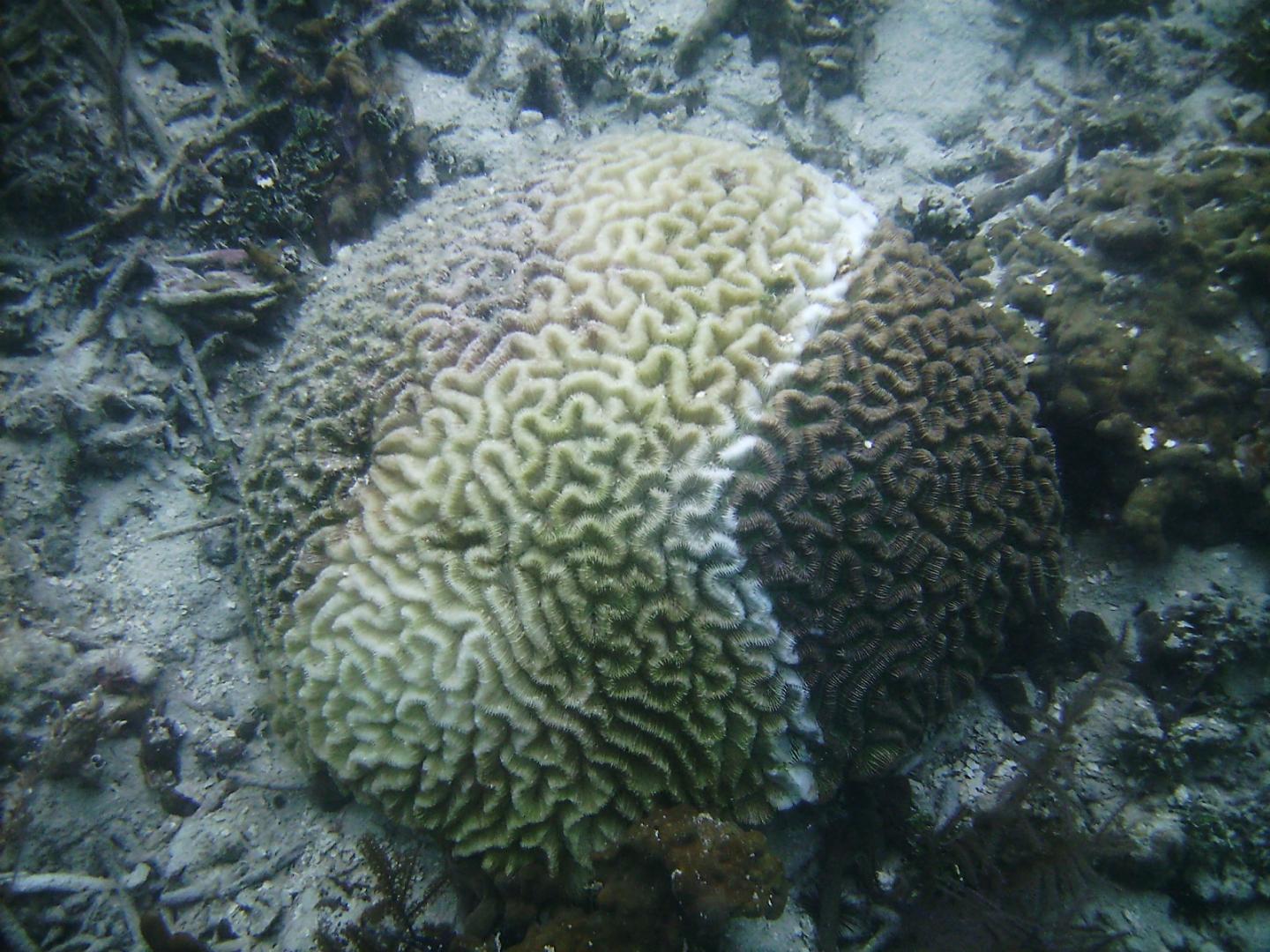
By 2020, massive losses of large populations of corals have been observed throughout Florida and into the greater Caribbean basin. Taking into account the high mortality and the large number of susceptible species affected, this is likely the most lethal case of Stony Coral Tissue Loss Disease (SCTLD) ever recorded in modern history.

However, for too long, the tremendous decline in coral reefs has wrongly been attributed to the local dredge project, which had been ongoing at the time of the initial reports. In a recent Perspectives paper, published in the open-access peer-reviewed journal Rethinking Ecology, William Precht, a carbonate sedimentologist by training and currently the Director of Marine and Coastal Programs for the independent environmental consulting firm Dial Cordy and Associates Inc., provides an overview about what went wrong and how Florida ended up in a situation, where the best that could be done is the rescue of genetic material from coral species already at risk of regional extinction.

In fact, the coral disease was first observed in September 2014 near Virginia Key, Florida, and is, unfortunately, still active throughout the Caribbean to this date.

Initially, the resource managers in Southeast Florida missed the short time window to respond to the emerging epidemic before it spreads. Once it began to reach into the greater Caribbean, many, including the mass media, were quick to blame the ongoing Port Miami Dredge Project for the coral reef losses, even though its activities, meant to widen or deepen existing ship channels, while minimising damage to coral reef resources, had already been under a thorough scrutiny by government agencies and intensive monitoring, conducted by trained scientific divers. Nevertheless, dredging has typically been assumed to be bad for corals. Furthermore, these events coincided with the State of Florida’s prohibition for government employees to acknowledge global warming in their work.

In the meantime, SCTLD, a disease initiated by a regional thermal anomaly and coral bleaching event, was killing off the same suite of coral species in the same fashion throughout the region, well beyond the dredge site.

“Finally, when the agencies responded to the outbreak, their efforts were too little and much too late to make a meaningful difference. While eradication of the disease was never a possibility, early control measures may have slowed its spread, or allowed for the rescue of significant numbers of large colonies of iconic species. Because of the languid management response to this outbreak, we are now sadly faced with a situation where much of our management efforts are focused on the rescue of genetic material from coral species already at risk of regional extinction,” explains Precht.

“Why was the response to the loss of our coral reefs to a coral disease epidemic such a massive failure? This includes our failure as scientists, regulators, resource managers, local media, and policy makers alike,” he adds.

###

Original source:

Precht W (2021) Failure to respond to a coral disease epizootic in Florida: causes and consequences. Rethinking Ecology 6: 1-47. https://doi.org/10.3897/rethinkingecology.6.56285

Media Contact
William Precht
[email protected]

Related Journal Article

http://dx.doi.org/10.3897/rethinkingecology.6.56285

Tags: BiodiversityBiologyClimate ChangeEcology/EnvironmentMarine/Freshwater BiologyPollution/RemediationVirologyZoology/Veterinary Science
Share12Tweet8Share2ShareShareShare2

Related Posts

Evaluating Pediatric Emergency Care Quality in Ethiopia

February 7, 2026

TPMT Expression Predictions Linked to Azathioprine Side Effects

February 7, 2026

Improving Dementia Care with Enhanced Activity Kits

February 7, 2026

Decoding Prostate Cancer Origins via snFLARE-seq, mxFRIZNGRND

February 7, 2026
Please login to join discussion

POPULAR NEWS

  • Robotic Ureteral Reconstruction: A Novel Approach

    Robotic Ureteral Reconstruction: A Novel Approach

    82 shares
    Share 33 Tweet 21
  • Digital Privacy: Health Data Control in Incarceration

    63 shares
    Share 25 Tweet 16
  • Study Reveals Lipid Accumulation in ME/CFS Cells

    57 shares
    Share 23 Tweet 14
  • Breakthrough in RNA Research Accelerates Medical Innovations Timeline

    53 shares
    Share 21 Tweet 13

About

We bring you the latest biotechnology news from best research centers and universities around the world. Check our website.

Follow us

Recent News

Evaluating Pediatric Emergency Care Quality in Ethiopia

TPMT Expression Predictions Linked to Azathioprine Side Effects

Improving Dementia Care with Enhanced Activity Kits

Subscribe to Blog via Email

Success! An email was just sent to confirm your subscription. Please find the email now and click 'Confirm' to start subscribing.

Join 73 other subscribers
  • Contact Us

Bioengineer.org © Copyright 2023 All Rights Reserved.

Welcome Back!

Login to your account below

Forgotten Password?

Retrieve your password

Please enter your username or email address to reset your password.

Log In
No Result
View All Result
  • Homepages
    • Home Page 1
    • Home Page 2
  • News
  • National
  • Business
  • Health
  • Lifestyle
  • Science

Bioengineer.org © Copyright 2023 All Rights Reserved.