• HOME
  • NEWS
  • EXPLORE
    • CAREER
      • Companies
      • Jobs
    • EVENTS
    • iGEM
      • News
      • Team
    • PHOTOS
    • VIDEO
    • WIKI
  • BLOG
  • COMMUNITY
    • FACEBOOK
    • INSTAGRAM
    • TWITTER
Saturday, March 28, 2026
BIOENGINEER.ORG
No Result
View All Result
  • Login
  • HOME
  • NEWS
  • EXPLORE
    • CAREER
      • Companies
      • Jobs
        • Lecturer
        • PhD Studentship
        • Postdoc
        • Research Assistant
    • EVENTS
    • iGEM
      • News
      • Team
    • PHOTOS
    • VIDEO
    • WIKI
  • BLOG
  • COMMUNITY
    • FACEBOOK
    • INSTAGRAM
    • TWITTER
  • HOME
  • NEWS
  • EXPLORE
    • CAREER
      • Companies
      • Jobs
        • Lecturer
        • PhD Studentship
        • Postdoc
        • Research Assistant
    • EVENTS
    • iGEM
      • News
      • Team
    • PHOTOS
    • VIDEO
    • WIKI
  • BLOG
  • COMMUNITY
    • FACEBOOK
    • INSTAGRAM
    • TWITTER
No Result
View All Result
Bioengineer.org
No Result
View All Result
Home NEWS Science News

Stuck in a rut: Ocean acidification locks algal communities in a simplified state

Bioengineer by Bioengineer
January 15, 2021
in Science News
Reading Time: 2 mins read
0
IMAGE
Share on FacebookShare on TwitterShare on LinkedinShare on RedditShare on Telegram

Researchers from the University of Tsukuba find that ocean acidification restricts algal communities to a state of low biodiversity and complexity
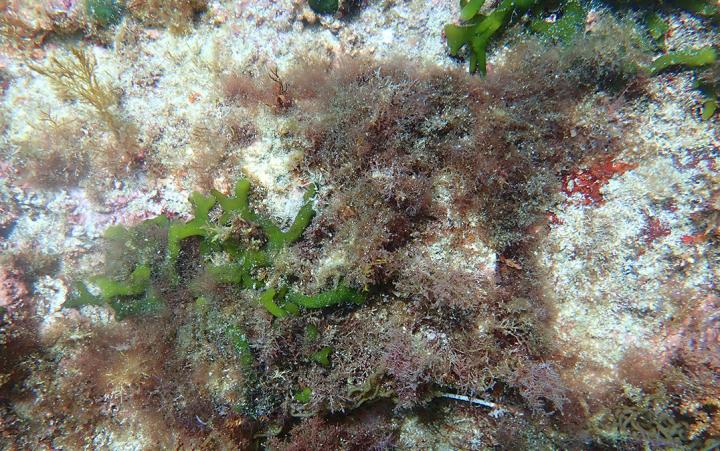
IMAGE

Credit: University of Tsukuba

Tsukuba, Japan – Out with the old, in with the new, as the New Year’s saying goes, but not where the marine environment is concerned. Researchers from Japan have discovered that ocean acidification keeps algal communities locked in a simplified state of low biodiversity.

In a study published on 11th January 2021 in Global Change Biology, researchers from the University of Tsukuba have revealed that as oceanic carbon dioxide levels rise, the biodiversity and ecological complexity of marine algal communities decline.

Ocean acidification is the continuing increase in the acidity of the Earth’s oceans, caused by the absorption of atmospheric carbon dioxide (CO2). The largest contributor to this acidification is human-caused CO2 emissions from the burning of fossil fuels.

“Ocean acidification is harmful to a lot of different marine organisms,” says lead author of the study Professor Ben P. Harvey. “This affects not only ecosystem functions, but the goods and services that people get from marine resources.”

To examine the changes caused by CO2-enriched waters in algal communities, the researchers anchored tiles in the ocean for the algae to grow on. The tiles were placed in reference conditions (i.e., ones that represent the structure and function of biological communities subject to no/very minor human-caused disturbances) and acidified conditions. The team used a natural CO2 seep for the acidified conditions to represent the CO2 conditions at the end of this century, and compared differences between the cooler months (January to July) and warmer months (July to January).

“We found that the tiles ended up being taken over by turf algae in the acidified conditions, and the communities had lower diversity, complexity and biomass,” explains Professor Harvey. “This pattern was consistent throughout the seasons, keeping these communities locked in simplified systems that had low biodiversity.”

The team also transplanted established communities between the two conditions. The transplanted communities ultimately matched the other communities around them (i.e., high biodiversity, complexity and biomass in the reference conditions, and vice versa for the acidified conditions).

“By understanding the ecological processes that change community structure, we can better evaluate how ocean acidification is likely to alter communities in the future,” says Professor Harvey.

The results of this study highlight that if atmospheric CO2 emissions are not reduced, we may see an increased loss of large algal habitats (such as kelp forests). But the study also shows that shallow-water marine communities can recover if significant reductions in CO2 emissions are achieved, such as those urged by the Paris Agreement.

###

The article, “Ocean acidification locks algal communities in a species-poor early successional stage,” was published in Global Change Biology at DOI: 10.1111/gcb.15455

Media Contact
Naoko Yamashina
[email protected]

Related Journal Article

http://dx.doi.org/10.1111/gcb.15455

Tags: BiodiversityBiologyClimate ChangeEcology/EnvironmentMarine/Freshwater Biology
Share12Tweet8Share2ShareShareShare2

Related Posts

Biochar Boosts Forest Resilience Against Acid Rain by Restoring Essential Soil Nitrogen

Biochar Boosts Forest Resilience Against Acid Rain by Restoring Essential Soil Nitrogen

March 27, 2026
Two Salk Scientists Honored as 2025 AAAS Fellows

Two Salk Scientists Honored as 2025 AAAS Fellows

March 27, 2026

Starburst Winds Drain Supernova Energy Quickly

March 26, 2026

Decoding the Phosphorus Puzzle: How Microplastics and Hydrochar Transform Nutrient Dynamics in Rice Paddies

March 26, 2026
Please login to join discussion

POPULAR NEWS

  • blank

    Revolutionary AI Model Enhances Precision in Detecting Food Contamination

    96 shares
    Share 38 Tweet 24
  • Imagine a Social Media Feed That Challenges Your Views Instead of Reinforcing Them

    1004 shares
    Share 397 Tweet 248
  • Uncovering Functions of Cavernous Malformation Proteins in Organoids

    54 shares
    Share 22 Tweet 14
  • Promising Outcomes from First Clinical Trials of Gene Regulation in Epilepsy

    51 shares
    Share 20 Tweet 13

About

We bring you the latest biotechnology news from best research centers and universities around the world. Check our website.

Follow us

Recent News

In-Sensor Cryptography Links Physical Process to Digital Identity

Can Psychosocial Factors Influence Cancer Risk?

Depression Factors in Elderly: Pre vs. Post-COVID Analysis

Subscribe to Blog via Email

Enter your email address to subscribe to this blog and receive notifications of new posts by email.

Join 78 other subscribers
  • Contact Us

Bioengineer.org © Copyright 2023 All Rights Reserved.

Welcome Back!

Login to your account below

Forgotten Password?

Retrieve your password

Please enter your username or email address to reset your password.

Log In
No Result
View All Result
  • Homepages
    • Home Page 1
    • Home Page 2
  • News
  • National
  • Business
  • Health
  • Lifestyle
  • Science

Bioengineer.org © Copyright 2023 All Rights Reserved.