• HOME
  • NEWS
  • EXPLORE
    • CAREER
      • Companies
      • Jobs
    • EVENTS
    • iGEM
      • News
      • Team
    • PHOTOS
    • VIDEO
    • WIKI
  • BLOG
  • COMMUNITY
    • FACEBOOK
    • INSTAGRAM
    • TWITTER
Monday, December 1, 2025
BIOENGINEER.ORG
No Result
View All Result
  • Login
  • HOME
  • NEWS
  • EXPLORE
    • CAREER
      • Companies
      • Jobs
        • Lecturer
        • PhD Studentship
        • Postdoc
        • Research Assistant
    • EVENTS
    • iGEM
      • News
      • Team
    • PHOTOS
    • VIDEO
    • WIKI
  • BLOG
  • COMMUNITY
    • FACEBOOK
    • INSTAGRAM
    • TWITTER
  • HOME
  • NEWS
  • EXPLORE
    • CAREER
      • Companies
      • Jobs
        • Lecturer
        • PhD Studentship
        • Postdoc
        • Research Assistant
    • EVENTS
    • iGEM
      • News
      • Team
    • PHOTOS
    • VIDEO
    • WIKI
  • BLOG
  • COMMUNITY
    • FACEBOOK
    • INSTAGRAM
    • TWITTER
No Result
View All Result
Bioengineer.org
No Result
View All Result
Home NEWS Science News Chemistry

Scientists discover a new type of brain cell that could help detect distance

Bioengineer by Bioengineer
December 21, 2020
in Chemistry
Reading Time: 2 mins read
0
IMAGE
Share on FacebookShare on TwitterShare on LinkedinShare on RedditShare on Telegram

IMAGE

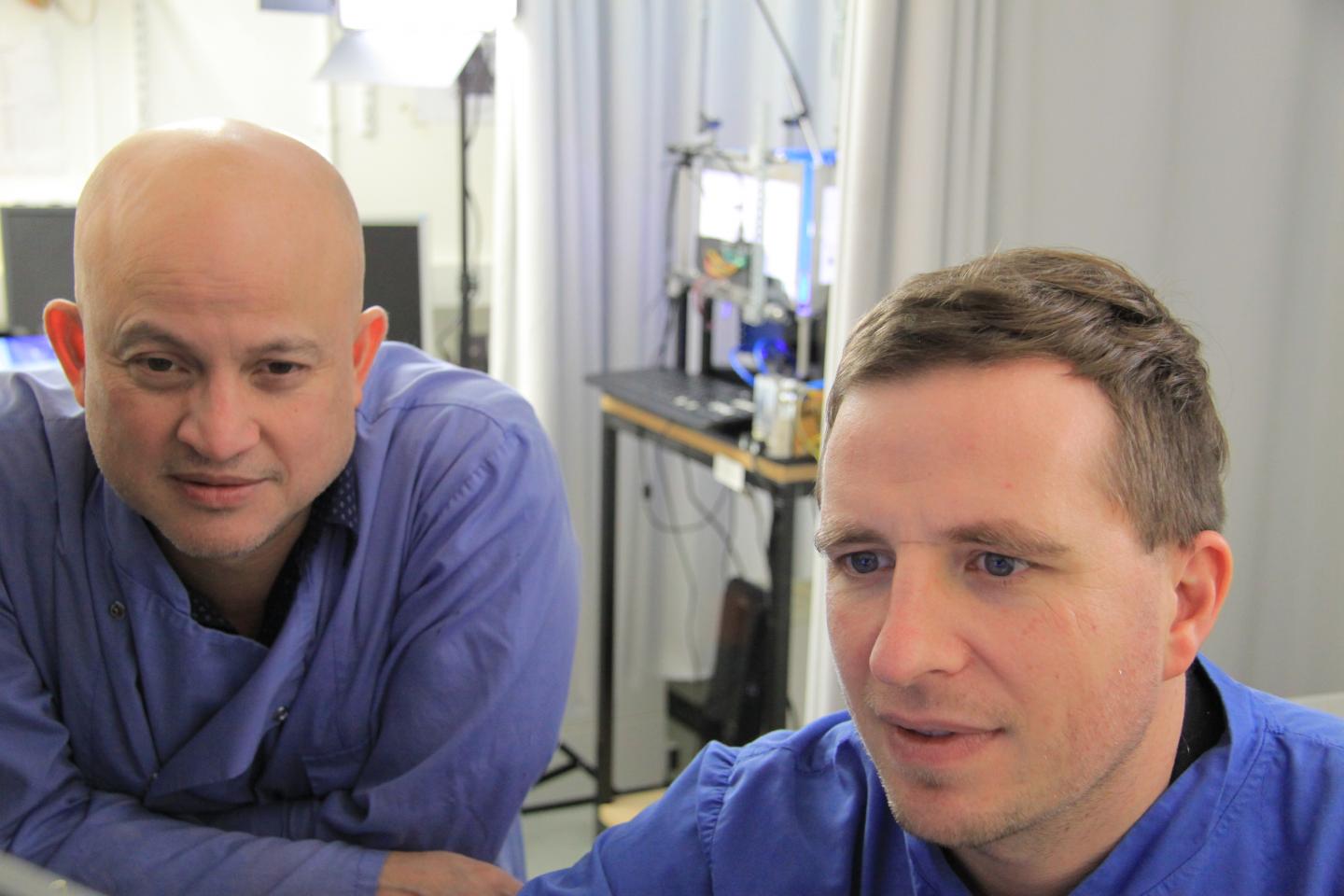
Credit: Dr. Steven Poulter and Dr. Colin Lever

The existence of GPS-like brain cells, which can store maps of the places we’ve been, like our kitchen or holiday destination, was already widely known, but this discovery shows there is also a type of brain cell sensitive to the distance and direction of objects that can store their locations on these maps.

The research, led by Dr Steven Poulter and Dr Colin Lever from Durham University, and co-directed by Dr Thomas Wills from the University of Central London (UCL), found that Vector Trace cells can track how far we have travelled and remember where things are, which are added to our memory map of the places we have been.

Dr Steven Poulter said: “The discovery of Vector Trace cells is particularly important as the area of the brain they are found in is one of the first to be attacked by brain disorders such as Alzheimer’s disease, which could explain why a common symptom and key early ‘warning sign’ is the losing or misplacement of objects.”

Dr Lever added: “It looks like Vector Trace cells connect to creative brain networks which help us to plan our actions and imagine complex scenarios in our mind’s eye. Vector trace cells acting together likely allow us to recreate the spatial relationships between ourselves and objects, and between the objects in a scene, even when those objects are not directly visible to us.”

Brain cells that make up the biological equivalent of a satellite-navigation system were first discovered > by Professors John O’Keefe, Edvard Moser, May-Britt Moser. Their discovery shed light on one of neurosciences great mysteries – how we know where we are in space – and won them the 2014 Nobel Prize in Medicine.

Speaking about the discovery, Professor John O’Keefe said: “I’m very impressed. Not only have they discovered a new type of brain cell, the Vector Trace cell, but their analysis of its properties is exhaustive and compelling. This discovery sheds considerable light on this important but enigmatic structure of the brain, supporting the idea that it is indeed the memory system we have always believed it to be.”

Professor Lord Robert Winston added: “This fascinating work on Vector Trace cells uncovers further levels of our memory, so often lost with brain damage and ageing. This discovery gives a possible insight into certain kinds of dementia which are now of massive importance.

He added: “The idea that loss or change of such cells might be an early biomarker of disease could lead to earlier diagnosis and more effective therapies for one of the most intractable medical conditions.”

###

Media Contact
Dr. Steven Poulter
[email protected]

Tags: AlzheimerCell BiologyHealth CareneurobiologyNeurochemistry
Share12Tweet8Share2ShareShareShare2

Related Posts

Neighboring Groups Speed Up Polymer Self-Deconstruction

Neighboring Groups Speed Up Polymer Self-Deconstruction

November 28, 2025
blank

Activating Alcohols as Sulfonium Salts for Photocatalysis

November 26, 2025

Carbonate Ions Drive Water Ordering in CO₂ Reduction

November 25, 2025

Isolable Germa-Isonitrile with N≡Ge Triple Bond

November 24, 2025
Please login to join discussion

POPULAR NEWS

  • New Research Unveils the Pathway for CEOs to Achieve Social Media Stardom

    New Research Unveils the Pathway for CEOs to Achieve Social Media Stardom

    203 shares
    Share 81 Tweet 51
  • Scientists Uncover Chameleon’s Telephone-Cord-Like Optic Nerves, A Feature Missed by Aristotle and Newton

    120 shares
    Share 48 Tweet 30
  • Neurological Impacts of COVID and MIS-C in Children

    106 shares
    Share 42 Tweet 27
  • MoCK2 Kinase Shapes Mitochondrial Dynamics in Rice Fungal Pathogen

    66 shares
    Share 26 Tweet 17

About

We bring you the latest biotechnology news from best research centers and universities around the world. Check our website.

Follow us

Recent News

Pulmonary Conditions Affect Surfactant Response in Preterm Infants

Calendula officinalis: Potential KRAS-Targeted Cancer Therapy

Gut Microbiome Imbalance Linked to PCOS Symptoms

Subscribe to Blog via Email

Enter your email address to subscribe to this blog and receive notifications of new posts by email.

Join 69 other subscribers
  • Contact Us

Bioengineer.org © Copyright 2023 All Rights Reserved.

Welcome Back!

Login to your account below

Forgotten Password?

Retrieve your password

Please enter your username or email address to reset your password.

Log In
No Result
View All Result
  • Homepages
    • Home Page 1
    • Home Page 2
  • News
  • National
  • Business
  • Health
  • Lifestyle
  • Science

Bioengineer.org © Copyright 2023 All Rights Reserved.