• HOME
  • NEWS
  • EXPLORE
    • CAREER
      • Companies
      • Jobs
    • EVENTS
    • iGEM
      • News
      • Team
    • PHOTOS
    • VIDEO
    • WIKI
  • BLOG
  • COMMUNITY
    • FACEBOOK
    • INSTAGRAM
    • TWITTER
Thursday, March 26, 2026
BIOENGINEER.ORG
No Result
View All Result
  • Login
  • HOME
  • NEWS
  • EXPLORE
    • CAREER
      • Companies
      • Jobs
        • Lecturer
        • PhD Studentship
        • Postdoc
        • Research Assistant
    • EVENTS
    • iGEM
      • News
      • Team
    • PHOTOS
    • VIDEO
    • WIKI
  • BLOG
  • COMMUNITY
    • FACEBOOK
    • INSTAGRAM
    • TWITTER
  • HOME
  • NEWS
  • EXPLORE
    • CAREER
      • Companies
      • Jobs
        • Lecturer
        • PhD Studentship
        • Postdoc
        • Research Assistant
    • EVENTS
    • iGEM
      • News
      • Team
    • PHOTOS
    • VIDEO
    • WIKI
  • BLOG
  • COMMUNITY
    • FACEBOOK
    • INSTAGRAM
    • TWITTER
No Result
View All Result
Bioengineer.org
No Result
View All Result
Home NEWS Science News

UBCO researchers suggest stool transplants can battle serious infections

Bioengineer by Bioengineer
December 9, 2020
in Science News
Reading Time: 3 mins read
0
IMAGE
Share on FacebookShare on TwitterShare on LinkedinShare on RedditShare on Telegram

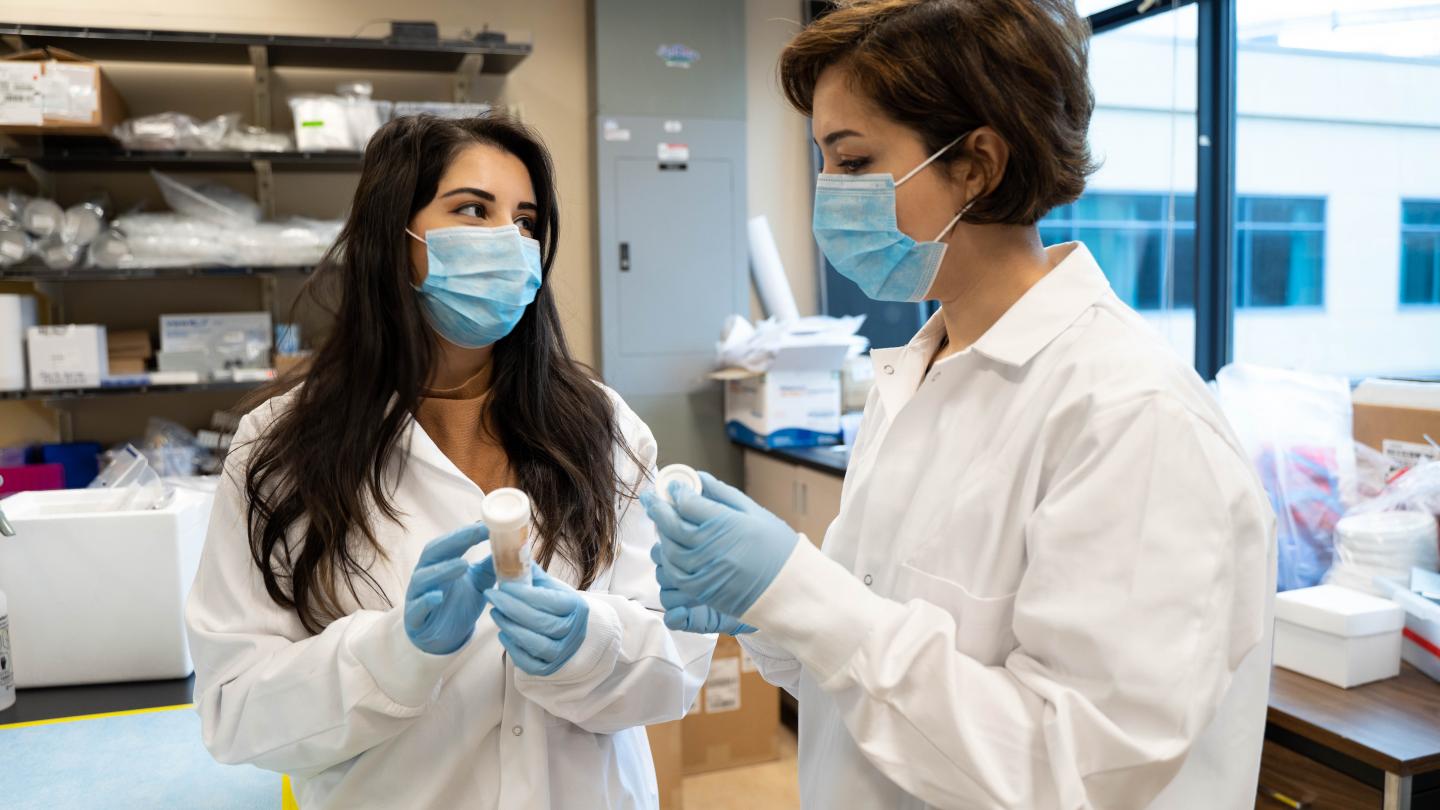
Genetic analysis helps ensure successful fecal microbiota transplants
IMAGE

Credit: UBC Okanagan

Could number two be number one when it comes to combating recurrent Clostridium difficile (CDI) infections?

Using genetic material analysis and machine learning, UBC researchers have pinpointed several key factors to ensure successful fecal microbiota transplants (FMT), which have proven successful in treating bacterial infections in the gut including illnesses like C. difficile, Crohn’s Disease, Colitis and even obesity, explains lead author Negin Kazemian.

“This therapy is still in its infancy, but studies like ours are helping identify key contributors to its overall success,” says Kazemian, a graduate student at UBC Okanagan’s School of Engineering.

Kazemian and her supervisor, Assistant Professor Sepideh Pakpour, are investigating the internal dynamics of both donors and recipients to set out a formula for the effectiveness of the therapy.

C. difficile is one of the most frequently identified health care-associated infection in North America, she adds. Once a patient gets it, the illness often recurs, making a significant negative impact on a patient’s gut microorganisms.

Kazemian explains that severely damaged gut ecosystems, like someone who has had C. difficile, are not self-renewing. Therefore, FMT can help by restoring damaged systems through the recreation of the original ecosystem, or the construction of an entirely new and alternative ecosystem.

“In our study, we showed that the success of gut ecological recovery through FMT is dependent on several factors, including the donor gut microbiome–the presence of specific bacteria–as well as the recipient’s pre-FMT gut community structures and the absence of specific bacteria and fungi.”

Some previous studies have pointed to the possibility of “super” donors, but these new findings indicate the relationship between donors and recipients is much more complex. Pakpour says the notion of the super-donor is oversimplified due to the observed short-term fluctuations. A recipient’s microbiota may be just as important to consider when predicting treatment outcomes, especially in unbalanced conditions such as ulcerative colitis.

“Take, for example, blood transplants where we have a strong understanding of the four main blood groups or types, and how they interact with one another,” says Pakpour. “With fecal transplants the research up to this point has not been as clear in what constitutes a good match or compatibility.”

Working with data from the University of Alberta Hospital, Kazemian and Pakpour analyzed the gut composition and DNA from samples extracted before and after FMT.

According to Kazemian, their findings indicate that there isn’t a “one stool fits all” approach to ensure transplant success.

“The data illustrates that the unique microorganisms in everyone’s bodies respond differently over time, and this has profound implications on whether these transplants work well or not.”

The researchers suggest that preparing donors and patients’ gut ecosystems prior to transplant, maybe by using metabolites, would potentially sync their microbiota leading the way to a higher probability of transplant success.

###

The new research is published in Nature Research’s Scientific Report.

Media Contact
Wellborn, Patty
[email protected]

Original Source

https://news.ok.ubc.ca/2020/12/09/ubco-researchers-suggest-stool-transplants-can-battle-serious-infections/

Related Journal Article

http://dx.doi.org/10.1038/s41598-020-75162-x

Tags: BacteriologyBiologyBiomedical/Environmental/Chemical EngineeringBiotechnologyEating Disorders/ObesityGastroenterologyInternal MedicineMedicine/HealthTransplantation
Share12Tweet8Share2ShareShareShare2

Related Posts

Microtubules Found to Actively Ensure Accurate Chromosome Distribution During Cell Division

March 25, 2026

Aversive Learning Hijacks Brain Sugar Sensor

March 25, 2026

Isolated H2-Reduced Clusters Boost CO2-to-Methanol Catalysis

March 25, 2026

In-Sensor Cryptography Links Physical Process to Digital Identity

March 25, 2026
Please login to join discussion

POPULAR NEWS

  • blank

    Revolutionary AI Model Enhances Precision in Detecting Food Contamination

    96 shares
    Share 38 Tweet 24
  • Imagine a Social Media Feed That Challenges Your Views Instead of Reinforcing Them

    1003 shares
    Share 397 Tweet 248
  • Uncovering Functions of Cavernous Malformation Proteins in Organoids

    54 shares
    Share 22 Tweet 14
  • Promising Outcomes from First Clinical Trials of Gene Regulation in Epilepsy

    51 shares
    Share 20 Tweet 13

About

We bring you the latest biotechnology news from best research centers and universities around the world. Check our website.

Follow us

Recent News

In-Sensor Cryptography Links Physical Process to Digital Identity

Can Psychosocial Factors Influence Cancer Risk?

Depression Factors in Elderly: Pre vs. Post-COVID Analysis

Subscribe to Blog via Email

Enter your email address to subscribe to this blog and receive notifications of new posts by email.

Join 78 other subscribers
  • Contact Us

Bioengineer.org © Copyright 2023 All Rights Reserved.

Welcome Back!

Login to your account below

Forgotten Password?

Retrieve your password

Please enter your username or email address to reset your password.

Log In
No Result
View All Result
  • Homepages
    • Home Page 1
    • Home Page 2
  • News
  • National
  • Business
  • Health
  • Lifestyle
  • Science

Bioengineer.org © Copyright 2023 All Rights Reserved.