• HOME
  • NEWS
  • EXPLORE
    • CAREER
      • Companies
      • Jobs
    • EVENTS
    • iGEM
      • News
      • Team
    • PHOTOS
    • VIDEO
    • WIKI
  • BLOG
  • COMMUNITY
    • FACEBOOK
    • INSTAGRAM
    • TWITTER
Saturday, February 7, 2026
BIOENGINEER.ORG
No Result
View All Result
  • Login
  • HOME
  • NEWS
  • EXPLORE
    • CAREER
      • Companies
      • Jobs
        • Lecturer
        • PhD Studentship
        • Postdoc
        • Research Assistant
    • EVENTS
    • iGEM
      • News
      • Team
    • PHOTOS
    • VIDEO
    • WIKI
  • BLOG
  • COMMUNITY
    • FACEBOOK
    • INSTAGRAM
    • TWITTER
  • HOME
  • NEWS
  • EXPLORE
    • CAREER
      • Companies
      • Jobs
        • Lecturer
        • PhD Studentship
        • Postdoc
        • Research Assistant
    • EVENTS
    • iGEM
      • News
      • Team
    • PHOTOS
    • VIDEO
    • WIKI
  • BLOG
  • COMMUNITY
    • FACEBOOK
    • INSTAGRAM
    • TWITTER
No Result
View All Result
Bioengineer.org
No Result
View All Result
Home NEWS Science News Chemistry

Predicting breast cancer recurrences

Bioengineer by Bioengineer
December 3, 2020
in Chemistry
Reading Time: 3 mins read
0
IMAGE
Share on FacebookShare on TwitterShare on LinkedinShare on RedditShare on Telegram

IMAGE

Credit: Dr. Howard R. Petty

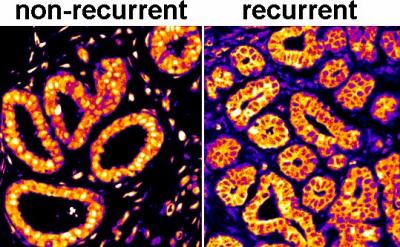
A new tool combining traditional pathology with machine learning could predict which breast cancer patients actually need surgery. The technology, reported in the November issue of American Journal of Physiology — Cell Physiology (vol. 319: C910-C921; https://doi.org/10.1152/ajpcell.00280.2020), could spare women from unnecessary treatments, reduce medical expenses, and lead to a new generation of drugs to stop breast cancer recurrences.

Ductal carcinoma in situ (DCIS) of the breast, an early form of disease also known as stage 0 breast cancer, is a diagnosis that only sometimes leads to invasive breast cancer. But only some patients need surgery, chemotherapy and/or radiotherapy, and the rest could be sent home. Predicting the outcomes of patients with early forms of cancer has been a major scientific problem for decades.

Professor Howard Petty and Ms. Alexandra Kraft, his research assistant, both of the University of Michigan, have just reported a solution to this diagnostic dilemma. The new technology was tested on DCIS patient samples donated to research over 10 years ago supplemented by their current clinical histories.

“Typically, patients with pre-invasive cancers, such as DCIS, are treated very aggressively,” says Prof. Petty. “In the case of DCIS, this means partial or total mastectomies…but we know from other work that more than half of these patients will not experience invasive disease.”

The method relies upon the newly reported discovery that, in both DCIS cases that are destined to recur and metastatic breast cancer, cells reorganize certain enzymes into “metabolic platforms” just beneath the outer membrane of these dangerous tumor cells. “This allows the enzymes to operate with high efficiencies, like an assembly line at a factory,” Prof. Petty says. That efficiency is what makes those cancers so dangerous. Petty theorizes that the enzyme products produced by these cellular factories promote tumor cell invasiveness and simultaneously deflect many forms of chemotherapy and radiotherapy.

To predict which DCIS cases lead to such assembly lines, Petty and colleagues tag biomarkers within patient samples then photograph the biomarkers with a sophisticated camera – similar to those used in astronomy. The digital images are then uploaded into a cloud computing platform for analysis.

Using this approach, the researchers correctly predicted cancer recurrences and non-recurrences 91% of the time, with only 4% false negatives. Further improvements are on the way.

The authors suggest that this tool will reduce the overdiagnosis of life-threatening DCIS. The technique may allow scientists to pharmaceutically disrupt metabolic platforms, thereby blocking tumor invasiveness, enhancing chemotherapy and radiotherapy, and stopping recurrences. “This tool may also be useful in predicting the outcomes of other pre-invasive lesions and in predicting which patients will respond to specific therapeutic interventions,” Prof. Petty says.

The researchers are presently performing the additional retrospective experiments needed to obtain FDA approval of this new diagnostic test.

###

This work has recently received the American Physiological Society’s APSselect Award.

Contact: [email protected]

Media Contact
Vanessa Denha-Garmo
[email protected]

Related Journal Article

http://dx.doi.org/10.1152/ajpcell.00280.2020

Tags: BiochemistryBiomechanics/BiophysicsBreast CancerCell BiologyMedicine/HealthRobotry/Artificial Intelligence
Share12Tweet8Share2ShareShareShare2

Related Posts

blank

Breakthrough in Environmental Cleanup: Scientists Develop Solar-Activated Biochar for Faster Remediation

February 7, 2026
blank

Cutting Costs: Making Hydrogen Fuel Cells More Affordable

February 6, 2026

Scientists Develop Hand-Held “Levitating” Time Crystals

February 6, 2026

Observing a Key Green-Energy Catalyst Dissolve Atom by Atom

February 6, 2026
Please login to join discussion

POPULAR NEWS

  • Robotic Ureteral Reconstruction: A Novel Approach

    Robotic Ureteral Reconstruction: A Novel Approach

    82 shares
    Share 33 Tweet 21
  • Digital Privacy: Health Data Control in Incarceration

    63 shares
    Share 25 Tweet 16
  • Study Reveals Lipid Accumulation in ME/CFS Cells

    57 shares
    Share 23 Tweet 14
  • Breakthrough in RNA Research Accelerates Medical Innovations Timeline

    53 shares
    Share 21 Tweet 13

About

We bring you the latest biotechnology news from best research centers and universities around the world. Check our website.

Follow us

Recent News

Evaluating Pediatric Emergency Care Quality in Ethiopia

TPMT Expression Predictions Linked to Azathioprine Side Effects

Improving Dementia Care with Enhanced Activity Kits

Subscribe to Blog via Email

Success! An email was just sent to confirm your subscription. Please find the email now and click 'Confirm' to start subscribing.

Join 73 other subscribers
  • Contact Us

Bioengineer.org © Copyright 2023 All Rights Reserved.

Welcome Back!

Login to your account below

Forgotten Password?

Retrieve your password

Please enter your username or email address to reset your password.

Log In
No Result
View All Result
  • Homepages
    • Home Page 1
    • Home Page 2
  • News
  • National
  • Business
  • Health
  • Lifestyle
  • Science

Bioengineer.org © Copyright 2023 All Rights Reserved.