• HOME
  • NEWS
  • EXPLORE
    • CAREER
      • Companies
      • Jobs
    • EVENTS
    • iGEM
      • News
      • Team
    • PHOTOS
    • VIDEO
    • WIKI
  • BLOG
  • COMMUNITY
    • FACEBOOK
    • INSTAGRAM
    • TWITTER
Monday, December 1, 2025
BIOENGINEER.ORG
No Result
View All Result
  • Login
  • HOME
  • NEWS
  • EXPLORE
    • CAREER
      • Companies
      • Jobs
        • Lecturer
        • PhD Studentship
        • Postdoc
        • Research Assistant
    • EVENTS
    • iGEM
      • News
      • Team
    • PHOTOS
    • VIDEO
    • WIKI
  • BLOG
  • COMMUNITY
    • FACEBOOK
    • INSTAGRAM
    • TWITTER
  • HOME
  • NEWS
  • EXPLORE
    • CAREER
      • Companies
      • Jobs
        • Lecturer
        • PhD Studentship
        • Postdoc
        • Research Assistant
    • EVENTS
    • iGEM
      • News
      • Team
    • PHOTOS
    • VIDEO
    • WIKI
  • BLOG
  • COMMUNITY
    • FACEBOOK
    • INSTAGRAM
    • TWITTER
No Result
View All Result
Bioengineer.org
No Result
View All Result
Home NEWS Science News

The first detection of marine fish DNA in sediment sequences going back 300 years

Bioengineer by Bioengineer
November 16, 2020
in Science News
Reading Time: 2 mins read
0
IMAGE
Share on FacebookShare on TwitterShare on LinkedinShare on RedditShare on Telegram

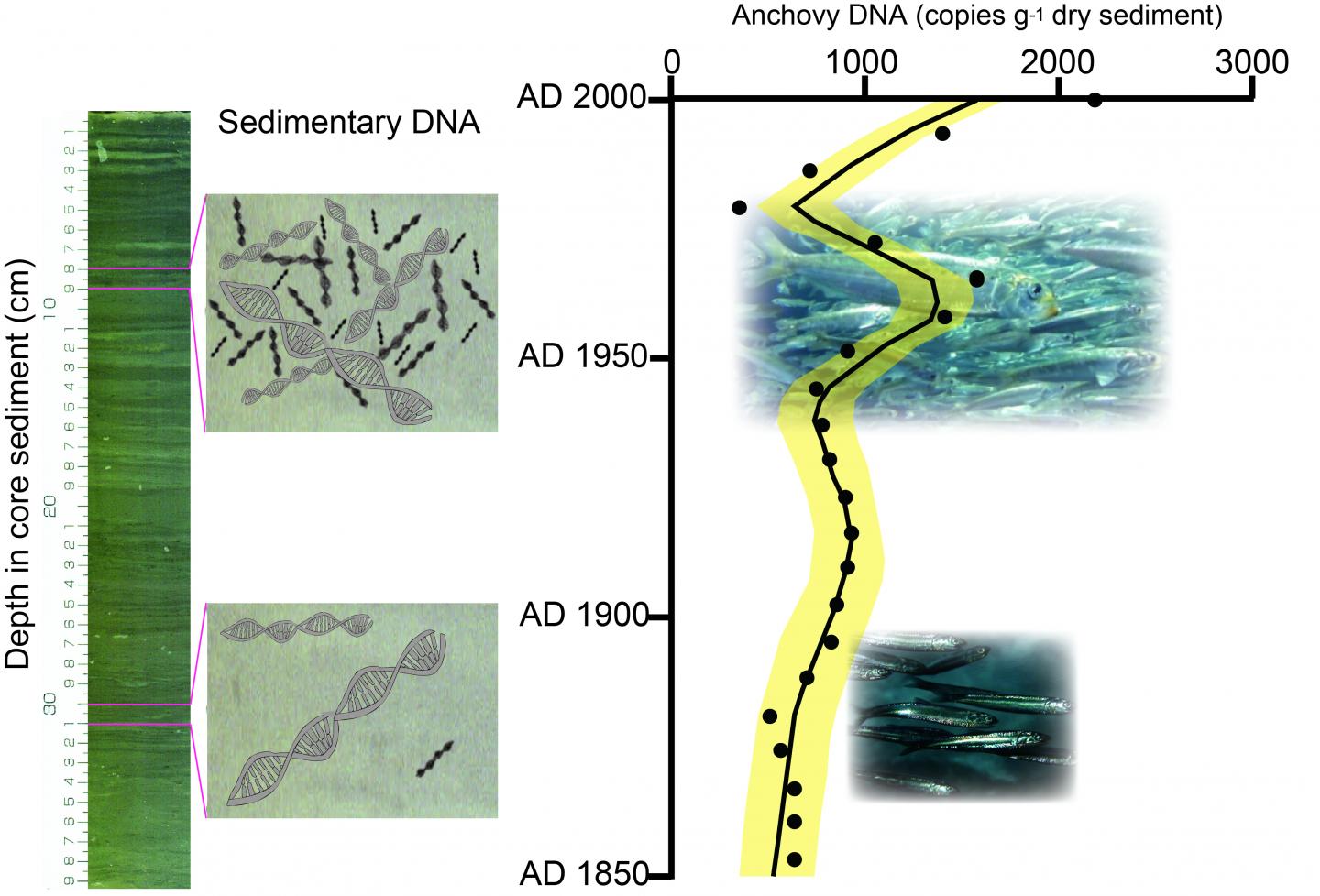
Can sedimentary DNA technology track the long-term dynamics of macro-organism species?
IMAGE

Credit: Michinobu Kuwae, CMES, Ehime University

Long-term variability in the ‘abundance’ of a macro-organism could provide fundamental information for evaluating its evolution, its responses to climate changes and human impact, enabling management and preservation strategies. Biological monitoring in aquatic systems has provided evidence of long-term variability in the abundance of macro-organisms. However, almost all such records span less than a century; there are none which span centuries or more. Aquatic bottom sediments have provided records of species abundance on longer time scales, although previous studies addressed marine fish species using fossil remains (mainly fish scales) and reconstructed abundance for only seven fish taxons. Thus, there remains a distinct lack of information on long-term changes in abundance for many marine fish species and other macro-organisms in aquatic systems.

This study focused on an approach using sedimentary DNA which is a potentially powerful tool for reconstructing lengthy records of fish species. We first tested the existence of fish DNA in the marine sediment sequences in a Japanese bay. Then we tested the utility of sedimentary DNA in reconstructing past fish abundance by comparing fish sedimentary DNA concentrations with fish scale concentrations and landing data.

Sediment core samples collected from Beppu Bay in the Seto Inland Sea, Japan, were used to quantify sedimentary DNA of three major fish species (Japanese anchovy, Japanese sardine, and jack mackerel) by applying quantitative Polymerase Chain Reaction (qPCR) methods. The result showed that the DNA of these fish species were detected in sediment sequences spanning the last 300 years. Observed temporal changes in fish DNA concentrations on decadal and centennial time scales are consistent with those of landings in Japan for all three species and with those of sardine fish scale concentrations. Thus, sedimentary DNA could be used to track decadal-centennial dynamics of fish abundance in marine.

Using environmental DNA is a widely accepted approach for biological monitoring that is easy, fast and inexpensive without the need for taxonomic expertise for the physical identification of a species. However, such monitoring started only recently; the data collection interval not being less than 10 years. In contrast, the use of sedimentary DNA is expected to instantly obtain lengthy retrospective monitoring data of abundance if the water has a sedimentary basin in which DNA is continuously deposited and stably preserved. This approach has not been used because it remains unclear whether sedimentary DNA concentrations reflect the abundance of an aquatic species. Our findings suggest that the use of sedimentary DNA is a viable technique for tracking past changes in fish abundance, and also could be used to reconstruct the abundance of macro-organisms inhabiting water. Sedimentary DNA technology could support monitoring efforts during the 21st century as a potential tool for decifering the long-term dynamics of macro-organisms before the monitoring started or at a place lacking lengthy monitering observations.

###

Media Contact
Public Relations Division
[email protected]

Related Journal Article

http://dx.doi.org/10.1038/s42003-020-01282-9

Tags: BiodiversityBiologyBiomedical/Environmental/Chemical EngineeringClimate ChangeFisheries/AquacultureMarine/Freshwater BiologyPaleontologyPopulation Biology
Share12Tweet8Share2ShareShareShare2

Related Posts

Machine Learning Identifies Early Right Ventricular Activation

December 1, 2025

Distinguishing Diabetes Types in Kids with Ketoacidosis

December 1, 2025

Boric Acid and Quercetin Mitigate Paraquat Neurotoxicity

December 1, 2025

COVID-19’s Effects on Canada’s Healthcare Workforce: Key Insights

December 1, 2025
Please login to join discussion

POPULAR NEWS

  • New Research Unveils the Pathway for CEOs to Achieve Social Media Stardom

    New Research Unveils the Pathway for CEOs to Achieve Social Media Stardom

    203 shares
    Share 81 Tweet 51
  • Scientists Uncover Chameleon’s Telephone-Cord-Like Optic Nerves, A Feature Missed by Aristotle and Newton

    120 shares
    Share 48 Tweet 30
  • Neurological Impacts of COVID and MIS-C in Children

    106 shares
    Share 42 Tweet 27
  • MoCK2 Kinase Shapes Mitochondrial Dynamics in Rice Fungal Pathogen

    67 shares
    Share 27 Tweet 17

About

We bring you the latest biotechnology news from best research centers and universities around the world. Check our website.

Follow us

Recent News

Machine Learning Identifies Early Right Ventricular Activation

Distinguishing Diabetes Types in Kids with Ketoacidosis

Boric Acid and Quercetin Mitigate Paraquat Neurotoxicity

Subscribe to Blog via Email

Enter your email address to subscribe to this blog and receive notifications of new posts by email.

Join 69 other subscribers
  • Contact Us

Bioengineer.org © Copyright 2023 All Rights Reserved.

Welcome Back!

Login to your account below

Forgotten Password?

Retrieve your password

Please enter your username or email address to reset your password.

Log In
No Result
View All Result
  • Homepages
    • Home Page 1
    • Home Page 2
  • News
  • National
  • Business
  • Health
  • Lifestyle
  • Science

Bioengineer.org © Copyright 2023 All Rights Reserved.