• HOME
  • NEWS
  • EXPLORE
    • CAREER
      • Companies
      • Jobs
    • EVENTS
    • iGEM
      • News
      • Team
    • PHOTOS
    • VIDEO
    • WIKI
  • BLOG
  • COMMUNITY
    • FACEBOOK
    • INSTAGRAM
    • TWITTER
Saturday, February 7, 2026
BIOENGINEER.ORG
No Result
View All Result
  • Login
  • HOME
  • NEWS
  • EXPLORE
    • CAREER
      • Companies
      • Jobs
        • Lecturer
        • PhD Studentship
        • Postdoc
        • Research Assistant
    • EVENTS
    • iGEM
      • News
      • Team
    • PHOTOS
    • VIDEO
    • WIKI
  • BLOG
  • COMMUNITY
    • FACEBOOK
    • INSTAGRAM
    • TWITTER
  • HOME
  • NEWS
  • EXPLORE
    • CAREER
      • Companies
      • Jobs
        • Lecturer
        • PhD Studentship
        • Postdoc
        • Research Assistant
    • EVENTS
    • iGEM
      • News
      • Team
    • PHOTOS
    • VIDEO
    • WIKI
  • BLOG
  • COMMUNITY
    • FACEBOOK
    • INSTAGRAM
    • TWITTER
No Result
View All Result
Bioengineer.org
No Result
View All Result
Home NEWS Science News

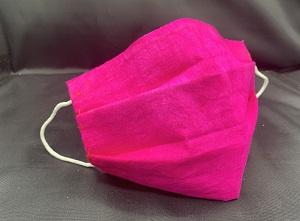
Cloth face masks that can be disinfected by the sun

Bioengineer by Bioengineer
November 11, 2020
in Science News
Reading Time: 3 mins read
0
IMAGE
Share on FacebookShare on TwitterShare on LinkedinShare on RedditShare on Telegram

IMAGE

Credit: Adapted from ACS Applied Materials & Interfaces 2020, DOI: 10.1021/acsami.0c15540

During the COVID-19 pandemic, many people have become accustomed to wearing cotton face masks in public places. However, viruses and bacteria that stick to the mask could be transferred elsewhere when the wearer removes or touches it. Now, researchers reporting in ACS Applied Materials & Interfaces have developed a special type of cotton face mask that kills up to 99.9999% of bacteria and viruses within 60 minutes of daylight exposure.

Face masks made of various cloth materials can filter nanoscale aerosol particles — such as those released by a cough or sneeze — potentially helping to reduce the spread of diseases, including COVID-19. But live bacteria and viruses on the surface of the mask could still be contagious. Peixin Tang, Gang Sun, Nitin Nitin and colleagues wanted to develop a new cotton fabric that would release reactive oxygen species (ROS) when exposed to daylight, killing microbes attached to the fabric’s surfaces while being washable, reusable and safe for the wearer. Then, a person could disinfect their cloth mask during their lunch hour outside in the sun, or by spending a longer period of time under office or building lights, which are much less intense than sunlight.

The researchers made their antimicrobial fabrics by attaching positively charged chains of 2-diethylaminoethyl chloride (DEAE-Cl) to ordinary cotton. Then, they dyed the modified cotton in a solution of a negatively charged photosensitizer (a compound that releases ROS upon exposure to light), which attached to the DEAE chains by strong electrostatic interactions. The team found that a fabric made with a dye called rose Bengal as the photosensitizer killed 99.9999% of bacteria added to the fabric within 60 minutes of daylight exposure and inactivated 99.9999% of T7 bacteriophage — a virus thought to be more resistant to ROS than some coronaviruses — within 30 minutes. Further testing showed that the material could be handwashed at least 10 times and constantly exposed to daylight for at least 7 days without losing its antimicrobial activity. The fabric shows promise for making reusable, antibacterial/antiviral cloth face masks and protective suits, the researchers say.

###

The authors acknowledge funding from the COVID-19 Research Accelerator Funding Track Program at the University of California, Davis and the California Department of Pesticide Regulation.

The abstract that accompanies this paper can be viewed here.

The American Chemical Society (ACS) is a nonprofit organization chartered by the U.S. Congress. ACS’ mission is to advance the broader chemistry enterprise and its practitioners for the benefit of Earth and its people. The Society is a global leader in providing access to chemistry-related information and research through its multiple research solutions, peer-reviewed journals, scientific conferences, eBooks and weekly news periodical Chemical & Engineering News. ACS journals are among the most cited, most trusted and most read within the scientific literature; however, ACS itself does not conduct chemical research. As a specialist in scientific information solutions (including SciFinder® and STN®), its CAS division powers global research, discovery and innovation. ACS’ main offices are in Washington, D.C., and Columbus, Ohio.
 
To automatically receive news releases from the American Chemical Society, contact [email protected].
 
Follow us: Twitter | Facebook

Media Contact
Katie Cottingham
[email protected]

Tags: BacteriologyBiotechnologyChemistry/Physics/Materials SciencesInfectious/Emerging DiseasesPublic HealthStars/The SunVirology
Share14Tweet9Share2ShareShareShare2

Related Posts

Oxygen-Enhanced Dual-Section Microneedle Patch Improves Drug Delivery and Boosts Photodynamic and Anti-Inflammatory Treatment for Psoriasis

February 7, 2026

Scientists Identify SARS-CoV-2 PLpro and RIPK1 Inhibitors Showing Potent Synergistic Antiviral Effects in Mouse COVID-19 Model

February 7, 2026

Neg-Entropy: The Key Therapeutic Target for Chronic Diseases

February 7, 2026

Multidisciplinary Evidence-Based Guidelines for Therapeutic Drug Monitoring of Biologics in Inflammatory Bowel Disease

February 7, 2026
Please login to join discussion

POPULAR NEWS

  • Robotic Ureteral Reconstruction: A Novel Approach

    Robotic Ureteral Reconstruction: A Novel Approach

    82 shares
    Share 33 Tweet 21
  • Digital Privacy: Health Data Control in Incarceration

    63 shares
    Share 25 Tweet 16
  • Study Reveals Lipid Accumulation in ME/CFS Cells

    57 shares
    Share 23 Tweet 14
  • Breakthrough in RNA Research Accelerates Medical Innovations Timeline

    53 shares
    Share 21 Tweet 13

About

We bring you the latest biotechnology news from best research centers and universities around the world. Check our website.

Follow us

Recent News

Oxygen-Enhanced Dual-Section Microneedle Patch Improves Drug Delivery and Boosts Photodynamic and Anti-Inflammatory Treatment for Psoriasis

Scientists Identify SARS-CoV-2 PLpro and RIPK1 Inhibitors Showing Potent Synergistic Antiviral Effects in Mouse COVID-19 Model

Neg-Entropy: The Key Therapeutic Target for Chronic Diseases

Subscribe to Blog via Email

Enter your email address to subscribe to this blog and receive notifications of new posts by email.

Join 73 other subscribers
  • Contact Us

Bioengineer.org © Copyright 2023 All Rights Reserved.

Welcome Back!

Login to your account below

Forgotten Password?

Retrieve your password

Please enter your username or email address to reset your password.

Log In
No Result
View All Result
  • Homepages
    • Home Page 1
    • Home Page 2
  • News
  • National
  • Business
  • Health
  • Lifestyle
  • Science

Bioengineer.org © Copyright 2023 All Rights Reserved.