• HOME
  • NEWS
  • EXPLORE
    • CAREER
      • Companies
      • Jobs
    • EVENTS
    • iGEM
      • News
      • Team
    • PHOTOS
    • VIDEO
    • WIKI
  • BLOG
  • COMMUNITY
    • FACEBOOK
    • INSTAGRAM
    • TWITTER
Saturday, February 7, 2026
BIOENGINEER.ORG
No Result
View All Result
  • Login
  • HOME
  • NEWS
  • EXPLORE
    • CAREER
      • Companies
      • Jobs
        • Lecturer
        • PhD Studentship
        • Postdoc
        • Research Assistant
    • EVENTS
    • iGEM
      • News
      • Team
    • PHOTOS
    • VIDEO
    • WIKI
  • BLOG
  • COMMUNITY
    • FACEBOOK
    • INSTAGRAM
    • TWITTER
  • HOME
  • NEWS
  • EXPLORE
    • CAREER
      • Companies
      • Jobs
        • Lecturer
        • PhD Studentship
        • Postdoc
        • Research Assistant
    • EVENTS
    • iGEM
      • News
      • Team
    • PHOTOS
    • VIDEO
    • WIKI
  • BLOG
  • COMMUNITY
    • FACEBOOK
    • INSTAGRAM
    • TWITTER
No Result
View All Result
Bioengineer.org
No Result
View All Result
Home NEWS Science News Chemistry

Utilizing a ‘krafty’ waste product: Toward enhancing vehicle fuel economy

Bioengineer by Bioengineer
November 5, 2020
in Chemistry
Reading Time: 2 mins read
0
IMAGE
Share on FacebookShare on TwitterShare on LinkedinShare on RedditShare on Telegram

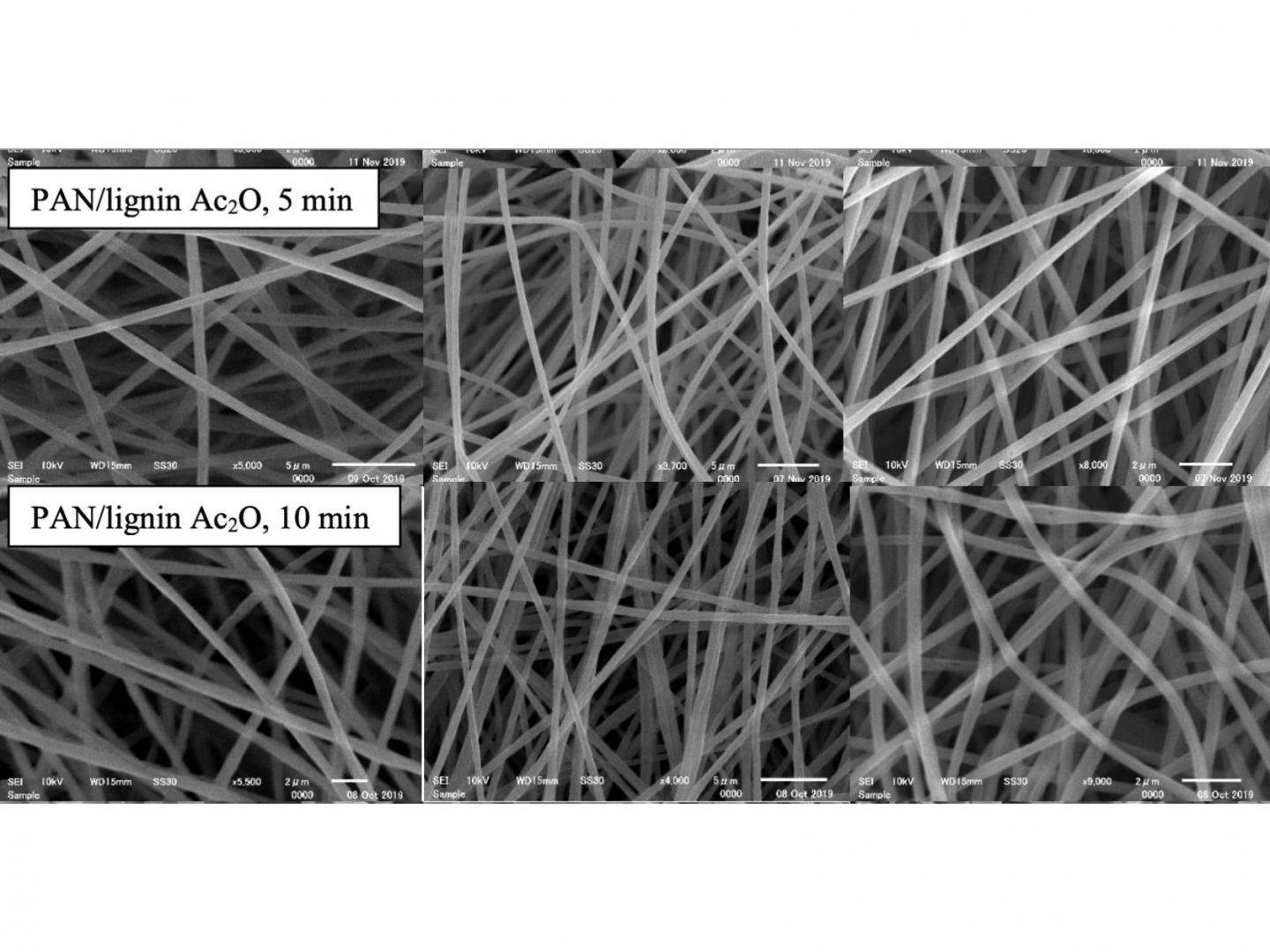
Researchers from Kanazawa University fine-tuned the chemical structure and mechanical performance of a substance that’s ordinarily burned in the paper industry as waste matter, for future use as a lightweight automotive structural material
IMAGE

Credit: Kanazawa University

Kanazawa, Japan – Given concerns over global climate warming, researchers are hard at work on minimizing the amount of fuel that we all use in everyday life. Reducing the weight of vehicles will lessen the amount of fuel required to power them, and put money back into your pocket.

In a study recently published in Chemical Engineering Journal, researchers from Kanazawa University have chemically modified an industrial waste product, and processed it into a possible lightweight structural material. This development may increase the fuel economy of private and commercial transportation.

The researchers started with Kraft lignin, a byproduct of a common wood pulping process. Paper mills usually burn Kraft lignin to generate power, because it’s difficult to use for anything except specialized purposes. Chemically processing Kraft lignin into a more useful material would improve the environmental sustainability of paper production.

“We performed a chemical modification of Kraft lignin polymer known as acetylation,” says first author László Szabó. “Optimizing the extent of acetylation was critical to our research effort.”

A controlled reaction was important for optimizing Kraft lignin’s ability to be compatible with another polymer called polyacrylonitrile, and thus prepare quality carbon fibers creating an engineered composite. If there’s too little–or too much–acetylation, the carbon fibers are of low quality.

“Our reaction was quite mild, producing only a rather benign side product–acetone–without changing the polydispersity of the Kraft lignin,” explains Kenji Takahashi, co-senior author. “We thus were able to mix Kraft lignin with polyacrylonitrile to obtain a dope solution for electrospinning containing more compatible polymer segments and eventually fabricate quality carbon fibers.”

The researchers’ carbon fiber mats contain fine uniform fibers, without the thermal treatment lessening fiber quality. In fact, compared with unmodified Kraft lignin, by using the modified polymer the fiber mat exhibited an almost 3-fold improvement in mechanical strength.

“Our fibers’ mechanical performance is attributable to the tailored graphitic structure of the materials,” explains Szabó. “This outcome is owing to the improved polymer interactions leading to a more aligned polymeric network which is then subjected to the thermal treatment.”

Engineered composites are common in spacecraft, cars, plastic, concrete, and many other products and technologies. When these researchers minimize the cost of preparing their new carbon fibers, perhaps vehicles of the future will be lighter, more durable, and more fuel-efficient. Given that every industry uses transportation, everyone will save money and every business will be more environmentally sustainable.

###

Media Contact
Tomoya Sato
[email protected]

Original Source

https://www.sciencedirect.com/science/article/pii/S1385894720327686?via%3Dihub

Related Journal Article

http://dx.doi.org/10.1016/j.cej.2020.126640

Tags: Chemistry/Physics/Materials SciencesMaterialsPolymer Chemistry
Share12Tweet8Share2ShareShareShare2

Related Posts

blank

Breakthrough in Environmental Cleanup: Scientists Develop Solar-Activated Biochar for Faster Remediation

February 7, 2026
blank

Cutting Costs: Making Hydrogen Fuel Cells More Affordable

February 6, 2026

Scientists Develop Hand-Held “Levitating” Time Crystals

February 6, 2026

Observing a Key Green-Energy Catalyst Dissolve Atom by Atom

February 6, 2026
Please login to join discussion

POPULAR NEWS

  • Robotic Ureteral Reconstruction: A Novel Approach

    Robotic Ureteral Reconstruction: A Novel Approach

    82 shares
    Share 33 Tweet 21
  • Digital Privacy: Health Data Control in Incarceration

    63 shares
    Share 25 Tweet 16
  • Study Reveals Lipid Accumulation in ME/CFS Cells

    57 shares
    Share 23 Tweet 14
  • Breakthrough in RNA Research Accelerates Medical Innovations Timeline

    53 shares
    Share 21 Tweet 13

About

We bring you the latest biotechnology news from best research centers and universities around the world. Check our website.

Follow us

Recent News

Personalized Guide to Understanding and Reducing Chemicals

Inflammasome Protein ASC Drives Pancreatic Cancer Metabolism

Phage-Antibiotic Combo Beats Resistant Peritoneal Infection

Subscribe to Blog via Email

Enter your email address to subscribe to this blog and receive notifications of new posts by email.

Join 73 other subscribers
  • Contact Us

Bioengineer.org © Copyright 2023 All Rights Reserved.

Welcome Back!

Login to your account below

Forgotten Password?

Retrieve your password

Please enter your username or email address to reset your password.

Log In
No Result
View All Result
  • Homepages
    • Home Page 1
    • Home Page 2
  • News
  • National
  • Business
  • Health
  • Lifestyle
  • Science

Bioengineer.org © Copyright 2023 All Rights Reserved.